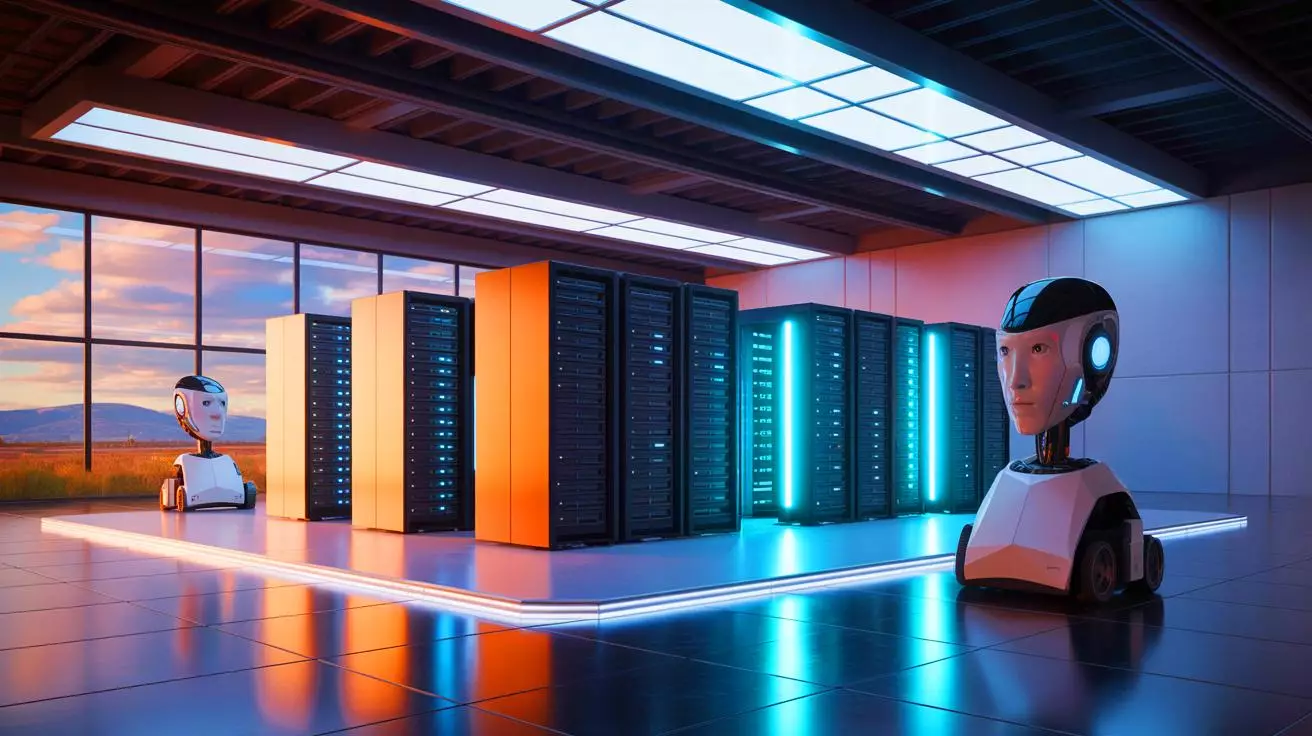





Amazon is spending much more to implement warehouse robots in the United States to gain a competitive advantage by achieving shorter delivery times and building a more resilient supply chain. The firm would increase its business activities by implementing over half a million mobile robotic units to be used alongside human employees to enhance sorting, picking, and packing processes. These advances show that the company is committed to automating its operations as it develops more logistics solutions. 

Robotic Integration Across Fulfillment Centers  

Amazon has grown to have numerous distribution centers in the United States and beyond, with warehouse robotics programmes that started as small pilot projects and are now full-scale and operational. The system uses autonomous mobile robots (AMRs) to transfer inventory in large facilities, minimising physical load on workers, reducing unnecessary movement, and improving operational performance.  

The robots use high-level AI-based routing technology to monitor order volumes, patterns in warehouse traffic, and changes in facility layout and to adjust paths in real time. Optimising the movement will also enable Amazon to achieve a 25% increase in processing speed across its capacity centres, which are already operating at full capacity. The robotics system not only accelerates order processing but also helps human workers focus on crucial tasks, such as quality control, complex packaging, and inventory management, thereby boosting the entire organisation’s productivity.  

Robotic systems also help human workers by enabling them to focus on important business activities, such as evaluating product quality, performing complex packaging operations, and providing customer support. 

Enhancing Delivery Speeds in the US  

Fast delivery services now serve as the most important competitive advantage for online shopping businesses. Amazon expands its robotic systems to meet customer demand for same-day and next-day delivery. The company will achieve faster order processing and delivery operations through its plan to increase warehouse automation.  

Amazon operates robotics technology in both its standard urban fulfilment centres and delivery system, a logistics process that transports packages from the final storage location to customers’ doors, enabling rapid movement from storage to delivery vehicles.  

AI-Driven Warehouse Management  

The central component of Amazon’s robotics operations uses an artificial intelligence-based system that manages its operations. The machine learning algorithms track inventory status, forecast future demand changes, and control robot movements throughout the day.   

During peak holiday periods, AI systems dynamically reallocate robots to zones experiencing higher demand. The system also tracks energy usage, robot movement patterns, and maintenance timetables, letting each facility establish its own autonomous management system.   

Amazon combines robotics with predictive analytics to achieve faster delivery times, which result in reduced operational costs, fewer mistakes, and safer work environments for its employees.  

Sustainability and Efficiency Gains  

Amazon uses its automated systems to achieve environmental sustainability goals that extend beyond its current operations. The company achieves cost savings through its robotic systems, which operate at peak efficiency by reducing the walking required of warehouse staff and lowering energy use. The company claims that its robot systems have already improved operational efficiency while decreasing energy consumption throughout its facilities. 

The new generation of robots uses lightweight yet durable materials and energy-efficient motors to reduce environmental impact while achieving high operational performance.  

Workforce Collaboration and Training  

Amazon states that robots serve as tools that enhance human workers’ abilities rather than replace them. The company trains its associates to operate robots using mobile devices and sensors to achieve robotic unit operation. 

The company has established training programmes to develop employees’ skills so they can handle every aspect of robotic system operation and maintenance. This partnership creates a workplace sector that promotes safety and efficiency and trains employees to manage more automated tasks.  

Implications for US Logistics and E-Commerce  

Amazon’s warehouse robotics expansion has multiple impacts on the entire US logistics industry. The competitors face pressure to implement identical systems because the technology delivers faster processing and more reliable performance, which drives e-commerce and third-party logistics to adopt automated systems.   

Automated fulfilment meets while also allowing them to develop their own robotic systems. Industry analysts predict that these investments will change how customers expect delivery times, service dependability, and service performance.  

Challenges and Considerations  

The robotics industry faces technical and operational hurdles that prevent its benefits from being fully realised. The safe operation of warehouse systems requires three components: precise facility mapping, ongoing system oversight, and flexible artificial intelligence systems.  

The organisation needs to maintain its numerous units through two essential requirements: strong infrastructure and highly skilled personnel. Amazon works on system improvements to increase production while maintaining operational dependability.  

Three main elements need assessment to create automation systems for facility operations: workplace safety requirements, labour relations, and regulatory compliance. The company establishes safety standards governing robot operations in areas requiring continuous operational oversight.    

Looking Ahead  

Amazon plans to integrate robotic solutions into its current and future distribution centres by 2026. In the future, there will be improved artificial intelligence systems, faster mobile robots, and more efficient systems that can tie delivery operations to drones and self-driving cars.   

The application of warehouse robots in Amazon’s operations enables the development of an innovative e-commerce logistics system, thereby reducing delivery times across the United States. The project demonstrates that AI-driven automation systems can be efficient in terms of operational efficiency, safety standards, and customer satisfaction.

Sources: Operations 

Tesla is making progress on its full self-driving (FSD) software by testing it extensively in real-world conditions and adopting end-to-end neural networks by March 5, 2026. The software, now called full self-driving (supervised), had collected billions of miles of driving data from more than six million vehicles to boost security and performance.  

Key Developments Within Real-World Testing 

  • End-to-end neural networks, a type of artificial intelligence model that processes input data and generates outputs without separate, hand-coded rules, are central to version 12. Tesla replaced more than 300,000 lines of C code with neural networks trained on videos of real drivers. This change allows the car to handle complex situations by learning from real-world examples instead of following preset instructions.  
  • Elon Musk claims FSD version fourteen should surpass human driving by 2 or 3 times, while version 15 aims for 10 times better performance.  
  • Global expansion. Tesla has started piloting FSD internationally. Recent trials in China and Australia show FSD surpassed local competitors on highways and in urban areas, despite lacking initial local training data.  
  • Shadow mode. Every Tesla operates FSD in shadow mode, where the software silently predicts actions and compares them to the driver’s choices; discrepancies are identified for further learning.  

Technological Innovations 

  • A vision-only approach, unlike competitors who use LiDAR or RADAR. Tesla relies exclusively on eight cameras and artificial intelligence to interpret its environment.  
  • Tesla’s Dojo supercomputer processes vast video data, enabling fast updates and retraining of AI models.  
  • Occupancy networks are AI models that enable software to generate a real-time, three-dimensional bird’s-eye view of the road. This view maps the location of vehicles, pedestrians, and obstacles around the car, enabling the system to better anticipate the movement of surrounding objects and predict possible future events.  

Continuing Difficulties & Scrutiny 

  • The NHTSA is still investigating FSD’s performance in low-visibility conditions and driver supervision.  
  • Despite its name, Full Self-Driving (FSD) is classified as a Society of Automotive Engineers (SAE) Level 2 system. SAE levels range from 0 (no automation) to 5 (full automation), and Level 2 means the vehicle can control steering and speed but still requires the driver to supervise and be ready to take over at any time.  
  • Edge case issues, such as phantom breaking and the interpretation of ambiguous line markings, remain significant engineering hurdles. Test continues to address these challenges in ongoing evaluations.  

Tesla, the well-known electric car company known for its daring, sometimes debated automated driving technology, has just made a major change. to its full self-driving (FSD) software led by Elon Musk. The company is replacing its old F. FSD code with a new system as it prepares to launch its robotaxi service.  

This change replaces the old code with a neural network-based system that interprets and adapts to real driving situations. It marks a significant departure from the previous rule-based model.  

A Major Shift 

Previously, the old FSD software relied on a complicated set of rules to help cars manage different driving situations. While effective at times, it often struggled with the unusual or unexpected events that drivers encounter on the road. In contrast, Tesla’s new FSD uses deep learning, letting the car learn from vast amounts of real-world driving data by observing it. In many different situations, the system can better understand its surroundings and adjust its driving.  

With this transition to neural networks, several potential benefits emerge. The system can learn and improve over time without manual updates, continuously refining its decision-making as it experiences more types of driving situations.  

However, moving to a neural network also entails new challenges. It’s important to ensure people understand how the system makes decisions, which helps build trust in the technology. Regulators, safety experts, and consumers all want to know how the software decides what to do, especially if something goes wrong.  

People online have mixed opinions about the new system. CEO Michael Dell praised it on X, saying, “Super impressive. Tesla FSD v12.3 is like a human driver.” But some Reddit users had a different take: “I had my first experience with it, and it felt as if having a 15-year-old driver. It’s a very cool technical demo, but I feel like they have a long way to go to achieve their initial goal like at least 5 more years until they can even argue it’s level 4 or 5.”  

Tesla’s History With Safety and Autonomy 

Tesla began developing autonomous driving in 2014 with the launch of its Autopilot system. Initially, Autopilot featured adaptive cruise control and lane-keeping assist. Since then, Tesla has consistently refined and expanded Autopilot, aiming to eventually achieve full self-driving capability.  

Tesla’s push regarding autonomy has faced multiple challenges and controversies. The company has been criticized for marketing Autopilot and FSD features in ways that some say could mislead customers about what the systems actually do. There have also been several well-known accidents involving Teslas using Autopilot, raising concerns about the technology’s safety and reliability.  

Following these incidents, the National Highway Traffic Safety Administration (NHTSA) initiated an investigation into Tesla’s Autopilot system. In a statement, the NHTSA emphasized the importance of ensuring that vehicles with automated driving systems operate safely and as intended, necessary to maintain public trust and confidence in these technologies.  

Tesla’s decision to fully update its FSD software has drawn mixed reactions from specialists and safety advocates. Some people worry about the risks of rolling out new technology on a larger scale, especially given Tesla’s mixed track record with self‑driving technology.  

Experts say renaming “full self‑driving” to “supervised full self‑driving” clarifies the system’s capabilities. Pratik Chaudhari, an engineering professor and former developer of autonomous taxis, noted that drivers have always been required to provide active supervision. The new name emphasizes this fact.  

Obstacles in Achieving Full Autonomy 

Chowdhury pointed out the shortcomings of current automotive driving technology, stating that there are still regular incidents in which Teslas and assistive autonomous cars from other car makers have behaved in an unsafe manner. The driver is expected to remain alert and intervene in the event of such incidents. He stressed the challenges of handling unforeseeable human behavior and of ensuring a car is 99.99% safe, given the vast diversity of situations that can occur on the roads.  

A major challenge for total autonomy is getting driverless cars to handle unusual or unexpected situations. Machine learning and computer vision have improved significantly in recent years, but these technologies still have a long way to go before they can match the way humans adapt and make choices on the road.  

Self-driving companies use various strategies to improve safety and reliability with real-world testing, exposing software to a wide range of situations. As Chaudhary noted, ensuring full safety remains difficult due to the sheer diversity of scenarios vehicles may encounter.  

Alternative Approaches to Automated Driving Technology 

Tesla mainly uses visible-light cameras and neural-network software for its automated driving technology, but other companies are adopting different approaches. Shawn Taikratoke, CEO of autonomous mobility startup Mozee, said he was impressed by Tesla’s choice to rebuild its FSD software. He explained that Tesla’s daring decision to rebuild its full self-driving suite reflects a culture that focuses on speed, originality, and responsiveness qualities that are critical as it works toward ambiguous, ambitious targets, such as deploying robotaxis.  

Mozee takes a different approach by using a broader range of sensors, including radar and infrared sensors. This ensures their vehicles work well in many settings. Taikratoke said our diverse sensor approach ensures our vehicles can function reliably across a wide range of environments. These include the planned pathways of university campuses and the unforeseeable streets of metropolitan centers. By maintaining this flexible and thorough approach, we ensure that our technology is adaptable and scalable. This reflects our customers’ diverse demands and the environments in which they operate.  

Mozee believes that for self-driving technology to succeed, vehicles and infrastructure must communicate seamlessly to form a connected network that enhances safety and efficiency. Taikratoke stressed the need for teamwork and partnerships to move the business forward. He said as we grow, this adaptivity will be critical not only to fulfilling but surpassing the expectations of our partners and the communities we serve. We are excited to partner with industry leaders like Tesla to shape the future of transportation and create a safer, more effective world for all.  

As the industry evolves, companies like Tesla, Mozee, and Waymo are leading the way in developing flexible, expandable solutions that prioritize safety, efficiency, and real-world use, although some people are concerned about Tesla’s complete overhaul of its FSD software. It demonstrates the company’s commitment to innovation and its readiness to tackle the challenges of building fully self-driving vehicles.  

To make fully self-driving vehicles a reality, more technological advances are needed, along with progress in regulations and community acceptance. Governments and regulators must set explicit rules and standards for the development, testing, and use of self-driving vehicles. Building community confidence is also important, since people need to feel confident in the safety and performance of these systems before they become common.  

In a 2020 interview, Elon Musk expressed optimism about self-driving technology. He said, “I am extremely confident that we will have the basic functionality for level 5 autonomy completed this year.” Still, he admitted there are challenges. “There are many small problems that need to be solved, and there’s the challenge of solving all those small problems and putting the whole system together.”  

As the self-driving industry grows, companies, researchers, and regulators will need to work together to develop self-driving technology safely and responsibly. By joining forces to address the technical, legal, and social challenges of self-driving vehicles, we can help establish a future in which self-driving transit changes how we live, work, and travel.  

As Chowdhari noted, achieving safe driving is also a slow march of the nines. This means making the system 99%. 99.9% safe, then 99.999%, and so on. The aim is always to improve and solve rare problems. It requires technological progress as well as progress on policy and infrastructure.

Source: Tesla’s new self-driving software throws out its old code entirely 

As of March 30, 2026, the US government is moving forward with a national AI policy framework based on innovation-first principles. The goal is to set consistent federal safety standards and prevent conflicting state regulations. This approach aims to accelerate AI development and strengthen the country’s position against foreign competitors, relying on industry guidance rather than creating a new federal agency.  

The main parts of the unified AI policy are:  

  • Preemption of state laws. The framework urges Congress to supersede state AI regulations with a uniform national standard, removing the fragmented landscape of laws.  
  • Innovation-first focus. The policies support AI growth by using regulatory sandboxes, granting agencies such as the GPS and GSA access to federal data, and working with existing industry-specific regulators to oversee implementation.  
  • In federal AI adoption, the General Services Administration (GSA) launched USAI.gov, a tool for federal agencies to use AI models, with GSA guiding initial adoption.  
  • Strategic and security focus. These policies reflect global competition, aiming to preserve US leadership in AI and bolster national security amid foreign threats.  
  • Regulatory mechanism. The plan includes creating an AI litigation task force to contest state AI laws that do not align with the national strategy.  

This approach has sparked debate. Several industry leaders endorse unified rules to promote innovation, while critics warn of diminished worker protections and reduced state oversight of safety.  

The Trump administration recently unveiled the national AI legislative framework, a policy proposal that would restrict state interference in AI innovation. The plan calls on Congress to confront major AI risks while fortifying the US stance in the technological rivalry with China.  

According to SCMP, the framework asks Congress to override state AI laws that impose undue burdens. The goal is to create a single national standard for AI regulation. This would replace different rules in each state. The uniform approach aims to prevent inconsistencies that could slow technological progress.  

The new policy states that state laws should not regulate areas better suited for federal oversight and must not contradict the US national strategy. The national strategy prioritizes global AI leadership and centralizes authority.  

This consolidated model enables the federal government to address national security priorities and counter China’s influence. Uniform national policy is viewed as critical for AI progress and strategic competition.  

The proposed framework aims to keep the United States at the forefront of AI innovation and use. It stresses the need for a clear national strategy to avoid different rules across states. Divided regulations could slow down the deployment and rollout of new AI technology. The push for unified federal oversight reflects concerns that varied state rules might slow U.S. AI companies and give other nations an edge, thereby shifting regulatory power to the federal level.  

The document advocates clear, consistent regulations for companies and researchers through a singular legislative structure. The government aims to streamline processes for technology developers, including major tech firms, facilitating nationwide advancement.  

This policy coincides with escalating international competition in advanced technologies. The administration asserts that national security and economic strength depend on AI leadership. The framework intends to reinforce the US’s global standing.  

The primary objective is to create conditions that accelerate AI development while mitigating risks identified by federal authorities. The national AI legislative framework seeks to merge all regulations into a comprehensive federal standard, ensuring nationwide consistency.  

The framework urges Congress to enact these unified standards, instructing lawmakers to override state-level regulations. The approach is structured to prevent laws that could impede innovation or confuse AI developers.  

The policy unambiguously prioritizes national oversight of AI development, emphasizing federal leadership in advancing this critical technology. This methodology is intended to align development with security and international objectives.  

Officials regard technological dominance in AI as essential for international influence, believing uniform national rules underpin US innovation and strategic aims. The legislative proposal underscores ongoing efforts to prioritize federal oversight for both progress and security. The Trump administration introduced an AI policy framework to harmonize regulations and minimize state-level barriers, thereby enhancing the US’s ability to counter security threats.  

  • This plan seeks to counter Beijing’s expanding dominance in artificial intelligence.  
  • The framework urges Congress to preempt state AI laws and eliminate inconsistent regulations.  

Source: Trump Administration Moves to Unify AI Rules, Bolster Edge Over China 

Background security improvements add extra security protections between regular software updates.  

These improvements deliver security updates for Safari, WebKit, and other system libraries. They keep your device safer with patches between major software updates.  

If there are compatibility issues, these improvements may be temporarily removed and fixed in a later update.  

Starting with iOS 26.1, iPadOS 26.1, and macOS 26.1, background security improvements are enabled by default. Each update lists the specific iOS, iPadOS, or macOS versions addressed, along with details of fixes and any available CVE identifiers.  

View Background Security Improvement In Settings 

Open the privacy and security menu to find these settings.  

  • On iPhone or iPad, open Settings, then Privacy & Security.  
  • On Mac, open the Apple menu, System Settings, then Privacy & Security.  

Find background security improvements and ensure automatic install is enabled.  

If you turn off this setting, your device may miss these improvements until a future update includes them.  

If you remove a background security improvement after applying it, your device reverts to the standard software update, such as iOS 26.3. Without these improvements.  

If your iPhone isn’t running the latest version of iOS, go to Settings > General > Software Update and follow the on-screen steps to update iOS. This helps keep your data safe.  

Security experts have discovered web-based attacks targeting older versions of iOS. These use harmful web content. If you use an outdated version and click a bad link or visit a risky website, your iPhone’s data could be stolen.  

We looked into these problems right away and quickly released software updates for the latest iOS versions to fix the issues and stop these attacks.  

Keeping your iPhone up to date is the best way to keep your Apple devices secure. Lockdown Mode provides extra protection, but updating to the latest iOS is most important. https://xthe.com/news/apple-iphone-17e-review-is-the-599-budget-iphone-worth-it/ 

Update your older iOS device now to keep your data protected.  

  • Devices with iOS 15 through 26 are protected. If not, update iOS now.  
  • March 11, 2026, we released a software update for iOS 15 and iOS 16. This helps protect older devices that can’t update. Update to the newest iOS version  
  • If your device has iOS 13 or iOS 14, you need to update to at least iOS 15 to receive these protections. You will be prompted soon to install a critical security update.  
  • Apple Safe Browsing in Safari is enabled by default and blocks harmful website addresses associated with these attacks.  

Note: If you can’t update your device, consider turning on lockdown mode if your device supports it. This can help protect against harmful web content and other threats.

Source:About Background Security Improvements for iOS, iPadOS and macOS 

Google has redefined real-time digital search by nearly eliminating the gap between events and search results. Google has just expanded its live search features, adding new tools that process and organize live data with much greater detail, rather than just listing web pages. Google now creates a live map of what’s happening around the world by pulling data from sources such as transit sensors, environmental monitors, and verified social media. Users can see up-to-the-minute updates about their area and beyond. This shift instantaneous indexing meets the need for local and crisis information, making Google a key tool for keeping up with today’s fast-paced cities.  

The Mechanics of Instantaneous Indexing 

The heart of this update is a new processing engine that can handle rapid bursts of data. Something previous search crawlers couldn’t. In the past, search engines scanned the web periodically to find new pages, which could take hours or days. Now Google uses a network of ingestion nodes that stay connected to trusted data sources. When something important happens, like a sudden drop in the air quality, a big transit delay, or breaking news, these nodes pick up the change and update the search rankings in milliseconds. This means the Search results now act like a live dashboard, showing what’s happening right now instead of world information.  

A new contextual validation layer supports this technology to prevent misinformation during fast-moving events. The system checks live data against a trust graph of reliable sources if several independent sensors and trusted news outlets confirm the same event. Google highlights it in a live module at the top of the results. This module provides users with a timeline, interactive maps, and links to official advice, ensuring updates are both fast and accurate. Now, if you search for a local fire or transit strike, you get a live feed that changes as events unfold, offering awareness that used to be limited to emergency teams.  

Hyperlocal Utility And Metropolitan Navigation 

These real-time features are most useful for improving daily life in the city. Google now works more closely with city data, so it can show what is happening in a city with greater accuracy. In big cities, people can check real-time crowd levels in parks, see live wait times for government services, and find the exact location of things, including seasonal ferries or micro mobility hubs. This is possible because Google uses “aggregate anonymized telemetry,” which looks at movement patterns to show how busy places are while still protecting people’s privacy.  

For most commuters, this means the search experience helps them avoid daily hassles. If you search for “coffee near me,” you won’t just see a list of shops. You can also find out which one has the shortest line right now using live data. When the weather is bad, the search engine highlights road closures, power outages, and updates on local warming or cooling centers. By making the search bar a tool for instant updates, Google helps people make quick decisions and renders city life a little less stressful.  

Live Event Orchestration and Media Integration 

This update also changes how people follow global events, whether it is a big sports game, an award show, or a political debate. The search engine now functions as a “secondary screen” that aggregates live conversations from around the world. The new “Event Pulse” feature shows the most talked-about moments, lifestyles, and short video highlights just seconds after they air. This works because of “real-time multimodal analysis,” which lets the system understand live video and connect it to related searches.  

“These also include authenticated social inputs” since first-hand reports often come before official news. Google now lets verified witnesses share media directly in search results during major events. These posts go through a “geofence verification” system to make sure they are really from the event location. So if you are watching a marathon or a space launch, you can see everything from expert commentary to the crowd’s excitement, all in one place. This makes searching feel more like taking part in the event, letting users experience global moments as they happen.  

Environmental Monitoring And Global Resilience 

Expanding real-time search features is important for global environmental resilience as it provides communities with timely, actionable data. The platform now brings together information from thousands of ocean buoys, seismic sensors, and atmospheric monitors to create a “planetary health” dashboard in disaster-prone areas. This feature directly improves safety and preparedness. For example, if someone searches for “earthquake” in a vulnerable region, the system immediately displays a full-screen alert with countdowns to expected tremors sourced from early warning networks. Thus, this alert provides information in under a second, allowing people to take cover, protect family members, or shut down industrial systems before danger strikes.  

This approach also helps track climate changes. Now, users can search for global wildfire activity or Arctic ice extent and see live satellite images and sensor data. This makes advanced scientific information available to everyone. People can see immediate changes in Earth’s ecosystems by searching for this data. More users feel connected and responsible for the planet. The idea of planetary health now feels immediate, not abstract. It shows the planet’s condition changes constantly and that everyone plays a role.  

The Vibration Of A Connected Word 

As digital connections grow worldwide, we are seeing a rise in global awareness. The search engine is not simply a storehouse of information, but a responsive tool that responds to our daily lives. It is almost like the environment itself can communicate, sharing important updates through technology that listens in real time. We are moving toward a future where searching and discovery happen simultaneously, and every person is quickly answered by a system that is always ready. Our curiosity is met with clear and immediate information. We are helping to build a world that is always connected, knowing that every important moment is recorded and valued by a system that treats life’s data as essential. 

Source: Bringing the power of Personal Intelligence to more people 

The wearable technology industry is moving toward screenless, ambient AI devices that prioritize voice interaction, context, and seamless integration into daily life, rather than screen-heavy wrist computers. The latest trends for 2026 point to dedicated AI assistance, smart rings, and screen-free hearables. These devices process data locally, making them faster, more private, and less distracting.  

Key Trends in Screen Light/Screenless AI Wearables (2025–2026) 

  • Rise of ambient companions: the latest AI wearables leverage ambient computing; these always-on devices passively listen, record, summarize, and act on information, reducing the need for screens or frequent user input.  
  • Screenless and voice-first devices, such as Bee Wearable, Plaud NotePin, Pin, and the upcoming OpenAI-backed hardware SweetPea, focus on audio interaction instead of screen engagement. This approach aims to reduce digital fatigue.  
  • Shift from general to specialized AI: wearables are increasingly concentrating on specific tasks such as meeting transcription. (Vocci AI ring) memory assistance(limitless) or health coaching rather than attempting to replace smartphones entirely  
  • Smart rings and discrete sensors are gaining popularity. Devices like Muse Ring 1 and Pebble Index 01 offer robust health tracking, gesture controls, and haptic notifications. They remain discreet and stylish.  
  • AI glasses without displays to enhance battery life and reduce weight. New AI glasses, such as Rokid’s, lack displays. These devices utilize microphones, speakers, and cameras to enable voice-driven interaction.  
  • On-device processing for privacy: To increase speed and security, manufacturers are now moving AI processing from the cloud to the device itself. This technique is known as edge computing.  

Key 2026 Product Examples:  

  • Plaud NotePin S: an AI voice recorder weighing 0.59 ounces, clips to clothing, provides automatic meeting transcription and summarization.  
  • Pebble Index 01: A smart ring for voice notes and memories. It is intended as a dedicated memory collection. Lecta  
  • Bee: A screenless AI variable that logs memories, creates summaries, and generates tasks daily.  
  • Vocci AI Ring: A 2.8 ring that records, transcribes, and summarizes meetings in 100+ languages using AI.  
  • Luna band: a voice-led, screen-free fitness tracker offering AI coaching via an audio device.  

Understanding why this shift is occurring will help contextualize these trends and products. 

The initial wave of AI devices, such as the Humane AI Pin, faced challenges because they attempted to replace smartphones but often delivered technology that was either underdeveloped or distracting. The emerging approach is to complement existing devices and address specific issues, such as retaining conversations or taking notes without inducing screen dependency.  

This change is happening because large language models (LLMs) and advanced on-device AI sensors have improved. These devices can provide users with useful, customized insights rather than just raw health data.  

Expanding Demand for AI-Powered Wearables. 

Wearable devices are no longer just fitness trackers or step counters. The industry has grown into a multi‑billion‑dollar market that now, for the first time, includes AI, extended reality, and advanced computing. MarketsandMarkets predicts the global arable technology market will reach $265.4 billion by 2026, up from $116.2 billion in 2021.  

The report stated that consumer demand for sleek, compact devices in fitness and healthcare applications is rising. The growing popularity of IoT and connected devices will also drive market growth during the forecast period.  

Companies like Meta, Apple, and Snap are investing heavily in new ways for people to interact with various devices. This shows both business potential and strong consumer interest. For example, Apple has filed patents for gesture input and spatial computing. Meta’s Reality Labs has introduced a variable device that could replace the keyboard and mouse. This device uses surface electromyography (EMG) to read signals from wrist muscles to control other devices.  

With these new advances, people are increasingly talking about almost invisible AI-powered interfaces. These let users connect with digital environments without needing screens, controllers, or voice commands. This is more than mere convenience. It could change how people use technology, leading to air glasses, smart environments, and variables that can predict what users want to do. Variable Devices has become a leader in the field by being one of the first to bring working neural input devices to customers. Their Mudra brand, made for Apple Watch users and cross-platform Mudra Link, shows that Variable Devices saw the demand early and has already released products that hint at the future of how people and computers will interact. 

SourceAI-Powered Wearables Transform How Consumers Interact with Everyday Technology 

Apple is accelerating its entry into the smart home space with an AI-focused hardware lineup. The company is committed to broadening its reach beyond the iPhone, building a fully integrated home device ecosystem by 2026 and 2027.  

Driven by new AI technology, this effort features a virtual companion, a tabletop robot, a smart home display, and AI-enabled security cameras. Additionally, Apple is moving development and production to Vietnam to reduce its reliance on China.  

Key Upcoming AI Home Devices (2026-2027)  

  • Tabletop Robot Companion (2027): An iPad-like device on a mobile arm, this robot uses advanced AI to track and interact with people in real time. It initiates conversations and suggests options such as restaurants or recipes. 
  •  Smart Home Display (Spring 2026): Called J490, this 7-inch touchscreen hub mounts on a wall or base, runs Apple’s new OS, and is designed for multi-user home control. 
  • AI-Powered Security Cameras (Late 2026): Apple’s battery-powered indoor cameras, called J450, feature facial recognition and infrared sensors to compete directly with Ring and Nest.  

AI Expansion Beyond The Phone 

  • New Siri (Targeted for 2026): Apple plans to overhaul Siri in conjunction with the launch of new home devices, enhancing its conversational abilities with large language models.  
  • Other Wearables: Apple is also exploring AI-focused products, including AirPods with cameras, a wearable AI pendant, and other smart devices. Their release timelines remain to be determined post-2026.  

Manufacturing And Planned Changes 

  • Manufacturing Focus: Apple is moving production of new home products to Vietnam in collaboration with BYD, representing a significant departure from its traditional manufacturing model.  
  • Charismatic OS: Both the smart display and robot will run this new multi-user operating system, purpose-built for the smart home. The OS prioritizes voice controls and interactive widgets, enabling multiple users to seamlessly operate home devices. Unlike traditional platforms, Charismatic or Home OS enables quick access to home functions without relying on individual apps.  

Market Context 

Apple is pushing this initiative to spark growth after software core product sales and minimal Vision Pro traction with a unified smart home sale. In its Matter-based strategy, Apple aims for true home integration and synergy.  

Next Smart Home Hub has been in the news recently, and new details about its launch date and price have surfaced online. The HomePod was planned for release in March 2025. Apple is reportedly setting up a manufacturing hub in Vietnam with BYD to prepare for production. The device is expected to feature a 7-inch display, a built-in FaceTime camera, and possibly support for Apple Intelligence.  

Apple’s Smart Home Hub Could Feature a 7-Inch Display. 

According to Bloomberg, Apple completed the hardware for its smart home hub, with a seven-inch-square display, about a year ago. The company originally planned to launch it with an updated Siri assistant in March 2026, but delays in the AI software have pushed the actual launch to spring 2026.  

The new series update, expected to launch in March 2026, may introduce more features and improved in-app controls. These updates help the smart home hub manage appliances, music, and communications after that date.  

Apple is working on two versions of the new home hub. The J490, featuring a display on a speaker base, will be introduced first, followed by the J491, designed for wall mounting. The wall-mounted model was finished soon after the table-top version, both scheduled for release starting in spring 2026.  

Both the J490 and J491 are expected to include a FaceTime camera and software that adapts to users. The system may recognize the camera.  

Apple reportedly plans to sell the new home hub for approximately $350, which is about $50 more than the current full-sized HomePod and higher than comparable offerings from Amazon and Google. 

Reports indicate that Apple’s operations teams are seeking ways to reduce manufacturing costs, with the aim of potentially lowering prices for both initial and future releases. 

Apple To Produce Home Hub In Vietnam 

Additionally, the report claims that Apple is planning to expand its manufacturing footprint in Vietnam. The report also says Apple plans to expand manufacturing in Vietnam as part of its effort to move production beyond China. This could help Apple as it enters the smart home hardware market, including indoor security cameras and a display for controlling appliances. These devices will be manufactured in Vietnam in partnership with BYD, Bloomberg reported. The company also plans to expand iPad production in Vietnam with BYD.  

Apple is also reportedly working on a tabletop robot with a motorized arm, which could launch in 2027.

SourceApple’s Smart Home Hub Slated to Launch in 2026 With $350 Price Tag: Report 

Meta unveiled Meta Orion AR glasses — a prototype AR glasses platform developed over 10 years by Reality Labs to connect the physical and the virtual.  

Here are the main features of Meta’s Orion AR Platform: 

Design And Display Technology 

  • Meta Orion AR glasses feature clear lenses, enabling users to see their surroundings, make eye contact, and interact with others, unlike large mixed reality headsets that rely on video pass-through.  
  • The Meta Orion AR glasses weigh under 100 grams and are made of magnesium, providing comfort for everyday wear.  
  • Meta Orion AR glasses project 3D holograms into the lenses using micro-LED projectors in the arms, giving a 70° field of view. The silicon carbide lenses help project light and produce bright, high-resolution images in multiple lighting conditions.  

Computing And Control System 

  • To keep the glasses light, a small, wireless device you carry in your pocket handles most of the processing, not the glasses themselves.  
  • You mainly control Meta Orion AR glasses with an EMG wristband that reads electrical signals from your wrist to detect small hand movements. This layered approach lets you wipe, click, or scroll without moving your arm visibly.  
  • Multimodal interaction: Meta Orion AR glasses combine voice, eye, and hand tracking to deliver a fluid, intuitive user experience.  

Key Capabilities And AI Integration 

  • Meta AI on Orion recognizes what you are looking at and offers helpful suggestions, such as ingredient identification and recipe recommendations.  
  • The glasses display several apps at once, like a movie screen for videos, a web browser, or social media feeds.  
  • You can take part in video calls where others appear as holograms in the room using Meta Orion AR glasses.  

Availability And Future Outlook 

  • Currently, Meta is testing internally with employees and a few external groups. The product is not yet available for sale to the public.  
  • Meta plans to eventually sell Meta Orion AR glasses at a price similar to a high-end smartphone or laptop.  
  • Impact on strategy: The custom silicon and EMG technology developed for Orion is already shaping other Meta products, such as the Ray-Ban Meta glasses and the Quest headset. This is helping Meta move forward into an era of always-on computing.  

Today at Connect, Mark Zuckerberg introduced Meta Orion AR glasses, our first true AR glasses. They were previously known as Project Nazare.  

Orion offers users an industry-leading field of view for wider, more immersive visuals. Its silicon carbide lenses, advanced waveguides, and ULED projectors deliver sharper, brighter images. Orion provides daily utility and an enhanced user experience, making it our most advanced and polished prototype to date.  

We are focused on making Orion more accessible by reducing costs and improving performance, so more people can benefit from powerful AI. They are experienced. Our goal is to help people interact with information and their surroundings in a seamless, transformative way.  

“We are building AR glasses.”  

Five years ago, we said those five simple words. That moment signified our devotion to a future in which people do not have to choose between digital information and the physical world.  

Now, five years later, we have another five words that could change everything again:  

At Meta, our mission is to give people the power to build community and bring the world closer together. Reality Labs creates tools that help people feel linked wherever they are. We are working on the next computing platform to put people first so they can feel more present, connected, and empowered.  

Ray-Ban Meta glasses demonstrate the convenience of hands-free access to digital life. Users can talk to an AI assistant, connect with friends, and capture special moments easily, making daily tasks more efficient and enjoyable — all without reaching for their phone.  

Ray-Ban Meta created a new category of AI-powered glasses without a display, meeting demand for simple wearable tech. The XR industry’s ultimate goal is true AR glasses with a large augmented display and personal AI help for richer, more immersive everyday experiences in a stylish, all-day-wear design.  

Today, Orion brings the dream of advanced AR closer by offering immersive digital overlays and seamless interactions, the result of years of innovation. Reality Labs has produced custom silicon and the most advanced Air display, enabling users to enjoy more powerful experiences on lightweight glasses rather than bulky headsets.  

Orion’s intuitive input system voice, eye movement, hand tracking, and an EMG wristband allows users to swipe, click, and scroll with minimal effort. Stay engaged with people around you while blending digital content into your physical world, building on these advances. We are taking the next step.  

Starting today at Connect and continuing through the year, we are giving Meta employees and selected external groups access to the Meta Orion AR glasses prototype. This step will gather feedback, enable further improvements, and support our commitment to launching a consumer AR glasses product line in the near future.  

Why AR Glasses? 

AR glasses matter for three reasons, driving the next step in human-centered technology.  

  • Meta Orion AR glasses enable digital experiences beyond the limits of a small smartphone screen. Augmented reality displays use your surroundings to place 2D or 3D content, anywhere you like.  
  • They come with built-in AI, which means artificial intelligence — a system that senses and understands your environment. This lets the glasses anticipate and assist with your needs. They work well both indoors and outdoors.  
  • Our industry’s goal has been to combine variable convenience, a large display, fast input, and smart AI in a comfortable everyday design. All in a design that people feel comfortable wearing. We’ve had to choose between bulky headsets for immersive experiences and lightweight glasses that can’t deliver rich apps because they lack a large display and computing power.  

We want all the benefits without compromise. We’ve worked to shrink VR and MR technology into lightweight, stylish glasses, designing, building displays, creating AR experiences, and inventing interactions all in one product and this has been our industry’s toughest challenge. Sometimes we thought our chances of success were below 10%.  

Until now.  

A Cutting Edge Display in an Exceptional Form Factor 

Orion offers about a 70-degree field of view (how much of your surroundings you can see through your lenses), the largest ever in such a small pair of AR glasses. This wide view makes it possible to use Orion for things like multitasking, watching big‑screen entertainment, or seeing life‑size projected people. All this digital content blends smoothly with what you see in the real world. A wide field of view was our top goal. We had to work against the laws of physics to bend light in new ways, all while keeping power use extremely low, measured in milliwatts.  

Instead of glass, we used silicon carbide for the lenses, a new material for AR glasses. Silicon carbide is very light, avoids optical artifacts (visual errors like glare or ghost images) or stray light, and has a high refractive index (a measure of how much the material bends light) – These features are important for creating a wide field of view. The wave guides (thin structures that direct light) have complex nanoscale 3D structures to spread light as needed. These projectors use U LEDs (microscopic light-emitting diodes), a new display technology that is very small and uses little power. It looks like a regular pair of glasses with clear lenses. Unlike MR or other AR glasses, you can still see each other’s real eyes and expressions, so you can be present and share experiences. We needed dozens of innovations to make the design as comfortable and modern as everyday glasses. Orion is a real achievement in miniature, with components packed into tiny spaces. We even fit seven small cameras and sensors into the frame rims.  

We had to maintain optical precision at just one-tenth the thickness of a human hair. The system can detect even smaller movements, such as the frames expanding or shrinking with changes in room temperature, and quickly corrects the optical alignment in milliseconds. We used magnesium for the frames, the same material found in F1 race cars and spacecraft, because it is light but strong. This helps keep the optical parts properly aligned and efficiently carries heat away (which helps prevent the glasses from becoming too hot to wear).  

Heating and Cooling  

After we solved the display and zigzag challenges, we faced another big hurdle: combining powerful computing with low power use and effective heat management. Since you can’t put a fan in a pair of glasses, as you can with today’s MR headsets, we had to find new solutions. Many of the materials we use to cool Orion are actually similar to those that NASA uses to cool satellites in space.  

We designed custom silicon that is very power-efficient and designed for our AI, machine perception, and graphics algorithms. We created several custom chips, each with many specialized silicon IP blocks. This allows us to run complex algorithms for hand and eye tracking, as well as SLAM, using only a few dozen milliwatts of power, rather than the hundreds typically required. This means much less heat is produced.  

Together, these breakthroughs mark a turning point for Orion. With custom silicon at its core and continuous innovation, we’re not just shaping AR technologies—we’re charting the future of personal computing.  

Effortless EMG 

Each new computing platform changes how we interact with our devices; the mouse made graphical user interfaces possible, and smartphones only became popular once touch screens arrived. The same pattern is happening with wearables.  

We have discussed electromyography, or EMG, for years because we believe AR glasses require input that is fast, user-friendly, reliable, subtle, and seamlessly integrates into daily life. This technology is now ready for everyday use.  

Orion’s input system combines voice, eye, and hand tracking with an EMG wristband, so you can swipe, click, and scroll easily.  

It works and fails almost like magic. Picture taking a photo during your morning jog with just a tap of your fingers or moving through menus with tiny hand movements. Our wristband uses high-performance fabric with built-in EMG sensors to pick up even the smallest muscle signals. An on-device ML processor reads these signals and turns them into input events, which are wirelessly sent to the glasses. The system learns from you, so it gets better at perceiving subtle gestures over time. Today, we are also sharing more about how we support outside research to make EMG wristbands more accessible and fair.  

Meet the Wireless Compute Puck 

Real AR glasses must be wireless and compact. Our wireless compute puck handles some processing, helping Orion last longer and stay small and wireless, complete with low latency.  

  • The glasses handle hand tracking, eye tracking, SLAM, and special AR graphics, while the app logic runs on the puck. This setup keeps the glasses light and compact.  
  • The puck uses two processors, including one custom-made at Meta. This gives it the power needed for fast graphics, AI, and extra machine perception features.  
  • Because it’s small and sleek, you can easily put the puck in your bag or pocket and go about your day with no hassle.  

AR Experiences 

Like any hardware, what matters most is what you can do with it; even though it’s early or young, it already gives a promising look at the future.  

Meta AI, our smart assistant, runs on Orion. It can see what you’re looking at and help with helpful visualizations. Orion uses the same Lama model as the Ray-Band Meta, smart glasses. It also uses custom research models to show what future variables could do.  

You can make hands-free video calls on the go to catch up with friends and family in real time. Stay connected on WhatsApp and Messenger to view and send messages. There’s no need to take out your phone or search for apps. You can do it all through your glasses.  

You can play shared AR games with family far away or with a friend sitting next to you. Orion’s large display also lets you multitask with several windows, so you can get things done without carrying your laptop. Help chart the roadmap for our consumer AR glasses line. Our teams will continue to iterate and build new immersive social experiences alongside our developer partners, and we can’t wait to share what comes next.  

A Purposeful Product Prototype 

Orion won’t be sold to customers, but it’s not just a research prototype. It’s the most polished product prototype we’ve made and could be reproduced for the market. Instead of rushing it out, we’re focusing on internal development to keep improving the technology and experiences.  

This approach will help us deliver an even better product to consumers faster.  

What Comes Next 

There have been two big challenges for mainstream AR glasses: making a large display fit into compact glasses and creating useful AR experiences that work on them. Orion is a major step forward, offering real AR experiences on stylish hardware for the first time.  

Now that Orion has been introduced, we’re focusing on a few key areas:  

  • Tuning the AR display quality to make the visuals even sharper.  
  • Making the design even smaller wherever possible  
  • Producing at scale to lower the cost  

Over the next few years, you will see new devices from us that build on our research and development. Many of Orion’s innovations are already in our current products and future plans. They’ve improved our spatial perception algorithms. They now run on both Meta Quest 3S and Orion. The eye-gaze and gesture input system originally developed for Orion will be used in future products. We are also looking into using EMG wristbands in upcoming devices.  

Orion is more than a glimpse of the future; it shows what’s possible right now. We built it to help people connect, which is what we do best. From Ray Band, Meta Glasses to Orion, we’ve seen how these tools help people stay present and empowered in the real world. They also help people enjoy the benefits of the digital world.  

We believe you shouldn’t have to choose between the physical and digital worlds. What’s with the next computing platform you won’t have to orient is paving the way for a future where technology seamlessly empowers people to connect, create, and experience more without compromise. 

Source: Orion: True AR Glasses Have Arrived 

Corporate productivity is changing as companies move from traditional software to increasingly dynamic agent-based systems. Anthropic has expanded its expert services to include autonomous agents built for complex workplac/+ automation. Instead of just handling simple conversations, these digital assistants- can search internal databases, work with third-party apps, and complete multi-step tasks with little human help. By focusing on a safety-oriented design, Anthropic addresses key enterprise concerns, including data control, reliability, and transparent record keeping. As businesses face digital transformation, these advanced agents help reduce administrative work and speed up decision-making.  

The Engineering of Functional Agency 

The key to this progress is a powerful reasoning engine that lets agents do more than just observe patterns they can focus on completing real tasks in the past. Workplace automation relied on strict rules that often failed with complex business data. Anthropics’ new agents use a set of guiding principles called constitutional design to understand uncertain instructions and make logical decisions. For example, if someone requests a quarterly audit, the agent finds the relevant data, identifies any financial issues, and produces a clear report. This independence stems from a system that allows the agent to start specialized processes to handle different parts of a complex task.  

This move toward functional agency is made possible by new tool-use protocols—standards that allow agents to interact directly with business software. These agents work directly with a company’s software, such as CRM systems, ERP software, and cloud storage, using standard APIs (application programming interfaces). Agents can update client records in Salesforce or create invoices in SAP. This makes the agent a link between different software systems, helping information flow smoothly between divisions without requiring people to transfer data by hand.  

Strengthening Operational Reliability and Safety 

One major challenge with autonomous systems is the black box problem, where understanding how a machine made a decision can be difficult. To address this, Anthropic added a chain-of-thought transparency layer to its enterprise agents. A transparency layer is a protocol in which, for every action, the agent builds a private logic trace a step-by-step record showing its reasoning, the data it used, and the rules it followed. This allows IT and compliance teams to review the agent’s work in real time, ensuring it follows company policies and legal standards. In areas like legal or health care, this traceability supports trust.  

The safety system also includes a strong human-in-the-loop setup. Companies can set certain important events, such as transferring money or deleting sensitive data, that require a human supervisor’s final approval. When the agent reaches one of these points, it stops and presents the supervisor with a summary of what it plans to do and the evidence supporting it. In this teamwork, while the agent handles most of the data work, humans still make the key decisions. This approach reduces the risks of full automation while retaining the speed and capability benefits.  

Improving the Modern Supply Chain 

These agents are especially valuable in managing complex supply chains in today’s changing environment, real-time response is a key advantage. Anthropic’s agents monitor logistics needs and feed weather and supplier data simultaneously. If a port in East Asia closes, the agent identifies affected shipments, gauges production impacts, and suggests alternate routes for our suppliers. This proactive approach lets supply chain managers focus on strategy over crisis response, preserving continuity during disruptions.  

The agents also optimize inventory by analyzing past sales data and current market trends, and forecasting demand spikes. The agent adjusts procurement orders to avoid overstock or shortages. This precision reduces waste and lowers the carbon footprint, boosting business efficiency and protecting the environment. In retail, this ensures the right product is in the right place at the right time, increasing customer satisfaction and reducing excess inventory costs.  

The Transformation Of The Knowledge Worker 

As these agents assume repetitive, data-intensive tasks, the role of the knowledge worker is elevated. Automating administrative functions such as scheduling, data entry, and basic document drafting enables experts to focus on strategy, problem-solving, and relationship-building. For example, in a law firm, a junior associate can use an agent for initial document review, freeing up time to develop legal arguments and advise clients. This shift improves the value of human workers, positioning them as pioneers in automation rather than routine practitioners.  

This transformation also benefits professional development. Anthropic’s agents serve as knowledge co-pilots, giving employees immediate access to organizational knowledge. If a new engineer encounters problems with a traditional codebase, the agent can offer a narrated walkthrough that references design documents and past bug reports. This reduces onboarding challenges and ensures that institutional knowledge is preserved and accessible company-wide. By making information readily available, the agents promote constant education and agility, both of which are essential in today’s fast-changing economy.  

The Quiet Architecture of the Future 

As digital technology becomes integral to our work lives, we are quietly refining our methods. The Office of the Future will embrace smart, unseen systems that simplify tasks and drive efficiency. These tools will align with our ambitions, safeguarding data and boosting productivity. As the boundary between human-machine tasks and human creativity fades, we gain more freedom to focus on ideas. Ultimately, technology will handle routine work, empowering us to explore new possibilities within a dependable, logical work environment.

Source: What 81,000 people want from AI 

Major technology companies such as Microsoft, Amazon, Google, and Meta are investing in new power systems. They aim to address the significant power needs of AI data centers. As AI workloads increase and place greater demands on electric grids, these firms pursue an integrated strategy. This strategy combines renewable energy with investments in nuclear power and natural gas to ensure continuous reliability.  

Key Investments and Strategies: 

  • Nuclear Energy (SMRs and Existing Plants): technology companies have invested in small modular nuclear reactors (SMRs) and existing nuclear infrastructure. Infrastructure to deliver carbon-free, high-capacity baseload power.  
  • Amazon: The company is investing over $500 million in nuclear development, has entered a $650 million agreement for power from a Pennsylvania plant, and is working with Energy Northwest to fund four SMRs.  
  • Microsoft signed a 20-year agreement in 2024 to restart the decommissioned Three Mile Island nuclear plant and partner with fusion startup Helion.  
  • Google signed an agreement with Kairos Power to build seven SMRs, with the first expected to be online by 2030.  
  • Meta: The company is collaborating with utilities to secure new nuclear energy for its data centers, including a reported 20 T contract with Conservation Energy.  

In addition, two nuclear energy companies are also turning to natural gas and hybrid energy systems to maintain 24/7 reliability. Tlass’s demand grows.  

  • Meta: The company is developing a large data center in Louisiana supported by three new gas plants. It announced plans for a gigawatt-scale data center powered by three small modular nuclear reactors.  
  • Combined strategy: Companies are integrating on-site renewable energy sources, such as solar photovoltaic and wind turbines, with battery energy storage systems and natural gas turbines to ensure a continuous electricity supply.  

Renewable Energy Expansion 

  • Microsoft: contracted over 34 GW of carbon-free electricity in 24 countries, including a $6.2 billion agreement in Norway to set the government’s target to 100% renewable energy.  
  • Amazon: The company met its goal of matching 100% of electricity usage with renewable energy seven years ahead of schedule in 2023 and continues to support new projects. Evolving energy strategies reflect a pivot to new sources. Here is why this shift is underway. The rapid growth of AI is slowly training the electric grid, with data centers expected to consume as much power as 100,000 homes. These initiatives help prevent grid bottlenecks, meet net-zero commitments, and ensure the reliable operation of energy-intensive air training.  

The rise of AI poses a unique opportunity to fuel economic growth, increase productivity, and support the community changes needed for the energy transition. At the same time, energy remains a top priority for policymakers and business leaders because it connects economic opportunity, innovation, industrial growth, digital transformation, and environmental impact.  

The Asia-Pacific region, with its rapidly growing economies, large urban populations, and dynamic manufacturing labs, is expected to account for two-thirds of global electricity demand by 2030, according to the International Energy Agency (IEA). This increase parallels a spike in digital infrastructure, including data centers, cloud computing, and artificial intelligence (AI).  

In 2024, Asia installed over 413 gigawatts (GW) of new renewable power capacity, representing 71% of the world’s total additions. In Southeast Asia, electricity demand is projected to triple by 2050, driven by demographic growth, urbanization, and rising air-conditioning demand. Expanding carbon-free electricity generation, upgrading transmission and distribution networks, and making AI infrastructure more sustainable will support energy security, job creation, and advancement in clean energy and economic development.  

Energy and Sustainability Solutions 

Across Asia, Microsoft is signing long-term agreements to source carbon-free electricity and deploying technologies such as AI-driven grid forecasting models and circular data center processes to enhance energy system reliability, efficiency, and sustainability. The company is also partnering with governments, utilities, and industry associations to advance policy reform and expedite progress. Initiatives include clean energy development and market facilitation, legislative advocacy, technology innovation, water resilience, and circularity all of which contribute to the energy transition.  

  • Expand Clean Energy Supply and Market Development: demand for carbon-free electricity is essential to expanding the clean energy supply. Microsoft has contracted over 34 GW of carbon-free electricity across 24 countries, including 19 GW in 2024, and is applying this approach in the Asia Pacific to enable developer financing and create expandable solutions for buyers. Recent agreements include a 20-year virtual PPA with Shizan Energy in Japan for 25 MW of rooftop solar, a portfolio with EDP Renewables in Singapore for up to 200 MW, and a 10-year agreement with Contact Energy for Hookah Unit 3 Geothermal Power Station in Aotearoa, New Zealand. Through our climate innovation fund, we support novel financing models that accelerate the adoption of clean energy in Asia. We have invested in Eversource Capital, which has mobilized $2,000,000,000 and avoided 13.4 million tons of CO2, and in SEACEF, which reduces risk for early-stage renewable projects in Southeast Asia. These investments help unlock private capital and speed up project delivery. Supporting policies and technologies that expand carbon-free electricity and grid infrastructure is also critical. Advocacy matters because government policies and regulations determine the pace of renewable growth, the affordability of clean power, and access for corporate buyers in Korea. Microsoft collaborated with PS suppliers and the Association on the Special Act on Expanding the National Power Grid, passed in February 2025. The act will strengthen Korea’s transmission system, enable greater integration of renewable energy, and create opportunities for corporate buyers. This demonstrates how collaborative advocacy and government leadership can remove barriers. Microsoft is also partnering with energy companies in Asia to use AI for clean power. One developer is building an AI platform on Azure to improve predictions of solar and wind output. Early results show better forecast accuracy, fewer costly errors, and more efficient maintenance of renewable energy even before new power lines are constructed.  
  • Strengthen Water Resilience: Water stress is a critical sustainability challenge in Asia, ranging from shortages and poor water quality to climate-driven variability. Data centers depend on water for cooling. So we are committed to reducing our water use and supporting community adaptation. Microsoft is investing in solutions that strengthen local water resilience and support our goal to be water-positive in Malaysia by 2030. We partnered with CLEAN International to install rainwater-harvesting and filtration systems in 50 schools, benefiting 20,000 people. In India, collaborations with Flux Gen and Botanical Water Technologies conserve millions of liters annually and provide portable water to underserved communities in Korea. Our partnership with K-Water will create a wetland to restore water flows equal to the daily needs of one million people.  
  • Advanced Circularity: Microsoft is also reducing data center waste. At the circular center in Singapore, decommissioned servers and cloud computing hardware are reused or recycled. Parts are distributed to schools, training programs, and manufacturers. Microsoft is investing in companies like Cyclic Materials, which recycle rare earth magnets from old equipment. This reduces the need for new mining and improves supply chain sustainability. 

AI As a Tool for Decarbonization 

AAI’s influence goes beyond the digital group when used effectively. AI can drive decarbonization across entire economies. The IEA estimates that widespread use of existing AI technologies could reduce global emissions. This could be up to three times the indirect emissions generated by data centers worldwide. 

Building on this global perspective, it is important to consider Asia’s unique context, where energy-related systems are complex and fast-changing. AI offers three core strengths:  

  • Measuring, forecasting, and optimizing complex systems such as national electricity grids in real time while balancing fluctuating renewable generation with electricity demand.  
  • Accelerating progress in materials science, such as new battery chemistries and low-carbon fuels.  
  • Empowering the workforce and decision makers by transforming fragmented datasets into practical insights that accelerate deployment, strengthen supply chains, and unlock financing.  

A strong example is AI’s application in grid management across Asia. Advanced forecasting tools can model renewable output, predict demand increases, and optimize the use of existing transmission assets. This allows more clean energy to connect without waste while new lines are being built.  

We are also exploring how AI can accelerate permitting reform, which is still a significant barrier to energy project deployment and development. Microsoft is partnering with organizations such as Idaho National Laboratory in the US and Lloyd’s Register in the UK to simplify energy project development and permitting, thereby reducing costs and time in Asia. We are in early discussions on how AI can support faster approval of renewable projects and grid interconnections.  

Policy And What Comes Next 

Policy acts as a multiplier when supported by supportive frameworks. Governments can unlock investment, accelerate innovation, and scale solutions more rapidly than any single company. Three imperatives stand out:  

  1. Expand grid infrastructure, address grid bottlenecks, and mitigate risks to digital growth and decarbonization. Governments can fast-track permitting and interconnection timelines and adopt digital solutions, such as AI, to maximize the use of existing assets, shared open, trusted platforms, and RSS. These elements are essential for AI development in energy, enabling utilities, regulators, and innovators to optimize in real time.  
  1. Governments and private-sector partners must coordinate efforts to accelerate clean energy development and access. Key actions include scaling up technology deployment, streamlining and accelerating permitting processes, developing procurement pathways, and targeted investments to ensure all communities benefit from expanded clean energy.  
  1. Utilize AI as an accelerator of innovation. All tools and technologies empower people globally to build and operate clean, efficient, and resilient energy systems by enabling smarter resource use, improving system efficiency, and fostering innovation in carbon-free energy and conservation. The AI economy has the potential to advance both economic growth and environmental stewardship.  

The IEA estimates that emerging Asian economies must increase annual clean energy investment fivefold to approximately USD 190 billion by 2035 to meet security, climate, and development goals. Grid modernization alone will require $30 billion per year. This highlights the immediacy of coordinated public-private action.  

Microsoft is committed to playing our part as a long-term off-taker of clean energy, a technology partner deploying AI, and a policy collaborator shaping enabling conditions.  

The dual transformation of AI and energy is underway. With the right policies, investments, and partnerships, we can drive emissions reduction and encourage inclusive growth, regional resilience, and technological leadership. The time to act decisively and together is now.  

Source: Powering Progress in Asia: AI and Energy