Story Highlights 

  • Dell is reviving its XPS laptops with the new XPS 14 and XPS 16, and will bring back the XPS 13 later this year at its most affordable price yet.  
  • Alienware will double its laptop lineup to reach more gamers, introducing anti-glare OLED displays and new Intel Core Ultra 200HX processors, as well as AMD 2nd Gen Ryzen 9000X3D processors for desktops.  
  • Dell Alienware is launching two new monitors, including the world’s first 52-inch 6K display.  

Dell Technologies is growing its consumer and gaming lineup by reviving the XPS laptop line with new designs and pricing, expanding Alienware’s range, and debuting two new ultra-sharp monitors.  

Perspectives 

Jeff Clark, Vice Chairman and Chief Operating Officer at Dell Technologies, said, “We’re getting back to our roots with a fresh focus on consumer and gaming. XPS is back, better than ever, with a complete redesign that delivers outstanding craftsmanship in our thinnest, lightest form factors yet. We’re also bringing back the XPS 13 as our most accessible XPS ever. In gaming, we’re building on recent momentum and effectively doubling Alienware’s notebook lineup. These moves are about broadening our portfolio and expanding our coverage so we can reach more customers with the best products at every price point.”  

XPS Returns With Complete Redesign 

Dell re-introduces the XPS line with a streamlined design for the first time. The XPS logo appears on the cover. The XPS 14 and XPS 16 feature CNC-machined aluminum, improved interfaces, sharp displays, and strong performance. They lead the industry in battery life, up to 27 hours of Netflix or over 40 hours of local video playback.  

These are Dell’s thinnest laptops, measuring just 14.6 mm. The XPS-14 weighs roughly 3 lb, more than half a pound lighter than the previous generation, and the XPS-16 weighs almost 3.6 lb, lighter than its predecessor. Available with Tandem OLED (organic light-emitting diode) display options and Intel Core Ultra Series 3 processors. The built-in Intel Arc graphics feature 12 XE cores, specialized processing units that enhance graphics performance. The new XPS line delivers impressive visuals with a balanced focus on portability and performance.  

Later this year, Dell will add more XPS models in new styles and prices, including the XPS 13, the thinnest, lightest, and most affordable XPS yet.  

Alienware Expands to Reach More Gamers 

Alienware expands its laptop lineup with an ultra-slim 17mm gaming laptop combining high performance and portability, and a new entry-level laptop for greater affordability. These updates aim to broaden Alienware’s reach across gamer types.  

With these additions, Alienware offers choices for everyone, from dedicated and casual gamers to those with hybrid interests.  

Alienware debuts antiglare OLED displays on the 16 Area 51 and 16X Aurora laptops, delivering stunning OLED visuals with breakthrough anti-glare technology. Responding to one of the community’s top requests, these displays let gamers experience the deep blacks, vibrant shades, and exceptional contrast of OLED in any lighting condition. These laptops, along with the Alienware 18 Area 51, feature the powerful new Intel Core Ultra 200HX processors. Additionally, the Alienware Area 51 desktop is equipped with AMD’s new Ryzen 9850X 3D processor and 3D V-Cache technology, pushing the ceiling of gaming performance.  

Industry-Leading Dell UltraSharp Monitors 

Dell is introducing two new monitors.  

The Dell Atreshop 52 Thunderbolt Hub monitor is the world’s first 52-inch 6K monitor and the first monitor to achieve the highest tier 6 of TUV Rhineland Low Blue Light certification. It is designed for financial traders, data scientists, engineers, and executives who need maximum screen real estate without a multi-monitor setup.  

The Dell UltraSharp 32 4K QD OLED Monitor, ACS 2026 Innovation Award honoree, is the world’s first commercial display HDR True Black 500 QD OLED monitor with anti-glare, low-reflectance (AGLR) technology. Two years ago, Alienware brought QD-OLED to gamers. Now, with enhanced panel efficiency, improved HDR performance, and anti-glare technology, Dell is bringing QD-OLED to creative professionals who demand perfect color precision in any lighting condition.  

For details, including pricing and availability, visit www.dell.com/ces2026.

Source: DELL TECHNOLOGIES AT CES 2026: XPS Returns, Alienware Expands and UltraSharp Monitors Set New Standards 

News Summary 

  • AMD has launched the Ryzen AI 400 and Pro 400 series of processors. The Ryzen AI 400 series targets consumer and gaming systems, offering up to 60 NPU TOPS for Co-Pilot + PCs and advanced AI features, while the Pro 400 series is tailored for business applications.  
  • The Ryzen AI Max models extend these capabilities, bringing powerful AI and graphics to slim laptops, workstations, and compact devices for creators, gamers, and developers.  
  • AMD introduced the Ryzen AI Halo, a mini PC, distinct from the processors above. Halo runs on Ryzen AI Max + performance and targets AI developers who need an out-of-the-box mini PC platform for rapid edge AI development.  
  • In addition to its AI lineup, AMD announced the Ryzen 7 9850X 3D, the company’s fastest gaming processor, built on Zen 5 and AMD 3D V-Cache technologies. Unlike AI-oriented chips, this processor is purpose-built for peak gaming performance and is designed exclusively for gamers.  
  • Alongside these product launches, AMD announces robust yearly growth in OEM adoption of Ryzen AI processors, with more consumer, business, and gaming systems set to launch through 2026.  
  • The new ROCm 7.2 software for Windows and Linux now supports Ryzen AI for 400 series of processors for use with Comfy UI.  

Highlighting its ongoing efforts, AMD introduced its latest mobile and desktop processors at CES 2026, emphasizing expanded AI capabilities, gaming performance, and business features across a broader range of systems.  

Continuing the business focus, AMD also introduced the Ryzen AI Pro series, specifically for business laptops. This series features AI acceleration, robust security, and management capabilities distinct from consumer-focused models.  

With AI now central to PCs, AMD is expanding its hardware and software lineup to accelerate AI use. For example, the new Ryzen AI Halo platform’s ROCm7.2 support for Ryzen AI 400 series and an AI bundle for Adrenalin Edition make AI development and use easier and faster.  

For gamers, AMD is introducing a new top gaming CPU, the Ryzen 7 9850X3D. It improves on the Ryzen 7 9800X3D by 400 MHz, offering even better gaming performance. Ready on users will also get FSR Redstone, which adds machine running frame generation and upscaling to the latest AAA games, moving AMD closer to a complete AI computing platform.  

AI is changing what PCs can’t do, and AMD is at the forefront, said Jack Huynh, Senior Vice President and General Manager of AMD’s Computing and Graphics Group. We are making smarter, faster, and more compelling experiences possible for everyone.  

Introducing the AMD Ryzen AI 400 series and AMD Ryzen AI Pro 400 series 

AMD launches Ryzen AI 400 and Pro 400 series for consumer and business Co-Pilot + PCs. Built on XEN5 and XDNA2 NPUs, they deliver up to 60 TOPs of NPU AI compute and meet Co-Pilot + PC requirements. With up to 12 CPU cores, built-in Radeon 800M graphics, and faster memory, these chips offer strong performance, long battery life, and smart features across many devices.   

The Ryzen AI Pro 400 series is designed for businesses and modern IT needs. It offers strong performance, advanced security with AMD Pro technologies, easy management, and sustained reliability. These benefits translate to enhanced data protection, simplified service deployment, and reduced downtime for IT teams. IT teams can confidently upgrade their systems, knowing these processors offer reliable enterprise-level features and the same AI capabilities as the rest of the Ryzen AI Pro 400 series. This gives business users a consistent, high-quality experience and IT decision makers great performance and value.  

With the latest Ryzen AI processors, AMD is helping move AI PCs from early adopters to everyday tools by providing fast AI-powered services such as real-time translation, intelligent suggestions, and local data processing. For privacy, these new chips offer greater computing power, broader device compatibility, and an improved on-device user experience, helping users work and create more efficiently. Alongside our partners, the Ryzen AI 400 series is driving the next generation of fast, smart computing that delivers phenomenal AI benefits for everyday tasks.  

Pricing and Availability 

Systems with AMD Ryzen AI 400 series and Ryzen AI Pro 400 series will be available from top brands like Acer, Asus, Dell, HP, Gigabyte, and Lenovo starting in Q1 2026. Desktops with the Ryzen AI 400 series will launch later in Q2 2026.

Source: AMD Expands AI Leadership Across Client, Graphics, and Software with New Ryzen, Ryzen AI, and AMD ROCm Announcements at CES 2026 

On March 2 at Mobile World Congress Barcelona 2026, Intel and Ericsson announced an expanded partnership to accelerate the telecom industry’s adoption of AI-powered sixth-generation wireless networks.  

The partnership extends their decades-long relationship and focuses on developing compute infrastructure, connectivity systems, and cloud platforms for commercial 6G deployments.  

Ericsson, valued at about $38 billion, ranks among the top three telecom equipment vendors worldwide alongside Nokia and Huawei.  

The company primarily serves wireless carriers but is expanding into enterprise markets with 5G and cloud-based communication platforms.  

The partnership targets technical areas like:  

  • Radio Access Networks  
  • Packet Core Systems  
  • Edge Computing  
  • Security Systems  

They will collaborate on standards and ecosystem readiness to enable operators to launch AI-native networks rather than just add AI to existing systems. At the event, both showcased joint technology projects in their booths.  

Moving From Research To Practical World Use 

Borje Ekholm, Ericsson’s President and CEO, called the initiative a move from minor network upgrades to full infrastructure redesign.  

6G is not simply an iteration of mobile technology. Ekholm said it is the infrastructure that will distribute AI across devices, the edge, and the cloud. Ericsson’s long history of network innovation and large-scale operator deployments enables us to lead practical integration across the value chain and move 6G from research into commercial reality.  

Global standards groups are still developing sixth-generation wireless standards, and the industry expects commercial rollouts in the early 2030s. 6G is designed to offer speedier data speeds, lower latency, and support for more devices than 5G.  

Industry groups say that 6G’s main feature is to embed machine learning and AI into the network, from the start, rather than adding them later to systems not designed for them.  

Lip-Bu Tan, Intel’s CEO, described the company’s technical priorities within the partnership. Intel’s ambition is to be the undisputed technology leader in combining RAN, core, and edge AI to enable an effortless transition to AI-native 6G environments. Tan said: “Together with Ericsson, we will continue to demonstrate that the future of network connectivity is open, power-efficient, secure, and grounded in intelligent AI inference.”  

Open Connectivity refers to network designs with standardized interfaces that enable operators to use multi-vendor equipment.  

This method, called Open RAN, helps operators avoid reliance on a single supplier, lowers overall deployment costs, and gives smaller equipment makers a chance to compete with larger companies.  

The partnership aims to accelerate and optimize AI workloads across the network by using AI-optimized processors at cell sites and edge locations and by building systems for both network processing and machine learning on unified hardware.  

Intel’s Xeon processors will be used in cloud RAN systems, while future Ericsson chips will use Intel’s manufacturing technology.  

AI For Networks And Networks For AI 

The companies are forging ahead to achieve two ambitious goals: harnessing AI to revolutionize network operations by managing radio resources for casting traffic and seamlessly automating infrastructure management.  

The second goal involves building networks specifically designed to support AI applications running on devices and in cloud environments. In this vision, compute and connectivity are treated as integrated rather than separate layers, directly linking to the evolving operational needs enabled by AI.  

This integrated design contrasts with today’s mobile networks, where most computing happens in data centers and on users’ devices. Looking ahead, processing will be spread out across the network using radio equipment and edge servers for distributed computing, reflecting the demands of emerging AI-powered applications.  

Further, supporting this evolution, the plan also includes adding sensing abilities to the network. With these enhancements, the infrastructure can notice and react to what’s happening around it, not just move data from one place to another.  

Ericsson and Intel’s long-standing collaboration on cloud-based radio access and 5G core systems sets the stage for their latest venture. A 6G partnership focused on maximizing energy efficiency, championing open interfaces, and embedding cutting-edge AI.  

Industry groups like 3GPP are gearing up to launch official work on 6G standards, with the world eagerly awaiting the commercial debut of 6G technology projected for 2030-2032.

Source: Intel and Ericsson Partner Up to Accelerate AI-Native 6G Networks 

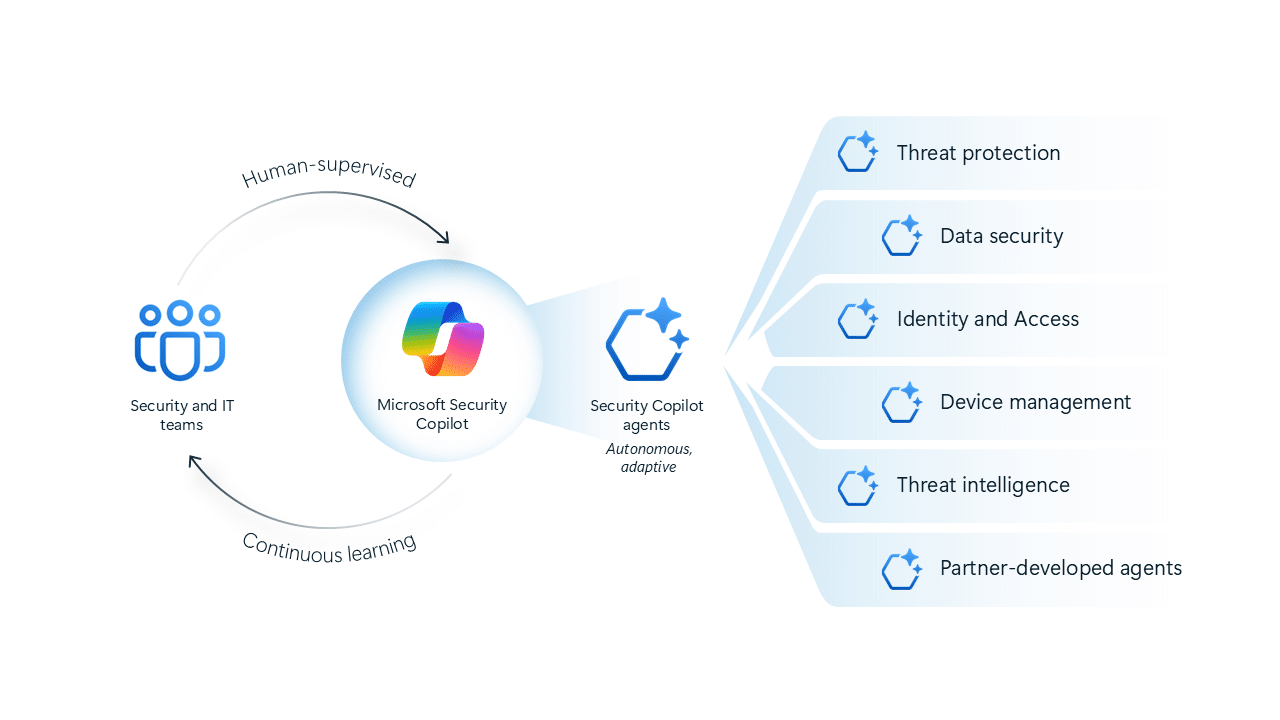
Microsoft has introduced Effective Settings reporting to Microsoft Defender for Endpoint, launching in March 2026. This feature allows Security Admins to see the actual security policies enforced on each device, rather than relying solely on intended configurations.  

Key Features of Effective Settings 

  • Actual configuration visibility: displays the security settings enforced on a device, including antivirus, attack surface reduction (ASR) rules, and any exclusions.  
  • Source tracking lets you see whether Intune Group Policy (GPO) or a local setting is controlling each policy.  
  • Conflict resolution: identifies when different sources try to set a policy but fail, and helps you troubleshoot conflicts more easily.  
  • Centralized reporting column: find this feature in the Microsoft Defender portal under Device Inventory. Go to Configuration Management, then the Effective Settings tab.  

Benefits for Security Teams 

  • No guessing: admins can confirm security policies are applied, reducing risks.  
  • Easy troubleshooting: see exactly why a setting may not work.  
  • Accurate, real-time data replaces outdated policy info.  

This feature bridges the gap between intended and actual policy enforcement, especially in mixed environments, using GPO, Intune, and Configuration Manager.  

In addition to Effective Settings, recent updates to the Microsoft Defender portal offer new ways for security teams to view and manage critical files and data.  

Microsoft has significantly improved configuration and vulnerability reporting features.  

Microsoft now makes it easier to track release notes and platform updates.  

This month, Microsoft introduced new features and improvements for Microsoft Defender for Endpoint. These updates boost security, visibility, and management options for businesses.  

Microsoft is previewing a new library management feature in the Defender portal. With this feature, security analysts can now view and manage files and scripts used during live response. The preview provides a central list of all uploaded files and their details. Analysts can also upload, view, and delete files outside live response sessions.  

The Effective Settings tab, available under Device Inventory in Configuration Management for commercial customers, lets administrators see which configuration values are actually applied, their sources, and helps spot any policy settings that did not apply to reduce security gaps.  

Upgraded Device Vulnerabilities Report Experience 

Microsoft has released an updated Device Vulnerabilities report. The new report no longer includes the section showing vulnerable Windows 10/11 versions over time. It now only provides a device group filter and offers limited historical data. The changes give an immediate, clearer view without waiting 30 days.  

Vulnerable Components Page Renamed To Software Components 

Microsoft has renamed the page previously called “Vulnerable Components” to “Software Components.” This change reflects that Defender Vulnerability Management now covers all software components in an organization, not only those that are vulnerable.  

Finally, there’s a naming update: the “What’s New” page is now “New Features in Windows Defender for Endpoint.” This page features both new features and direct links to the latest release notes. Now, release notes for all supported operating systems appear on a single unified page, making it easier to review updates across platforms, as older pages redirect to this consolidated view.

Source: Microsoft Defender for Endpoint Updates Boost Visibility and Control 

NVIDIA announced GTC, the leading conference on AI and accelerated computing, will be held March 16-19 in San Jose. Over 30,000 attendees from more than 190 countries, including developers, researchers, business leaders, and AI-focused companies, will gather to see how AI is becoming essential infrastructure for a new industrial era.  

GTC is the epicenter of the AI era, said Jensen Huang, founder and CEO of NVIDIA. AI is no longer a single breakthrough or application; it is essential infrastructure. Every company will use it. Every nation will build it from energy and chips to infrastructure models and applications. Every layer is advancing simultaneously, and you will see it come to life at GTC.  

What To Expect At GTC 2026 

On Monday, March 16, at 11:00 a.m. PT, Huang will deliver the keynote at the SAP Center, outlining NVIDIA’s latest advances across the entire AI stack:  

  • accelerated computing  
  • AI factories  
  • open models  
  • agentic systems  
  • physical AI  

The keynote will set the industry’s direction for the year. It will be available live or on demand at NVIDIA.com; registration is not required.  

GTC will cover the AI stack’s five layers:  

  • Energy   
  • chips  
  • Infrastructure  
  • Models  
  • Applications  

Attendees will learn about the technologies, partners, and jobs relevant to each layer and see how their combination drives major infrastructure expansion.  

1000+ Sessions: GTC will offer sessions on topics such as:  

  • AI factories  
  • large-scale inference  
  • robotics  
  • digital twins  
  • scientific computing  
  • quantum computing  
  • enterprise AI developments  

Highlights include:  

  • hands-on tutorials in AI development  
  • panels for robotics breakthroughs  
  • in-depth discussions of quantum applications  
  • real-world case studies of enterprise AI  

These presentations will cover how to build, scale, and optimize each AI layer and show them working together in practical scenarios.   

Huang will also lead a discussion on Open Frontier Models and Future Directions with leaders from A16Z, AI2, AMP, Coalition, Black Forest Labs, Cursor, Reflection AI, and Thinking Machines Lab.  

The GTC Live Keynote pre-game show starts on Monday, March 16, at 8:00 a.m. PT, featuring industry leaders discussing accelerated computing beyond AI and the five-layer stack behind major infrastructure projects. The ecosystem is needed for worldwide project delivery. This show will be available live online. Notable speakers include:  

  • Perplexity CEO Aravin Srinivas  
  • LangChain CEO Harrison Chase  
  • Skilled AI CEO Deepak Pathak  
  • Open Evidence CEO Daniel Nadler  
  • Mistral AI CEO Arthur Mensch  

In addition to talks, hands-on training and certification will be available. Developers and engineers can build in-demand skills in AI, accelerated computing, networking, data science, and physical AI through:  

  • over 60 hands-on labs  
  • on-site certification opportunities  

Self-paced courses, educator programs, and personalized training consultations will also be available to support workforce growth for the expanding AI infrastructure.  

Startups, investors, and the AI ecosystem:  

  • Over 240 NVIDIA inception startups will showcase technology in Physical AI, robotics, generative AI, and enterprise applications.  
  • There will be dedicated programming for startups and venture capital.  
  • An AI Day with top venture firms and NVentures.  
  • Engagement sessions to connect founders and investors working across every layer of the AI stack.  

Developer and Research tracks at GTC: Developers can learn directly from NVIDIA engineers and partners, and connect with the global community to build the next wave of AI applications. Technical deep dives, CUDA sessions, and infrastructure workshops will cover large-scale model training, inference optimization, and the deployment of AI services across cloud, edge, and sovereign environments.  

More than 150 poster presentations will present cutting-edge research from the global AI community, covering model innovation, robotics, systems, architecture, and new AI applications.  

AI Across Industries and Around the World will transform downtown San Jose into an AI campus across ten venues. Cesar Chavez Park will feature a day-and-night market with food, entertainment, and live programming. The All In! The podcast will host interviews from the show floor on Wednesday, March 18. On Thursday, March 19, Student and Community Day will offer discounted rates to the wider community.  

Recognizing global audiences, GTC will also provide virtual programming with customized regional content through the online session catalog.  

Additionally, GTC features a global lineup of leaders: representatives from organizations that span every layer of the AI industrial system, including cloud platforms, model labs, application developers, and robotics companies, who will share how AI is increasing productivity and driving change across industries.  

Participating Organizations:  

  • Adobe  
  • Agile Robots  
  • Agility AI2  
  • AMP Coalition  
  • Black Forest Labs  
  • Canva  
  • CodeRabbit  
  • Cohere  
  • Cursor Energy Systems  
  • Cursor  
  • Dassault Systems  
  • Decagon  
  • General Motors  
  • Giant Spark  
  • Goggle DeepMind  
  • HuggingFace  
  • IBM Research  
  • IdealWorks  
  • Inception Labs  
  • Johnson&Johnson  
  • Kimmy (Open Parentheses)  
  • Moonshot AI  
  • L’Oreal  
  • Lucid Motors  
  • Magic AI  
  • Meta  
  • Microsoft  
  • OpenAI  
  • Poolside  
  • Physical Intelligence  
  • Reflection AI  
  • Runway  
  • Siemens  
  • Shopify  
  • Snap  
  • Tesla  
  • Together AI  
  • Thinking Machines Lab  
  • Uber Electronic Technologies  
  • Universal Robots  
  • The US Department of Energy  
  • Vention  
  • and others  

NVIDIA Financial Analyst Q&A 

On Tuesday, March 17th at 9:00 a.m. PT, NVIDIA will hold a Q&A session for shareholders and analysts. The webcast will be available at investor.nvidia.com.

Source: NVIDIA CEO Jensen Huang and Global Technology Leaders to Showcase Age of AI at GTC 2026 

Key Takeaways 

  • Amazon is taking a major step to support the power grid and ensure that customers’ power bills will not rise due to data centers by joining the White House Energy Pledge.  
  • We cover all data center energy costs, including expenses for new power resources and grid improvements, ensuring we support local infrastructure without shifting costs to customers.  
  • Since 2020, Amazon has ranked among the world’s largest buyers of carbon-free energy.  
  • Amazon has launched over 700 carbon-free projects and provides more than 40 GW of energy.  

Today, Amazon is proud to have signed the ratepayer protection pledge at the White House. We appreciate the administration’s leadership on this issue. The pledge sets an important standard for protecting customers and supporting responsible, long-term energy partnerships that strengthen the grid and the communities where our data centers are located.  

We build and operate data centers responsibly, covering all costs and investing in new energy sources to strengthen the grid and support local communities.  

These efforts create skilled jobs, generate significant local tax revenue, and support job-training programs, directly benefiting surrounding communities.  

We understand that rising utility costs are a concern for American families. While data centers are often discussed in this context, independent studies show they are actually helping keep rates lower, even as other factors drive costs up.  

When we build data centers, we help upgrade the grid. Meeting growing energy needs helps keep electricity affordable and reliable, and supports economic growth and competitiveness.  

Amazon Contributes To America’s Electricity System 

Amazon fully pays for its electricity and invests in new generation and transmission infrastructure in our communities by working with local partners to meet future demand without passing costs to customers.  

For example, we have participated in utility rate proceedings in Indiana, Missouri, Ohio, Oregon, and Virginia to ensure we protect ratepayers and pay the full cost to serve our data centers. For Amazon, paying the monthly power bill is only part of what it takes to run a data center responsibly. We also pay for additional infrastructure to deliver that power to our data centers, including new transmission lines, substations, and other grid upgrades.  

We use long-term utility agreements, such as minimum demand charges, financial guarantees, and multi-year commitments, to ensure that Amazon covers all data center costs and does not pass them on to households or small businesses.  

Amazon’s Grid Modernization Benefits Local Communities 

At the same time, Amazon’s commitments provide utilities with the capital and certainty they need to invest in major initiatives that serve households, businesses, and local communities.  

  • Recently in Indiana, a collaboration between Amazon and NIPSCO resulted in an agreement expected to provide approximately $1 billion in cost savings to NIPSCO customers over 15 years, while also supporting Project Rainier, an AI compute facility. Additionally, Indiana Michigan Power (I&M) announced rate reductions due to increased revenue from data center growth, which is helping lower local customers’ costs.  
  • In Louisiana, Amazon’s full funding of our new data center campus—covering all energy infrastructure and grid upgrades enhances reliability and ensures no additional costs for SWEPCO customers.  
  • In Mississippi, Entergy’s $300 million grid transformation to cut outages by 50% is funded by Amazon and other large customers, so there is no additional cost for residential customers.  
  • In Pennsylvania, our agreements ensure that Amazon pays for transmission system upgrades, helping local electric utilities lower costs and benefit all energy users without increasing household rates.  

At Salem Township Data Center Campus in Pennsylvania, our investment provides direct financial support for the Susquehanna Nuclear Power Plant, helping ensure ongoing, safe, and reliable energy for local residents with no additional cost to consumers.  

How Amazon is Helping Power America’s AI Future 

The American economy is expanding, driving energy demand across sectors such as advanced manufacturing, transportation, and imaging technologies like AI. This growth highlights our economic strength but requires faster grid modernization. Utilities, regulators, policy makers, and energy providers must collaborate, aided by smart policies, streamlined permitting, and ongoing investment.  

Amazon supports this effort by making long-term energy commitments and investments that strengthen America’s energy future. Since 2020, we have led corporate purchases of carbon-free energy, with over 700 projects providing more than 40 GW of capacity, enough to power over 12 million American homes.  

These projects supply carbon-free energy while creating thousands of local construction and permanent jobs. They bring new energy resources to homes, hospitals, and schools, keeping costs affordable and enabling vital technologies.  

We are also developing the next generation of nuclear power. In Washington, we agreed to develop advanced small modular nuclear reactors (SMRs) capable of providing up to 960 MW of power. We invested in X-energy, a leading U.S. company developing SMRs, to help create over 5 GW of nuclear energy by 2039. We also work with national labs such as Idaho National Laboratory and Lawrence Livermore National Laboratory, using our AI technology to help them develop safer and more advanced nuclear fusion and fusion power.  

A Responsible Way Forward 

By signing the ratepayer protection pledge, Amazon supports affordable, reliable energy for customers, invests in new grid enhancements, builds responsibly, and collaborates to ensure the digital economy benefits all.  

While we continue grid upgrades, more must be done. Outdated transmission lines and permitting delays challenged competitiveness. We urge bipartisan action to support innovation and secure America’s energy edge.  

We invite government, industry, and community stakeholders to support and accelerate the transition to a resilient, modern grid. Taking action now will protect ratepayers, increase infrastructure investment, and secure America’s affordable energy future.

SourceA responsible path forward for America’s energy future 

Meta will invest $600 billion in US Artificial Intelligence Infrastructure projects through 2028, fueling economic growth in 30 states with new data center construction jobs. The company outlines steps to protect regional economies and has joined the White House’s ratepayer protection pledge, designed to shield Americans from negative impacts.  

A recent Meta blog post outlines how investments in XAI could benefit Americans and support affected communities.  

Meta said its AI-optimized data centers and infrastructure are an investment in the future of the American economy. The company believes AI will create skilled jobs, boost productivity, help businesses grow, and support scientific research.  

Meta highlighted how these projects will immediately benefit American workers.  

Meta’s AI projects create construction jobs and long-term roles for electricians, HVAC specialists, server and network technicians, and engineers. The company’s data centers also provide thousands of multi-year-scale trade jobs for steelworkers, pipefitters, electricians, fiber technicians, foremen, and more.  

Meta said it supports billions of dollars in business for American companies that supply products for building and running data centers. The company also offers skills training in these areas to help create future opportunities.  

Meta also said it supports important causes that help American communities. For example, the Meta Data Center Community Action Grant program is an annual initiative that provides direct funding to schools, registered nonprofits, and community organizations in locations where Meta has data centers.  

Meta has joined the federal Red Payer Protection Pledge, committing to cover the full cost of energy and water for its data centers so that consumers are not affected. This pledge increases accountability for large infrastructure projects.  

Amazon, Google, Microsoft, OpenAI, Oracle, and XAI have also signed the ratepayer protection pledge, which is administered by the US government. The pledge is designed to ensure that companies developing infrastructure projects do so responsibly and take financial responsibility for any extra impacts.  

Joel Kaplan, Meta’s chief of global affairs, said on X this week that Meta is proud to support US President Donald Trump’s Red Payer Protection Pledge. He said America is in the middle of the biggest infrastructure boom since World War II, and these projects will support the nation’s economy for years to come. AI projects with the Trump administration are keen to support expanded development and remove possible roadblocks. This is part of the reason why Meta CEO Mark Zuckerberg has been keen to cozy up to Trump and win the President’s trust. During Trump’s second presidential term, Meta has an opportunity to lay the foundation for its next decade of development.  

These commitments support that effort and fit with Meta’s larger goal of developing the next generation of AI systems.

Source: Meta says its AI-optimized data centers support the US economy 

AI updates continue at a rapid pace. Just two days after OpenAI released GPT 5.3 instant for ChatGPT, the company announced an even bigger upgrade, GPT 5.4.  

GPT 5.4 comes in two versions: Thinking and Pro. Both handle complex tasks, but Pro has extra capacity for the most demanding processes, delivering even higher performance than Thinking.  

Both versions are accessible through OpenAI’s Paid API and Codex development tools. GPT 5.4 thinking is included for all paid ChatGPT subscribers, including those on the $20 per month or higher plan, and supports advanced user tasks. By contrast, GPT 5.4 Pro, which offers expanded computational allowances and support for more complex tasks, is available only to ChatGPT Pro users ($200 per month) and enterprise customers.  

ChatGPT free-tier users may temporarily interact with GPT 5.4; however, this occurs only when user queries are programmatically routed to the upgraded model, according to an OpenAI spokesperson.  

The main highlights of this release are efficiency and a new feature. OpenAI says GPT 5.4 uses up to 47% fewer tokens on some tasks relative to earlier models. Even more impressively, the new native computer use mode lets GPT 5.4 users control their computers and run multiple applications via the API and Codex.  

OpenAI is also launching new ChatGPT integrations that let GPT 5.4 connect directly to Microsoft Excel and Google Sheets. This enables in-depth analysis and automated tasks, which could speed up business operations; however, it may also raise concerns about the right quality of job losses, especially after similar tools from Anthropic’s Claude and its Co-Work app.  

According to OpenAI, GPT-5.4 can handle up to one million tokens of context in the API and Codex. This lets agents plan, execute, and verify tasks using a purpose model with built-in advanced AI capabilities in Codex and API. Let control agents control computers and compute multi-step tasks through different apps.  

According to OpenAI, GPT-5.4 can autonomously generate control scripts for leveraging libraries such as play/write and accurately issue mouse and keyboard input events using screen capture data. The organization also cites significant improvements in performance metrics for automated web navigation processes.  

OpenAI shares benchmark results to show that this is anything but a user interface layer.  

In the BrowseCamp evaluation suite, which quantitatively assesses autonomous web navigation and the retrieval of obscured information, OpenAI reports that GPT-5.4 delivers a 17% absolute performance gain over GPT-5.2, achieving an 89.3% success rate, cited as the new performance benchmark.  

For the OS World Verified Benchmark and Assessment of Desktop Environment Navigation through Visual and Peripheral Event Recognition, OpenAI states GPT-5.4 attained a 75% completion rate, up from 47.3% for GPT-5.2 and surpassing the referenced human performance average of 72.4%.  

In the web arena, verified suite GPT-5.4 reports 67.3% aggregate success for DOM- and screenshot-driven commands, compared to 65.4% for its predecessor on the online main-2 web. OpenAI reports a 92.8% success rate for interactions in screenshot-mediated environments.  

OpenAI correlates advanced computer use with enhanced visual recognition and document parsing capabilities. On the MMU Pro Benchmark, GPT 5.4 achieved an 81.2% completion rate absent auxiliary toolkits, compared to 79.5 for GPT 5.2. The model reportedly realizes this metric employing substantially fewer computational tokens per inference.  

On the OmniDocBench test, GPT 5.4’s average error dropped from 0.109 to 0.140 for GPT 5.2. OpenAI also mentions better support for high-quality image inputs with detail levels up to 10.24 million pixels.  

OpenAI positions GPT-5.4 as optimized for persistent multi-phase task automation. According to the model, it functions as an autonomous agent managing workflow state across consecutive operational steps rather than responding to isolated prompts.  

Tool Search and Improve Tool Orchestration 

OpenAI notes that adding every tool definition to prompts increases costs, slows performance, and clutters requests.  

GPT-5.4 introduces tool search in the API. Instead of all tool definitions at once, it gets a list of lists and a search function that fetches full definitions as needed.  

For 250 tasks on scale, MCP Atlas with 36 servers, the tools search cut token use by 47% while maintaining the same accuracy as showing all MCP functions.  

The 47% reduction applies only to the tool search set up in that test. It does not mean GPT-5.4 always uses 47% fewer tokens for all tasks.  

Improvements For Developers And Coding Workflows 

GPT-5.4 combines the coding strengths of GPT-5.3 Codex with better tools and computer use capabilities for multi-step tasks.  

GPT 5.4 matches or beats GPT 5.3 Codex on SWE Bench Pro and responds faster during thinking tasks.  

Codex now offers more workflow controls with fast mode, providing up to 1.5x faster performance on supported models like GPT 5.4, delivering the same model and intelligence just faster.  

OpenAI is releasing an experimental Codex scale playwright interactive for visual debugging and testing of web and Electron apps.  

With GPT-5.4, OpenAI is launching a set of secure AI products for enterprises and financial institutions in ChatGPT. These tools use GPT-5.4 for advanced financial reasoning and Excel-based modeling.  

The main feature is ChatGPT for Excel and Google Sheets, which brings ChatGPT into spreadsheets, allowing teams to build, analyze, and update complex financial models using familiar formulas.  

The suite adds integrations for merging data from sources such as FactSet, MSCI, Third Bridge, and Moody’s, and introduces reusable skills for earnings reviews, comparable analysis, DCF analysis, and drafting investment memos.  

  • comparable analysis  
  • DCF analysis  
  • drafting investment memos  

OpenAI supports its finance focus with an internal benchmark showing model effectiveness rose from 43.7% with GPT-5 to 88% with GPT-5.4 in an internal investment banking test.  

Measuring AI Performance Against Professional Work 

OpenAI Benchmarks Against Real Office Work on GDP While Covering 44 Jobs GPT-5.4 matches or beats professionals in 83% of cases vs. 71% for GPT-5.2. The company also points to improvements in areas where models frequently struggle, such as structured tables, formulas, clear writing, and design quality.  

In an internal test of spreadsheet-modeled modeling tasks, similar to those done by junior investment banking analysts, GPT-5.4 scored an average of 87.5%, while GPT-5.2 scored 68.4%.  

In presentation tests, OpenAI human raters chose GPT-5.4’s presentation 68% of the time over GPT-5.2’s. They noted better design, more visual variety, and improved image generation.  

Improving Reliability and Reducing Hallucinations 

OpenAI describes GPT-5.4 as its most factual model yet and links that claim to a practical dataset: de-identified prompts that users previously flagged as containing factual errors. On that set, OpenAI reports GPT-5.4’s individual claims are 33% less likely to be false, and its full responses are 18% less likely to contain any mistakes compared to GPT-5.2.  

In comments to VentureBeat, early GPT-5.4 tester Daniel Swiecki from Walleye Capital said that on internal finance and Excel tests, GPT-5.4 boosted accuracy by 30 percentage points.  

Brendan Foody, CEO of Mercor, calls GPT-5.4 the best model the company has tested and says it’s now the top performer in Mercor’s Apex Agents benchmark for professional services, with a focus on long-horizon deliverables such as slide decks, financial models, and legal analysis.  

Pricing and Availability 

OpenAI states that GPT-5.4 thinking and GPT-5.4 Pro are available via the API as GPT-5.4 and GPT-5.4, respectively. Pricing is based on usage. GPT-5.4 is built at $30 per 1 million input tokens and $180 per 1 million output tokens. Pricing for GPT-5.4 thinking is not listed.  

It’s also important to know that with GPT 5.4, if your request goes over 227,000 input tokens, you will be charged double the usual rate. This is because the model now supports much larger prompts than before.  

In Codex, the default compaction limit is 272,000 tokens. The higher long context pricing applies only if your input exceeds that amount. Developers can keep prompts at or below 272,000 tokens to avoid the higher rate or choose the compaction limit for larger prompts, which will be billed at the higher rate.  

An OpenAI spokesperson said the API’s maximum output is 128,000 tokens, which is unchanged from earlier models.  

The spokesperson said that GPT-5.4’s higher base rate stems from three main factors:  

  1. It handles more complex tasks such as coding, computer use, deep research, advanced document generation, and tool use.  
  1. It benefits from major research advances.  
  1. It reasons more efficiently using fewer similar tokens for similar tasks.  

They also said that even with the price increase, GPT-5.4 still costs less than other leading models.  

The Wider Shift 

With this release and the follow-up clarifications, GPT 5.4 is described as a model designed for more than just generating answers. It aims to support ongoing professional workflows that require tool coordination, computer interaction, long-term context, and outputs that align with what people use in real-world settings.  

OpenAI’s focus on token efficiency, tool research, native computer use, and fewer user-reported factual errors aims to make agentic systems more practical for real-world use by lowering the cost of retries. Whether it’s a person re-prompting an agent using another tool or a workflow running again after a failed attempt, these improvements help make production systems more reliable.

Source: OpenAI launches GPT-5.4 with native computer use mode, financial plugins for Microsoft Excel, Google Sheets 

Apple has launched the iPhone 17e, but its $599 price tag leaves some wondering if the company will ever deliver a truly budget-friendly phone. With the regular iPhone 17 costing only up to $200 more, is the 17e worth it?   

We’ll help you decide if the iPhone 17E justifies its price. While it offers upgrades over the iPhone 16E, Apple also includes cost-saving features to keep it below flagship-tier pricing. Clarifying these trade-offs can highlight the phone’s real value.  

Double The Storage At No Extra Cost. 

Here are some things we like, with that in mind. Here’s what stands out about the iPhone 17E, along with some drawbacks. Stay tuned for our full review. The iPhone 17E still starts at $599, but we appreciate that Apple doubled the base storage from 128GB on the 16E to 256GB on the 17E without raising the price. This means you now get 256GB for $599, whereas last year you would have had to pay $699 for the same amount of storage with the 16E.  

I often run out of space on a 128 GB phone, so getting more storage at no extra cost is a big deal. It’s rare for a phone company to be this generous, so it’s worth celebrating when it happens.  

MagSafe  

For the first time, every iPhone Apple sells now supports its magnetic wireless charging standard, which is exciting. The main benefit is that max doubles the wireless charging speed, so the iPhone 17E can charge at up to 15 W instead of the 7.5 W limit on the iPhone 16E.  

The magnetic rings on the phone and charger help them align perfectly, making charging more efficient. Less energy is wasted as heat, so your phone charges faster and stays cooler. You can also easily attach the magnetic accessories and stands.  

The iPhone 17E also supports G2 at 15W, so you can use more chargers and accessories, not just Apple-approved ones.  

It’s Available In Pink Now  

One issue with the iPhone 16E and earlier SE models was the lack of color options. Usually, you only get black, white, and sometimes a red version later. Now the iPhone 17E comes in light pink, which is a welcome change. 

Now you can pick a light pink iPhone 17E, a welcome change from previous limited color choices. Additionally, the 17E uses the A19 chip the same as the iPhone 17 which has performed well in tests.  

A More Durable Display 

We haven’t tested the iPhone 17E yet, but if its performance matches the iPhone 17, especially in graphics, it’s promising. The 17E also gets Ceramic Shield 2, claimed to be 3x more scratch-resistant than the previous version.  

The glass is so tough that Jerry Rig Everything, a well-known phone tester, only made light scratches at level 7 on the Mohs hardness scale. Most phone screens scratch at level 5 or 6, so Apple’s new formula is clearly better. This should be a big advantage for the iPhone 17e.   

Does it mean you can skip a screen protector? Maybe not, but if you use your phone without one, you’ll probably have better luck than with the iPhone 16E.  

Reasons to Skip 

$599 is not cheap 

There are a lot of great features here, including the extra storage, but it’s debatable whether this device is still worth $600, especially when you consider that the iPhone 17 offers a whole lot more for an extra $200 and can likely be found on a deal. If you look hard enough, mid-range phones like Google Pixel 10a, Samsung Galaxy A56, and the best cheap phones offer comparable features and performance for under $500.  

Single Camera 

It’s unusual to see a phone with just one camera lens these days, especially for $599. While you do get 2x optical zoom, users interested in taking a variety of photos may miss an ultra-wide camera or macro mode.  

The camera lineup remains unchanged: a 48 MP main camera and a 12 MP front camera. Portraits benefit from subtle improvements in focus and background blur, but day-to-day use will feel mostly the same. Significant camera upgrades are missing this year.  

There Aren’t Many Upgrades 

It shouldn’t be a surprise to anyone that a new phone runs; the experience is more or less identical to its predecessor, while the iPhone 17e offers more noticeable upgrades than the Pixel Xa. It still doesn’t have much new to offer. Typical upgrades like the A19 chipset and MagSafe, but for the most part, it seems to be offering a very similar package to last year.  

We can’t fully compare the iPhone 17e until we test it and complete a review. On paper, Apple hasn’t done much to make the 17e stand out. The iPhone 16e may soon drop in price, so it may be worth saving money on that model before it sells out.  

Outlook 

There are plenty of reasons to be interested in the iPhone 17E, especially if you haven’t purchased a new iPhone in a very long time, compared to the iPhone SE or an older model like the iPhone 13. This phone offers a heck of a lot without many compromises.  

But at the same time, it’s hard to get over the fact that Apple isn’t offering much that’s new, nor is it actually supplying a cheap, good-value iPhone as it did with the iPhone SE series. It may cost less than an iPhone 17, but the iPhone 17e still doesn’t feel like it has enough to warrant the $599 price tag.  

We will only know whether there are more hidden upgrades once we’ve had a chance to fully review the phone.

Source: iPhone 17e: 5 reasons to buy and 3 to skip 

The Buzz 

  • Google’s Pixel 10 series now features Agentic AI, letting Gemini autonomously complete tasks in apps like Uber and Grubhub.  
  • Gemini operates in the background, so users can continue using their phones while intervening or halting its actions at any time.  
  • Previously previewed at the Samsung Unpacked event last week, the feature is now rolling out on the Pixel 10, 10 Pro, and 10 Pro XL. It marks a significant shift from reactive AI assistants to proactive assistants capable of managing multi-step tasks.  

Google has finally delivered on a long-standing AI industry promise: an assistant that actually gets things done for you. With the March Pixel update, the Pixel 10 lineup now includes Agentic AI features, so Gemini can book rides, order food, and handle errands. While you do other things, Google has talked about this kind of integrated computing since the early days of the Assistant, and now it might really work.  

Google is betting that people want AI to do more than just answer questions. They want help with their to-do lists. Gemini can now work independently in supported apps, handling tasks such as ordering groceries and booking rides without constant guidance.  

This feature is a leap from traditional voice assistants. Just tell Gemini to order your usual from Grubhub or book you an Uber home, and it handles the rest in the background while you continue using your phone.  

The Pixel 10 series is the first to receive this agentic AI, starting with Uber and Grubhub.  

What makes this different from earlier assistants is the way supervision works. Google has added safeguards that let users watch or pause Gemini’s actions at any time, which helps build trust in autonomous AI. You are not giving up all control; you are just setting up the AI to help while you monitor this. This strategic launch positions Google to lead as AI competition evolves from simple chatbots to agentic platforms. By responding to industry developments, Google differentiates itself with full integration across its hardware, software, and AI stack. This unified control could give Google a strong advantage over competitors who rely on third-party devices, potentially reinforcing the Pixel as the environment where its most advanced AI capabilities first emerge.  

The small number of supported apps shows that agentic AI has a long way to go. Uber and Grubhub are helpful, but most people use many different apps for daily tasks. Google is starting with partners where it can guarantee things to work well, but the real challenge will be adding support for email, calendars, and more complex tasks across multiple devices. This move is part of Google’s product strategy to give Pixel users early access to advanced AI, differentiating its smartphones in a saturated market. By leading with AI-driven features, Google aims to shift the competitive focus from hardware specs to user experience. This approach follows models set by other industry leaders, but if successful, it could reset consumer expectations of what AI on smartphones should deliver and force rivals to innovate their own solutions.   

Privacy is an important issue here, too. For Gemini to order groceries or book rides, it needs access to your app data, payment details, and personal preferences. Google has to balance making the AI useful with protecting privacy, especially as regulators pay more attention to how AI handles data.  

Official responses from Pixel users show cautious optimism, having experienced the limits of previous assistants. Many hope that Gemini will fulfill AI’s promise, but skepticism lingers. Google’s history includes ambitious features that vanished after lukewarm adoption. 

This is clear Google sees Agentic AI as the next big thing. The company isn’t just making a better assistant; it is trying to change how people use their phones. Whether users really want an AI to handle their errands is still uncertain, but Google’s investment in Google’s Agentic AI rollout is a strategic test for the next era of smartphone assistants, gauging whether users will embrace proactive AI or view it as another fleeting trend. The Pixel-first, limited-app launch allows Google to refine Gemini and gather feedback as it builds a robust digital assistant. Success could position Google as the leader in practical AI-powered devices; failure could risk eroding consumer trust in new features.

Source: Gemini Can Now Order Your Groceries on Google Pixel