




NVIDIA’s new Blackwell Ultra architecture introduces program-dependent launch, enabling preemptive scheduling of subsequent GPU kernels while the current kernel executes. This advancement in the GB300 NVL72 system enhances GPU utilization and throughput for complex AI workloads, such as agent-based AI and advanced reasoning models.  

Highlights Of Programmatic Launch And Blackwell Ultra 

  • The new launch feature cuts GPU idle time between kernels and maximizes throughput for high-performance AI workloads.  
  • The GB300 delivers a 1.5x boost in NVF throughput and doubles the attention task speed compared to standard Blackwell.  
  • The platform targets extended context inference and test-time scalability, supporting agentic systems that require deep reasoning.  
  • Blackwell Ultra supports 800 GB/s networking (Spectrum-X Quantum-X800) and works with NVIDIA Dynamo for large-scale multi-node tasks.  
  • These enhancements are expected to become available through partners in the second half of 2025.  

Blackwell Ultra includes a RAS engine to detect faults and cut downtime, adding reliability and efficiency.  

AI has advanced for years by scaling pre-training with larger models, more data, and greater computing power to achieve new capabilities. Over the past five years, this approach has increased compute needs by 50 million times, but now making smarter systems is about more than just bigger models. The focus is shifting to refining models and enabling them to think.  

Refining AI models with post-training scaling boosts performance and conversational ability. Tuning with domain-specific and synthetic data enables nuanced tech understanding and better inputs. Synthetic data production has no upper limit, increasing demand for post-training compute.  

A new approach called test-time scaling has now emerged to boost AI intelligence.  

Also known as long-thinking test time, scaling dynamically increases compute during AI inference to enable deeper reasoning. AI reasoning models don’t just generate responses in a single pass; they actively think, weigh multiple possibilities, and refine their answers in real time.  

This is moving us closer to true agentic intelligence: AI that can think and act independently to tackle more sophisticated tasks and provide more useful answers.  

Switching to post-training and test-time scaling greatly increases the need for computational resources. For example, the post-training process may require up to 30 times as much computational power as the original pre-training phase when creating custom AI models. Likewise, the long thinking involved in test-time scaling can demand up to 100 times as much computation as a single inference would for solving especially complex tasks.  

Blackwell Ultra NVIDIA GB300 NVL72 

To address these needs, NVIDIA launched Blackwell Ultra, a high-speed computing platform made for advanced AI reasoning. It supports training-time, post-training, and test-time scaling. Blackwell Ultra is built for large-scale AI inference, offering smarter, faster, and more efficient AI while keeping costs down.  

Blackwell Ultra powers the NVIDIA GB300 NVL72 systems. These liquid-cooled rack-scale setups connect 36 NVIDIA Grace CPUs and 72 Blackwell Ultra GPUs, all working together as one large GPU. The system offers an NVLink bandwidth of 130 TB/s.  

Blackwell Ultra delivers even greater AI inference performance for real-time multi-agent systems and long-term context reasoning. Its new Tensor cores provide 1.5 times more AI compute FLOPS than Blackwell GPUs. The GB300 NVL72 offers 70 times more AI FLOPS than the HGX H100. Blackwell Ultra also supports several FP4 formats to improve memory efficiency for advanced AI. Coherent memory per GB300 NVL72 rack opens the door to breakthroughs in AI, research, real-time analytics, and more. It provides the large-scale memory needed to run many large AI models simultaneously, having a high volume of complex tasks from many concurrent users, improving performance and reducing latency.  

Blackwell Ultra Tensor Cores accelerate attention layers twice as fast as the previous Blackwell system. This enables efficient processing of long context lengths, which is vital for real-time AI handling millions of input tokens at once.  

Optimized Large Scale Multi-Node Inference 

Efficiently inquiring AI inference requests across many GPUs is key to keeping costs low and increasing revenue in AI factories.  

Blackwell Ultra uses PCIe Gen 6 and ConnectX-8 800G Super NIC to raise network bandwidth to 800 GB/s.  

With more network bandwidth, NVIDIA Dynamo an open-source inference framework scales AI model services across nodes. It allocates GPU workers dynamically to reduce traffic bottlenecks.  

Dynamo also offers disaggregated serving. This means it separates the context (pre-fill) and generation (decode) steps for large-language-model inference across GPUs. This setup improves performance, making scaling easier and lowering costs.  

GB300 NVL72 supports 800 GB/s per GPU and integrates Quantum-X800 and Spectrum-X networking. It efficiently scales model size, data, and reasoning for AI factories and data centers.  

  • data  
  • reasoning capability  

Summary 

Blackwell Ultra accelerates AI reasoning, enabling real-time insights, smarter chatbots, better analytics, and productive AI agents in finance, healthcare, and e-commerce. Organizations can run larger models and more demanding AI workloads faster and more efficiently, making advanced AI practical in real life.  

Blackwell Ultra products will be available from partners in the second half of 2025, with all major cloud providers and server makers supporting them. See below for more details.


Source: NVIDIA Blackwell Ultra for the Era of AI Reasoning 

Apple has launched the new 14-inch and 16-inch MacBook Pro models with M5 Pro and M5 Max chips. These laptops deliver enhanced performance and advanced AI capabilities. The new CPU features what Apple describes as the world’s fastest CPU core. The GPU now integrates a Neura core l Accelerator in each, along with increased Unified Memory Bandwidth. This delivers up to 4x the AI performance of the previous generation and up to 8x for ML models. These enhancements enable developers, researchers, business professionals, and creatives to leverage AI-driven workflows directly on the MacBook Pro.  
 
The laptops now have SSDs that are up to twice as fast and start with:  

  • 1 TB of storage for the M5 Pro  
  • 2 TB of storage for the M5 Max  

The new MacBook Pro also features the N1 wireless chip, which supports WiFi 7 and Bluetooth 6 for better wireless performance and reliability. Other highlights include:  

  • up to 24 hours of battery life  
  • a Liquid Retina display with Nano Texture option  
  • a range of connectivity options, including Thunderbolt 5  
  • a 12MP Center Stage camera  
  • studio-quality microphones  
  • a 6-speaker sound system  
  • Apple’s intelligence features and macOS Tahoe  

The MacBook Pro is available in Space Black and Silver, with pre-orders starting March 4 and availability beginning March 11.  

MacBook Pro with M5 Pro and M5 Max sets a new standard for Pro Laptops, now up to four times faster than the previous generation, said John Ternus, Apple’s senior vice president of hardware engineering. With Neural accelerators in the GPU, the new MacBook Pro lets professionals run advanced LLMs on the device and unlock features that other laptops can’t match, all while keeping great battery life with faster unified memory and storage. Users can do even more with their work, opening new possibilities and expanding what’s possible.  

Outstanding Performance With M5 Pro And M5 Max 

The M5 Pro and M5 Max chips use Apple’s new Fusion architecture, designed specifically for AI. This approach combines two dies into a single system-on-a-chip, yielding significant performance gains. Both chips have a new CPU with up to 18 cores, including six super-cores featuring the world’s fastest CPU core and 12 new performance cores. This setup is optimized for power-efficient multi-threaded professional tasks and delivers up to 30% faster performance. The M5 Pro is ideal for users with complex workflows, such as coders working on algorithms or photographers managing large image libraries. The M5 Max is built for those who need maximum power, such as engineers running demanding simulations.  

The M5 Pro and M5 Max scale up performance from M5 and use the same advanced GPU design. Each core has a Neural Accelerator. LLM prompt execution is up to four times faster than on M4 Pro and M4 Max. This lets researchers and developers train custom models locally. Creative professionals can use AI-powered tools for editing, music, and design. Both chips also bring up to 50% more graphics performance than M4 Pro and M4 Max. Motion designers can work with complex 3D scenes in real-time. VFX artists can preview effects instantly. The neural engine is now faster and more efficient. Unified memory bandwidth is also higher, enabling advanced workflows such as intensive AI model training and massive video projects. M5 Pro supports up to 64 GB of unified memory and up to 307 GB/s bandwidth. M5 Max supports up to 128 GB of memory and up to 614 GB/s bandwidth.  

The 14 and 16-inch MacBook Pro models with M5 offer:  

  • AI image generation is up to 7.8 times faster than on a MacBook Pro with M1 Pro and up to 3.7 times faster than on a MacBook Pro with M14 Pro.  
  • LLM prompt execution is up to 6.9 times faster than on a MacBook Pro with M1 Pro and up to 3.9 times faster than on a MacBook Pro with M4 Pro.  
  • 3D rendering in Maxon Redshift is up to 5.2 times faster on a MacBook Pro with M1 Pro and up to 1.4 times faster on a MacBook Pro with M4 Pro.  
  • Gaming performance with Ray Tracing in titles like Cyberpunk 2077 Ultimate Edition is up to 1.6 times faster than on a MacBook Pro with M4 Pro.  

The 14 and 16-inch MacBook Pro models with M5 Max offer:  

  • AI image generation is up to 8x faster on the MacBook Pro with M1 Max and up to 3.8x faster on the MacBook Pro with M5 Pro Max.  
  • LLM prompt execution is up to 6.7 times faster than on a MacBook Pro with M1 Max and up to 4 times faster than on a MacBook Pro with M4 Max.  
  • Video effects rendering in Blackmagic DaVinci Resolve Studio is up to 5.4 times faster than on a MacBook Pro with M1 Max and up to 3 times faster than a MacBook Pro with M5 Max.  
  • AI video enhancement in Topaz Video is up to 3.5x faster than on a MacBook Pro with M4 Max.  

Improved Storage Speed and Longer Standard Storage 

The new MacBook Pro achieves up to double the read and write speeds of the previous generation, reaching up to 14.5 GB/s in storage benchmarks. This speed assists professionals handling 4K and 8K video content and large data sets. The M5 Pro includes 1 TB of storage, the M5 Max offers 2 TB, and the 14-inch M5 starts at 1 TB.  

More Reasons To Upgrade 

Upgrade now to the new 14 and 16-inch MacBook Pro with M5 Pro or M5 Max for a serious performance boost over older MacBook Pro models, whether you have Apple Silicon or Intel.  

  • With neural accelerators in the GPU, users upgrading from M1 models will see up to eight times faster AI performance in benchmark workloads.  
  • Exceptional Battery Life: The new MacBook Pro delivers up to 24 hours of battery life, giving Intel-based upgraders up to 13 additional hours and users coming from M1 models up to 3 more hours, so they can get more done on a single charge. Unlike many PC laptops, the MacBook Pro delivers the same incredible performance whether plugged in or running on battery power. Users will be able to fast-charge up to 50% in just 30 minutes with a USB-C power adapter rated at 96 W or higher.  
  • Upgraders will enjoy the Liquid Retina Pro Display, which offers 1600 nits of peak HDR brightness, up to 1000 nits for HDR content, and a Nano Texture option. The new MacBook Pro offers a range of connectivity options, including: three Thunderbolt 5 ports for fast data transfer, HDMI with support for up to 8K resolution, an SDXC card slot for quick media input, MagSafe 3 for fast charging with M5 Pro, You can connect up to two high-resolution external displays, each with M5, up to 4, giving you the flexibility to set up a larger workspace.  
  • Thanks to the Apple M1 chip, Wi-Fi 7, and Bluetooth 6, you get better performance and more reliable wireless connections.  
  • The new MacBook Pro features a 12MP Center Stage camera with desk-view support and studio-quality microphones, so you’ll look and sound your best on calls. You’ll also enjoy an immersive six-speaker sound system with special audio support.  

An Outstanding Experience With macOS Tahoe 

MacOS Tahoe brings new features to MacBook Pro that boost productivity :   

  • Spotlight now makes it easier to find apps and files and take action right from the search bar.  
  • Apple’s intelligence is more powerful and better protects your privacy.  
  • Shortcuts are smarter, letting you use Apple intelligence models directly.  
  • Live translation built into messages, FaceTime, and the phone app helps you communicate across languages by translating text and audio.  
  • Developers can add Apple intelligence features to their apps or use the core models framework for on-device intelligence tasks.  
  • Continuity features include the phone app on Mac, which lets you relay calls from your phone and live activities from your iPhone so you can keep up with live updates.  
  • macOS Tahoe also introduces a new design with Liquid Retina and more ways to personalize your Mac, including an updated Control Center with new color options for folders, app icons, and widgets.  

MacBook Pro And The Environment 

The MacBook Pro was designed with the environment in mind and helps Apple move closer to its goal of being carbon-neutral by 2030. It uses 45% recycled materials, including 100% recycled aluminum for the enclosure and 100% recycled cobalt for the battery. Half of the electricity used in its manufacturing comes from renewable sources, including wind and solar.  

The new MacBook Pro is built to last, is easier to repair, and offers strong software support, all while meeting Apple’s standard energy efficiency and safer materials. Its packaging is made entirely from fiber and is easily recyclable.

Source: Apple introduces MacBook Pro with all‑new M5 Pro and M5 Max, delivering breakthrough pro performance and next-level on-device AI

We are acquiring Promptfoo, an AI security platform enabling businesses to identify and address vulnerabilities in their AI systems during development.  

As companies start using AI co-workers in daily work, evaluation, security, and compliance are essential. Businesses need reliable ways to test agent behavior, spot risks before launch, and help clear records for supervision and accountability.  

Led by Ian Webster and Michael DeAngelo, the Promptfoo team has built strong tools. More than 25% of Fortune 500 companies use them. The company also offers a popular open source CLI and library for testing LLM applications. We will continue investing in and supporting the open-source project. Ongoing updates and community involvement will continue. We will also partner to improve enterprise features in Frontier.  

Promptfoo brings engineering to the evaluation, security, and testing of AI systems at scale. Their work helps businesses deploy secure and reliable AI applications. We look forward to integrating these capabilities into Frontier.  

Srinivas Narayan, CTO of B2B Applications, OpenAI  

We plan to expand multiple key features for businesses building agents on Frontier.  

  • Security and safety testing will be built into Frontier. Automated checks will look for risks like prompt injections, jailbreaks, data leaks, tool misuse, and policy violations.  
  • Security and evaluation will be part of the development process. Frontier will work with workflows to quickly spot, investigate, and fix agent risks. Security will be a key part of building and running enterprise AI systems.  
  • Frontier will include built-in reporting and traceability for documentation monitoring and compliance.  

Promptfoo was created to provide developers with practical advice on securing AI systems. This is important as agents connect to real data and systems. Ensuring their security and validation is more important than ever. By joining OpenAI, we aim to accelerate this mission. We plan to bring advanced security, safety, and governance features to teams building AI systems.  

Ian Webster, Co-Founder and CEO, Promptfoo  

We are excited to become the Promptfoo team. We will keep building the secure, reliable AI tools businesses need.

Source: OpenAI to acquire Promptfoo 

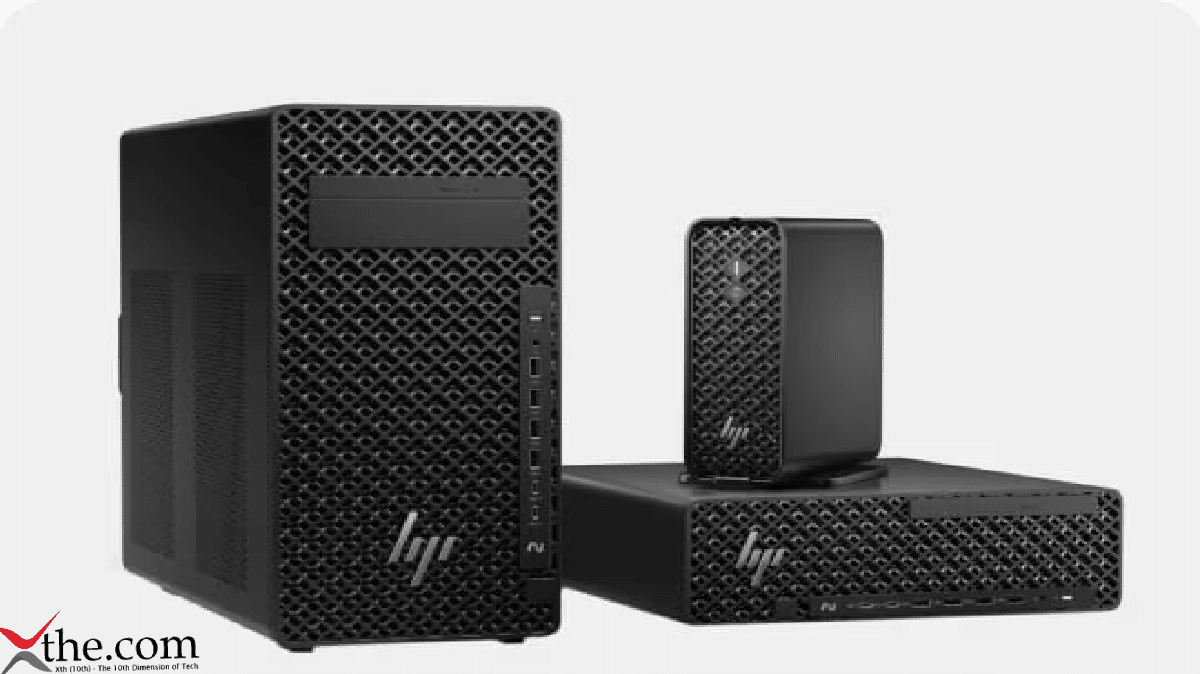
HP has released a high-priority security notice for enterprise administrators and IT managers regarding CVE-2025-31648, a firmware vulnerability affecting many Intel-based workstations. This issue is found in the Intel processor microcode and could allow attackers to gain higher access rights in certain situations.  

As of March 2026, HP launched the final and urgent remediation phase for business-class workstation fleets, including the Zed by HP and Elite series. This alert stresses the need for prompt action and outlines fleet-wide remediation procedures.  

Technical Summary: CVE-2025-31648 

The vulnerability results from improper handling of values in processor microcode during critical system operations. It manifests when the system startup code interfaces with System Management Mode (SMM), a privileged hardware-controlled environment.  

Intel rates the base severity as low due to the attack’s complexity; nonetheless, the risk is grave for secure environments. Failing to act promptly may leave systems exposed: an attacker with privileged local access and deep knowledge of microcode could bypass normal security limits because this is a firmware-level vulnerability. Standard OS-based endpoint detection and response tools cannot detect it.  

Affected HP Workstation Platforms 

HP’s Security Advisory confirms that the vulnerability impacts several generations of Intel-based hardware currently deployed in enterprise fleets:  

  • Z by HP Workstations: Models Spanning the G8, G9, and the Latest G11generations, (including Z2, Z4, Z6, and Z8 Towers).  
  • Elite book and elite desktop series Conover business class systems utilizing 12th through 14th gen Intel Core processors  
  • HPE SimpliVity and ProLiant nodes: certain workstation adjacent server nodes used in Edge compute environments  

The Resolution: Firmware And Microcode Updates 

HPE is fixing CVE-2025-3164A by releasing BIOS and UEFI firmware updates that will include the latest Intel Platform Update (IPU/2026.1) microcode.  

Fleet administrators must follow these steps to resolve the issues:  

Utilize HP Client Management Script Library (CMSL) or Microsoft Endpoint Configuration Manager to audit BIOS versions across the fleet.  

  1. Acquire SoftPaqs: HP has released specific SoftPaq bundles for each affected model. These are available via the HPE Support Site or HPE Image Assistant Tool.  
  1. Validate the Microcode revision after updating. Verify that the Microcode version meets the requirements outlined in Intel Advisory Intel SA-01399.6.  

Strategic Mitigation for Fleets 

In addition to applying immediate patches, HPE strongly urges reinforcing workstation security by enabling these hardware-based features without delay.  

  • Enable HP Sure Start: Ensure the self-healing BIOS feature is enabled to protect against unauthorized firmware changes during updates.  
  • Strict Local Privilege: Because the attack requires a privileged user, enforce a strict least-privileged model at the operating system level to help prevent such attacks.  
  • Implement Secure Boot: Check that UEFI Secure Boot is enabled to keep the system secure from start-up through operating system launch.  

Conclusion:  

Although CVE-2025-31648 is difficult to exploit, it represents a serious breach of hardware trust. Organizations with large workstation fleets must act without delay and update to the February or March 2026 firmware versions. Immediate updates are essential to maintaining long-term system security. 

Source: Intel Processor Firmware February 2026 Security Update 

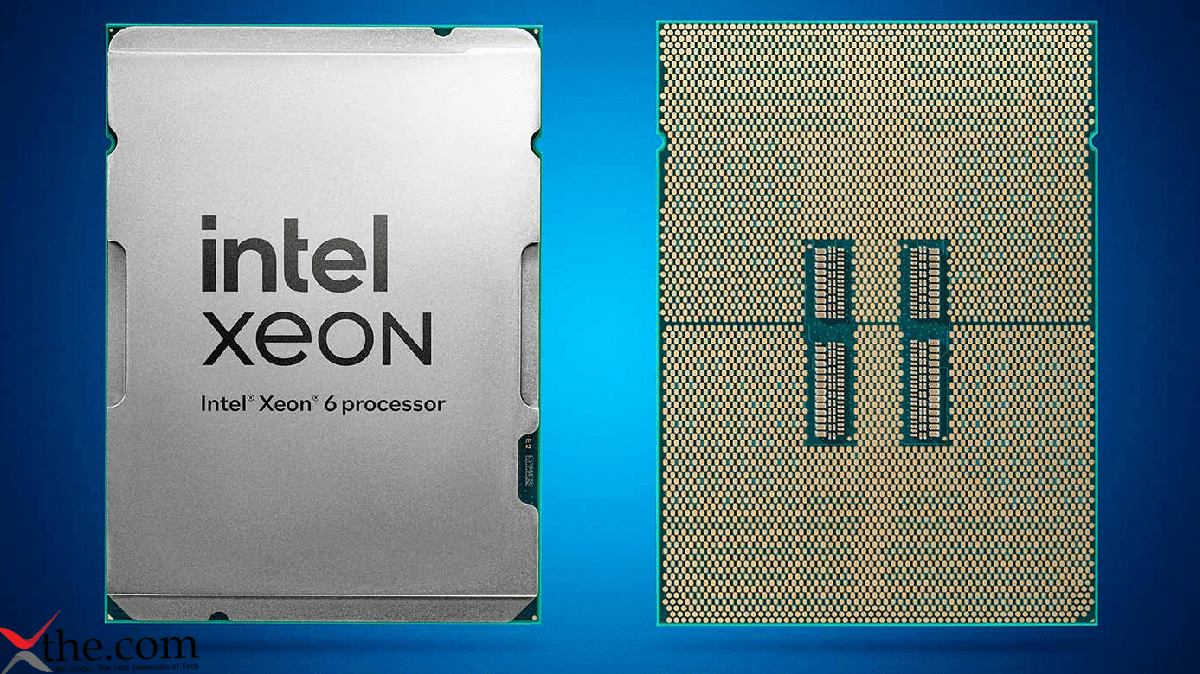
Intel Xeon 6 processors, formerly known as Sapphire Rapids, are architected with enhanced security as a primary design objective. Each single-socket (1S) processor features 136 PCIe 5.0 lanes, surpassing the typical 128 lanes available in competing solutions. The 6700P and 6500P series, introduced in early 2025, target compute-intensive workloads, AI operations, and high-performance computing environments in U.S. research laboratories and enterprise data centers.  

Main Security and Performance Features 

  • Security against firmware and update processes: the platforms integrate seamless firmware update (SFU), enabling updates without system reboots and minimizing operational disruption. Security capabilities include Intel Trusted Domain Extensions (TDX) for Confidential Computing and Software Guard Extensions (SGX).  
  • Optimized High Speed I/O: with 136 PCIe 5.0 lanes on single-socket designs, these processors develop a 6% increase in I/O capacity relative to competing products, supporting enhanced connectivity for NVMe storage, network interfaces, and hardware accelerators.  
  • Integrated AI acceleration: Intel Advanced Matrix Extensions (AMX) support up to 2048 FLOPS for INT8 precision and 1024 FLOPS for BF16/FP16 workloads. This integration optimizes the process of our AI-driven security network analytics and anomaly detection workloads.  
  • Performance and memory bandwidth: The processors support DDR5 at 6400 MT/s and multiplexed rank (MCR) DDR5, offering over 37% higher memory bandwidth than standard RDIMMs.  
  • Self-boot capabilities: Intel Xeon 6 processors can boot independently without a platform controller hub (PCH), enabling an autonomous CPU boot process.  

In research environments, these enhancements deliver significant gains in AI storage performance and in high-throughput, low-latency workloads, utilizing up to 128 cores per socket.  

Telsium 6 processors feature a flexible dual-architecture design with P-cores for chaining tasks and E-cores for scalable, high-density workloads on the same platform. Choose up to 288 E-cores for strong performance per Watt in cloud-native applications, or high core count, high-frequency P-cores for AI and high-performance computing. This architecture separates tasks to optimize both performance and efficiency, delivering up to two to three times better results.  

Intel Xeon 6 P-cores (Performance-cores) 

Intel Xeon 6 processors with P-cores deliver strong performance per core, with more cores, double memory bandwidth, and AI acceleration in every core, offering twice the performance for AI and HPC tasks. These processors outperform general-purpose CPUs on compute-intensive workloads such as AI inference and ML. They are also well-suited for public cloud workloads, with better performance per vCPU for floating-point operations, transactional databases, and HPC with AI inferencing. Intel Xeon remains a top choice for data processing on leading AI accelerator platforms.  

  • AI acceleration is built into every core. Intel AMX boosts inferencing for several model types, letting each core handle up to 2048 floating-point operations per cycle for INT8 and 1024 for BF16 or FP16.  
  • You can increase memory throughput with MRDIMM, which delivers over 37% more bandwidth than RDIMM and reaches up to 8,800 MT/s. Both core types also support DDR5-6400 high-speed memory.  
  • You can use up to 128 cores per socket and up to 504 MB L3 cache with low latency. Intel AVX-512 is available with P-cores to accelerate vector math for HPC and AI workloads.  

Intel Xeon 6 E-Core (Efficient-Cores) 

Intel Xeon 6 processors with Efficient cores are designed for high core density and strong performance per watt. They are especially useful for cloud-scale workloads that need high task-parallel throughput, compared to the second-generation Intel Xeon Scalable processors, which are common in today’s data centers and are good candidates for performance-per-watt upgrades. Intel Xeon 6 processors with e-cores can deliver over 2.6 times better performance per watt. Their efficiency also makes them a good fit for settings with limited power, space, or cooling. Intel Xeon 6 processors with E-Cores can:  

  • Replace 4 servers based on second-gen Intel Xeon scalable processors with just one server while keeping similar performance.  
  • Combine three racks of systems with second-gen Intel Xeon Scalable processors into a single rack.  
  • Support AI inferencing (making predictions using trained AI models) and vector operations using Intel Advanced Vector Extensions (Intel AVX-512), as well as new features like Vector Neural Network Instructions (VNNI, which help optimize AI tasks) and fast convert functionality for lower precision number formats BF16 and FP16.  
  • Provide up to 288 cores per socket, up to 216 MB of L3 cache, and very low latency even with large L3 access sizes.  

Shared Architecture Features 

Compatibility: Both types use the same platform and socket, enabling flexible infrastructure.  

AI acceleration: both have built-in acceleration using Intel Advanced Vector Extensions instructions that improve data processing for AI and Intel Advanced Matrix Extensions/Vector Neural Network instructions (AMX/VNNI, which optimize complex AI computations).  

Security: Both offer advanced security features, such as Intel TDX, for confidentiality. Intel Xeon 6 processors with p-cores and e-cores are efficient because they deliver scalable performance per workload as server workloads increase, with almost linear power and performance across a wide range of workloads. For intensive workloads, this means power is used efficiently to finish tasks faster in cloud or shared computing environments. This efficiency level means servers use only the power they need when busy, helping lower costs when they are not fully used. These processors also support sustainability through system-wide power management and telemetry, which help improve performance per watt in each application and reduce overall energy consumption.  

Source: Intel® Xeon® 6 Architecture – Performance and Efficiency Cores

AMD’s latest ROCm update adds support for new Ryzen APUs and enhances local AI features.  

This consistent progress in ROCm improvements demonstrates how local AI deployment is rapidly gaining power.  

These software advances stem from AMD’s focused efforts over recent years to improve the ROCm stack, particularly for Edge AI. At CES2026, for example, AMD introduced ROCm 7.2.7, which supports the new Ryzen AI 400 Gorgon Point APUs. Building on this, the company has also improved local model performance, which we’ll cover soon.  

In addition to these hardware advances, AMD has prioritized seamless ROCm integration with tools like Comfy UI, an image generation tool that delivers a 5-fold performance increase in ROCm 7. The company has also expanded ROCm support for consumer products, effectively doubling Ryzen and Radeon compatibility over the past year. Together, these moves illustrate how AMD’s software strategy aligns with its consumer objectives.  

Reflecting this increased user base, AMD has introduced smooth integration with the ONNX path for inference and training, targeting Windows AI users and OEMs. Additionally, ROCm is now compatible with PyTorch on Windows, and the Rock software package, an open-source platform from HIP and ROCm. Through these steps, Windows is becoming a key platform for ROCm as AMD drives local AI adoption into the mainstream.  

These technical and strategic improvements now enable local AI inference on consumer hardware to nearly match the quality of cloud-based models. For instance, AMD compared open-source models like GPT running on Ryzen AI Max Plus APUs against cloud-based counterparts. According to AMD, results show that for benchmarks similar to GPQA Diamond and MMLU, local and cloud performances are largely comparable, highlighting how much edge AI has improved through ROCm and new hardware capabilities.  

Source: AMD ROCm 7.2.2 Adds Support for Ryzen AI 400 CPUs & Unlocks Faster Local Inference Performance 

Meta is creating a new Applied AI Engineering Group in its Reality Labs Division to speed up how AI is added to products and infrastructure with a focus on generating revenue quickly. Vice President Maher Saba will lead the team, which reports to CTO Andrew Bosworth. The group aims to connect research and product development through a flat structure, enabling each manager to oversee up to 50 engineers to move faster.  

Key Details of the Tactical Pivot  

  • Purpose: The goal is to make AI models faster and more efficient using real-world information and feedback. Meta aims to create a cycle in which models continually improve across social platforms, smart glasses, and Meta AI.  
  • The group comprises two teams: One develops internal tools and interfaces. The other manages data pipelines, model evaluation, and oversight.  
  • The Applied AI team will collaborate with the Meta Super Intelligence Lab, led by former Scale AI CEO Alexander Wang, to accelerate the development of models such as Avocado for text and Mango for images and video.  
  • This shift prioritizes immediate AI monetization, using data to improve ad targeting and engagement across Meta’s platforms, as well as to support AI-powered wearable products.  
  • This pivot comes after Reality Labs’ major losses and aligns with Meta’s planned significant AI computing investments for 2026, marking a shift from metaverse to AI-powered wearables.  

This reorganization demonstrates that AI will drive all of Meta’s future products.  

On January 14, Meta laid off more than 1000 employees from its Reality Labs division. This is about 10% of its workforce. The layoff is part of a shift away from VR and metaverse projects. Meta will now focus on AI, Power Variables, and several VR game studios will be closed immediately as a result. The company is making these changes to address Reality Labs’ losses, which have topped $70B since 2021.  

On January 14, Meta announced a major shift in direction, laying off over 1,000 employees in its Reality Labs division as it moves away from its Metaverse focus. The cutback signals a clear transition within the company from Metaverse to AI-powered wearables and mobile technology initiatives.  

Workforce Reduction Details 

The layoffs affect about 10% of Reality Labs’ staff, with a spokesperson stating they are part of a broader plan to re-evaluate resources.  

This is part of that effort. We plan to reinvest the savings to support the growth of wearables this year. The spokesperson told Bloomberg the company had previously indicated this tactical shift in December.  

Strategic Change From VR To Wearables 

This represents a significant change from Meta’s previous Metaverse focus, which began during the pandemic and led to the rebranding from Facebook to Meta in October 2021. Reality Labs has since lost more than $70B.  

In an internal memo, CTO Andrew Bosworth said Meta wants to be more eco-friendly by moving its Metaverse investments towards mobile devices and cutting back on virtual reality spending. In December, the company had already announced plans to focus more on wearables than on the Metaverse.  

Gaming Operations Severely Impacted 

The restructuring has hit. Meta gaming plans are leading to the immediate shutdown of several VR gaming studios. The studios closed are Armichag, Sanzuru, and Twisted Pixel.  

The VR fitness app Supernatural will keep supporting its current features. However, new content and updates are on hold. Despite the closure, Tamara Sciamanna, director of Oculus Studio, stressed in an internal memo that gaming is still important to the company.  

Gaming remains the cornerstone of our ecosystem. With this change, we are shifting our investment to focus on our third-party developers and partners. This will guarantee long-term sustainability, she reportedly wrote.  

Previous Personnel Changes 

This is the latest round of job cuts at Reality Labs in April 2025. Meta also laid off staff working on the VR fitness game Supernatural. It did not share how many people were affected.  

This restructuring marks Reality Labs’ biggest step back from Metaverse projects. Meta is reallocating the Divisions’ resources as it pursues opportunities in the AI wearables market while seeking greater economic stability. 

Source: Meta Platforms Cuts Over 1,000 Reality Labs Jobs as Company Pivots from VR to AI Wearables

Quickly deploy a pre-configured OpenClaw instance with one click using an Amazon Lightsail Blueprint. Available in the US and other AWS regions, OpenClaw is an open-source, self-hosted AI agent for private use.  

How To Deploy With One Click 

Follow these steps in the AWS Lightsail console to set up OpenClaw.  

  1. Log in to your Amazon Lightsail account.  
  1. Go to Instances and select Create instance.  
  1. Choose your region and availability zone (e.g., US East or West)  
  1. Select the Linux/Unix platform.  
  1. Select the OpenClaw Blueprint option.  
  1. Pick your instance plan. Choose 4GB memory if available.  
  1. Name your instance. Create an instance to launch.  

Key Features 

  • Deploy privately to control your data and privacy.  
  • The Lightsail instance has built-in security sandboxing for isolation and easy HTTPS access.  
  • Default integration with Amazon Bedrock provides access via a post-deployment script in AWS CloudShell.  
  • Recommended security practices, including: keeping the OpenClaw gateway closed to the Internet, generating your own SSH keys, applying patches promptly, and regularly rotating authentication tokens  
  • Connect your AI assistant to Telegram, WhatsApp, and Discord.  

We are excited to share that OpenClaw is now available on Amazon LightSail. You can quickly launch an OpenClaw instance and connect it to your browser using AI features, and even link messaging channels if you want. Each LightSail OpenClaw instance comes ready with Amazon RedRock as the default AI model provider. After setup, you can start chatting with your assistant immediately. No extra configuration is needed.  

OpenClaw is an open-source, self-hosted AI agent that serves as your personal assistant on your own computer. Access OpenClaw in your browser to connect with messaging apps like WhatsApp, Discord, or Telegram. It manages emails, browses the web, organizes files, and more, not just answering questions.  

Many AWS customers have asked about running OpenClaw on AWS. Some have even shared blog posts about setting it up on Amazon EC2 instances. From my own experience installing OpenClaw on my home device, I found the process challenging and encountered security issues, including the need for strong SSH key management, secure network configuration to limit exposure, and promptly applying software security updates to protect sensitive data.  

Set up OpenClaw on your cloud easily and securely with Amazon Lightsail.  

Each Lightsail OpenClaw instance includes pre-configured security features such as session sandboxing.  

  • device pairing for approved device access  
  • automatic configuration backups  

You can securely access the dashboard in your browser with a single click. By default, OpenClaw uses Amazon Bedrock, but you can switch models or connect to Slack, Telegram, WhatsApp, or Discord.  

Amazon Lightsail is available in 15 AWS regions worldwide. Regions include:  

  • US East (Northern Virginia)  
  • US West (Oregon)  
  • Europe (London)  
  • Asia-Pacific (Tokyo & Jakarta)  

See Amazon Lightsail Documentation for the full list of regions. Go to the Lightsail console for pricing and more info. Check Lightsail pricing and Quick Start Documentation. 

Source: Amazon Lightsail now offers OpenClaw, a private self-hosted AI assistant 

Get started with OpenClaw on Lightsail

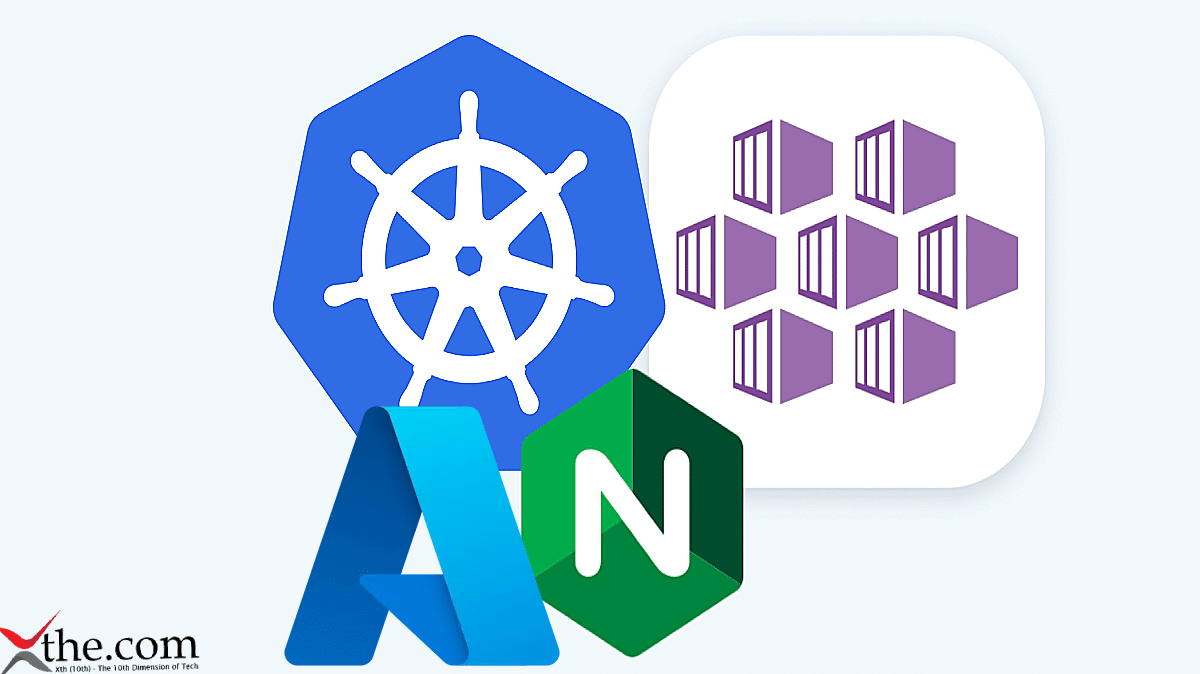
Microsoft will retire the managed Nginx Ingress with Application Routing Add-on for Azure Kubernetes Service on November 30, 2026, after the Kubernetes community’s decision to end support. The open-source Ingress Nginx controller support ends in March 2026.  

Key Dates 

  • March 2026: The Community Ingress NGINX project will be retired and no longer receive updates or security fixes.  
  • On November 30, 2026, Microsoft will end support for the NGINX Ingress Controller in Application Routing. Until then, only critical security patches will be provided.  

Migration to Gateway API 

Migrate to Kubernetes Gateway API alternatives. Gateway API provides stronger, more flexible L4 and L7 traffic management than the Ingress API.  

Microsoft offers several supported alternatives and migration options:  

  • Application Gateway for Containers is a managed Layer 7 load balancer for containers. It supports Gateway API and Ingress API.  
  • Microsoft is developing a new gateway API-based application for routing add-on.  
  • If using a service mesh, consider the Istio add-on.  

Action Plan 

  • Assess your progress: Check whether your AKS clusters use the community-maintained NGINX Ingress Controller or the NGINX Application Routing Add-on. Read the Microsoft LAM documentation to understand your migration paths to a supported platform.  
  • Develop a migration timeline. Allocate resources and test the new solution in a non-production environment. Document changes and notify stakeholders. Migrate early to avoid security risks.  

Kubernetes SIG Network and the Security Response Committee are announcing that Ingress Nginx will be retired to help keep the ecosystem safe and secure. We will provide best effort maintenance until March 2026. After that, there will be no more releases, bug fixes, or security updates. Existing Ingress Nginx deployments will continue to work, and the installation files will remain available.  

We strongly recommend that users begin migration to alternatives as soon as possible to ensure continued security and support. Gateway API is the modern replacement for Ingress and is a good option to consider. If you need to keep using Ingress, you can find other Ingress controllers listed in the Kubernetes documentation. Read on for more details about Ingress, NGINX’s history, current status, and next steps.  

About Ingress NGINX 

Ingress directs network traffic to Kubernetes workloads. Gateway API now handles similar tasks. Using Ingress requires a controller. Choose among controllers by user and cloud compatibility.  

Ingress NGINX, created early in the Kubernetes project, became popular for its flexibility and features and is widely deployed across Kubernetes platforms.  

History and Challenges 

The wide range of features in Ingress NGINX has made it hard to maintain. As expectations for cloud-native software have changed, some features that were once helpful are now seen as security risks. For example, allowing users to add any NGINX configuration via snippets and annotations is now considered a serious flaw. What was once flexible has become technical debt too difficult to manage.  

Not enough maintainers supported Ingress NGINX. One or two people kept it running, mostly in their free time. Last year, maintainers announced plans to shut down Ingress NGINX and build a replacement for the Gateway API. The announcement did not attract new contributors. IN-GATE, the planned replacement, is also being retired.  

Current State and Following Steps 

Right now, Ingress NGINX is only receiving best-effort maintenance. SIG Network and the Security Response Committee have tried everything to secure additional support and keep Ingress NGINX running. To keep users safe, we have decided to retire the project.  

In March 2026, we will stop maintaining Ingress Nginx and retire the project. After that, there will be no more releases, bug fixes, or security updates. The GitHub repositories will become read-only but will stay available for reference.  

Current Ingress Nginx deployments will continue to work. Project files, such as Helm charts and container images, will still be available.  

To check if you are using Ingress NGINX, run `kubectl get pods -all-namespaces -l app.kubernetes.io/name=ingress-nginx as a cluster administrator.  

We want to thank the Ingress Nginx maintenance team for their hard work and dedication to this project. This Ingress controller has handled billions of requests across data centers and home labs worldwide. Kubernetes would not be where it is today without Ingress Nginx, and we thank the many years of effort that went into it.  

The Security Response Committee urges all Ingress Nginx users to migrate to Gateway API or another controller now. Review alternatives in the Kubernetes docs or through your vendors. 

Source: Ingress NGINX Retirement: What You Need to Know 

Google Cloud is rolling out new features in Semantic Search and AI-driven data tools. Vertex AI Search supports multi-modal search, and Vertex AI Agent Builder now offers better governance when used with Firestone and Vertex AI Vector Search. These tools enable advanced context-aware queries for auditing and content validation.  

Key Components and Capabilities 

  • Vertex AI search and conversation let you build multi-modal semantic search and AI-driven chat agents. These help examine complex data in a complex control auditing setup.  
  • Vertex AI agent builder now has improved governance features, making AI-powered auditing applications more secure and easier to control.  
  • Firestone is a NoSQL document database for storing and syncing data. It can work with Vertex AI Vector Search to support advanced semantic queries.  
  • Bringing these capabilities together unlocks new automation opportunities: quality control checks and information accuracy can now be carried out across both structured and unstructured data.  
  • BigQuery and Cloud Dataflow support live data replication and processing, which is key to keeping records current and easy to audit.  

All of these technologies in the Google Cloud ecosystem enable the development of advanced AI tools for editing and quality control.  

We’re excited to share that the Vertex AI Agent Builder now includes advanced governance features enabled by the Cloud API Registry. With this update, administrators can manage which tools are available to developers right from the Agent Builder console. Developers can also use tools managed by the registry through the new API registry.  

  • Following last month’s expansion of our Agent Builder Platform, we are introducing tools that accelerate every stage of the Agent Life Cycle with new ADK tools and enhanced visual features. Developers can build agents more quickly and with greater flexibility, and expanded agent engine services. Simplified scaling, while new session and memory support ensure smoother, more reliable agent interactions. These improvements help speed development and reduce operational hurdles. See below for more details.  

Together, these enhancements make Vertex AI Agent Builder a single platform for managing the full agent life cycle, making it easier to move from prototype to production. To learn more about the new features, check out the latest documentation and release notes.  

Expanding beyond data tools, Gle-tenant Cloud HSM is now generally available. This standards-compliant, highly available, and scalable HSM cluster gives you full control over your cryptographic keys and sensitive cloud work tools and general applications.  

Have full control over your cryptographic keys and can manage admin credentials using our Google Cloud APIs. Each customer receives a dedicated cryptographically isolated HSM cluster.  

In addition to these security advancements, Security Command Center (SCC) premium pay-as-you-go customers now have access to advanced AI data and compliance security features. These tools, previously available only to enterprise and premium subscribers, include: the AI security dashboard  

  • data security posture management (DSPM)  
  • compliance manager  
  • security graph with graph search and correlated threats  

Integrating these updates, you can now manage new risks from general to AI and autonomous agents by providing integrated, automated protection for all your Google Cloud workloads. You can start a 30-day free trial to try the full SCC premium experience. 

Source: What’s new with Google Cloud – 2025