






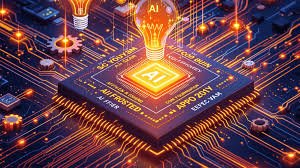
A single commit buried inside an Intel toolchain repository revealed more than routine updates. It referenced an embedded Intel AI compiler, a semiconductor AI automation layer tied to a recent patent filing. That pairing signals a shift in fabrication workflows, where AI agents no longer assist engineers but actively participate in chip design decisions. The implication is immediate: optimization tasks once handled manually may soon be entirely delegated to autonomous systems.
The Hidden Evolution Of Tool Chain Intelligence
Intel’s toolchains have usually relied on predictable processes. Engineers set constraints, ran simulations, and iteratively improved designs. This approach has always needed a lot of human input.
The introduction of AI for chip design changes this sequence. Instead of waiting for engineers to adjust parameters, AI agents can modify design variables in real time. These agents operate at the compiler layer, influencing how code is translated into physical layouts.
This change goes deeper than a simple upgrade. It puts intelligence directly into the execution process. The compiler now acts as both a transistor and a decision maker.
How Embedded AI Compilers Reshape Development
Decision Loops Within Intel AI Compiler Semiconductor AI Automation
The leaked information suggests that AI agents are now part of a recurring compilation cycle. Each cycle checks performance metrics like power efficiency, thermal limits, and signal integrity.
Rather than creating a single output, the compiler now works in a feedback loop:
- It generates a design variant.
- It evaluates performance against constraints.
- It refines parameters autonomously.
This loop keeps running until it meets set goals. Engineers no longer have to rerun simulations by hand for every change.
The presence of fab optimization AI within this loop indicates that decisions extend beyond design. They influence manufacturability as well.
Bridging Design And Fabrication
In the past, chip design and fabrication were largely separate. Design teams focused on logic, while fabrication teams focused on improving yield and process efficiency. AI agents blur this boundary by integrating chip design AI with fabrication constraints. The system evaluates how design choices impact production outcomes.
For example, an AI agent might adjust transistor placement to reduce the likelihood of defects during lithography. This is already happening and shows the kind of cross-domain optimization that embedded compilers can provide.
The Decline of Manual Optimization
When Human Iteration Becomes a Bottleneck
Manual optimization takes both skill and time. Engineers test different scenarios, study the results, and improve designs. While this method works, it does not scale well.
With the Intel AI Compiler, semiconductor AI automation, and increased iteration speeds, AI agents can explore thousands of design permutations in the time it takes a human to evaluate a handful.
This marks a turning point. Manual methods simply cannot match the speed and range of automated exploration.
Risks Of Overreliance On Autonomous Systems
Moving forward, automation brings new concerns. AI-driven decisions can be hard to understand, and engineers might not always know why a certain design choice was made.
The integration of fab optimization AI also raises accountability questions. If a design flaw emerges during production, tracing its origin becomes more complex.
Organizations need to decide how much control they want to keep. Full automation is efficient, but it makes it harder to see how decisions are made.
Strategic Implications for Semiconductor Leaders
Rethinking Competitive Advantage
For years, semiconductor companies gained an edge through engineering talent and unique processes. AI-driven toolchains are changing this situation.
Companies adopting the Intel AI Compiler and semiconductor AI automation can accelerate development cycles. They can also achieve higher levels of optimization across performance and yield.
This puts pressure on the whole industry. Companies that stick to traditional methods risk being left behind.
Investment Priorities, and Organizational Shifts
Switching to AI-driven toolchains takes more than just updating software. It also means changing team structures and how work gets done.
Engineers will move from hands-on optimization to more supervisory roles. They will set constraints, check outputs, and handle exceptions.
The role of chip design AI becomes central. It serves as both a collaborator and an executor, reshaping how engineering teams operate.
Industry-Wide Ripple Effects
Intel’s internal changes rarely stay private. Competitors watch these moves very closely. If AMD’s AI compilers work well, other semiconductor companies will likely follow suit.
This could standardize the use of AI for CAD optimization in advanced nodes. Foundries may begin to expect AI-optimized designs as a baseline requirement.
The impact extends beyond design teams and affects supply chains as well. Faster design cycles can shorten production timelines, influencing everything from sourcing parts to launching products.
The Future of Autonomous Chip Design
The integration of AI agents into toolchains marks a turning point. It moves intelligence to the core of semiconductor development, where decisions carry the most weight.
As these systems improve, finding the right balance between automation and oversight will be key. Engineers will still be involved, but their roles will change.
The future of semiconductor innovation will depend on how well organizations handle this change. Companies that combine human expertise with autonomous systems will lead the industry.








