Nvidia holds about 90% of the AI accelerator market, a number that has been a challenge for AMD during recent earnings calls. This gap sets the stage for AMD to host Advancing AI at San Francisco’s Moscone Center. Chair and CEO Dr. Lisa Su will aim to show developers, hyperscalers, and investors that AMD is closing the gap. The event, starting Wednesday, will focus on silicon, software, and the strength of AMD’s AI strategy.
Why the AMD San Francisco Data Center Push Matters Now
The AMD San Francisco data center showcase arrives at a moment when enterprise AI spending has shifted from experimentation to infrastructure commitment. Companies that spent 2024 and 2025 running pilot programs are now signing long-term compute contracts, giving vendors steady revenue. AMD’s data center business has grown, but Nvidia’s CUDA software and early lead still influence most buying decisions. This event is AMD’s strongest effort so far to show that the open-source ROCm platform and Instinct GPUs are a real, lower-cost option for teams ready to switch.
Attendees will hear from AMD executives and partners like Meta, Oracle, Microsoft, Cohere, and Dell. This lineup shows AMD wants to provide real examples, not just promises. Semiconductor analysts will look for solid deployment numbers instead of just future plans, since unclear commitments have hurt AMD’s stock in the past.
What Analysts Expect From AMD Product Line Updates 2026
The centerpiece of the show is expected to be a detailed look at AMD product line updates 2026, especially the Instinct MI450 accelerator family. Early information suggests AMD will present the MI450 as a direct competitor to Nvidia’s Blackwell and Vera Rubin chips, highlighting memory bandwidth and overall cost instead of just benchmark scores. This approach matters because large data centers care more about power and cooling costs over time than about peak lab performance.
In addition to GPU news, AMD will likely share information about its Zen6-powered EPYC Venice server processors. AMD plans to present its CPUs and GPUs as a matched set, not as separate products. This strategy is similar to what Nvidia has done with its Grace CPU, showing that AMD has learned from its competitor and adapted the approach for its own products.
The Data Center Unit Announcements Analysts Are Watching
Beyond hardware, the AMD data center unit announcements will be about software. ROCm, AMD’s open-source alternative to CUDA, has lagged behind Nvidia in developer tools and library support. Look for updates on inference performance, wider framework compatibility, and possibly new certification programs to make it easier for engineering teams to switch from Nvidia.
Rack-scale infrastructure will also be a key topic. AMD has already previewed its Helios rack-scale AI system, and this event should give a clearer view of how GPUs, networking, and cooling work together in a ready-to-use unit that data centers can order directly. Moving from selling just chips to selling complete systems follows Nvidia’s path and shows that AMD recognizes the market now values full solutions over individual parts.
Instinct GPU Roadmap and Software Ecosystem
The technical sessions are just as important as the keynote. Workshops on ROCm certification, agentic AI deployment, and inference optimization show that AMD is targeting the engineers who choose the hardware, not just the executives who approve purchases. Nvidia’s CUDA platform took over a decade to win developer loyalty, but AMD needs to move faster, making software investment as important as any new chip this week.
Can AMD Compete With Nvidia in the Data Center?
The honest answer is: partially, and unevenly across workloads. AMD competes with Nvidia data center rankings most effectively in inference tasks and cost-sensitive deployments, where the MI450’s memory advantages can translate into fewer racks doing the same job. Training workloads at the largest scale, however, remain Nvidia’s stronghold, reinforced by software maturity that AMD has not yet matched. Enterprise customers evaluating both platforms describe a familiar pattern: Nvidia for cutting-edge model training, AMD as a serious second source for inference and cost optimization.
Being a ‘second source’ is not simply a backup role. Hyperscalers have said publicly and in spending reports that they want a real alternative to relying on just one vendor. AMD’s goal this week is to show it can be that alternative on a large scale, not just in a few cases.
Why This AMD AI Event This Week Carries Outsized Weight
This week’s AMD AI event this week comes at a time when companies are carefully watching how much they spend on infrastructure. Public companies building AI systems are under pressure from investors to show results from their big investments, and hardware vendors who fall short risk losing long-term deals. If AMD can show signed deals with hyperscalers instead of just pilot programs, its data center story could change significantly for institutional investors in the semiconductor industry.
Industry observers are also watching whether AMD expects to announce data center updates that contain details on manufacturing capacity and shipment schedules, since chip announcements without production certainty have disappointed markets before. A roadmap slide is easy to produce; committed wafer allocation at TSMC is harder to secure, and analysts remain parsing Su’s language closely for the difference between the two.
What Comes Next
AMD will not catch up to Nvidia in just one event, and the company knows it. Still, this week can achieve important goals: turning cautious interest from businesses into signed contracts, giving developers a reason to choose ROCm, and showing investors that AMD’s data center business has a real, prolonged growth plan beyond any single product. The presentations in San Francisco will not decide the AI hardware race, but they will influence how much of it AMD can compete in over the next year and a half.
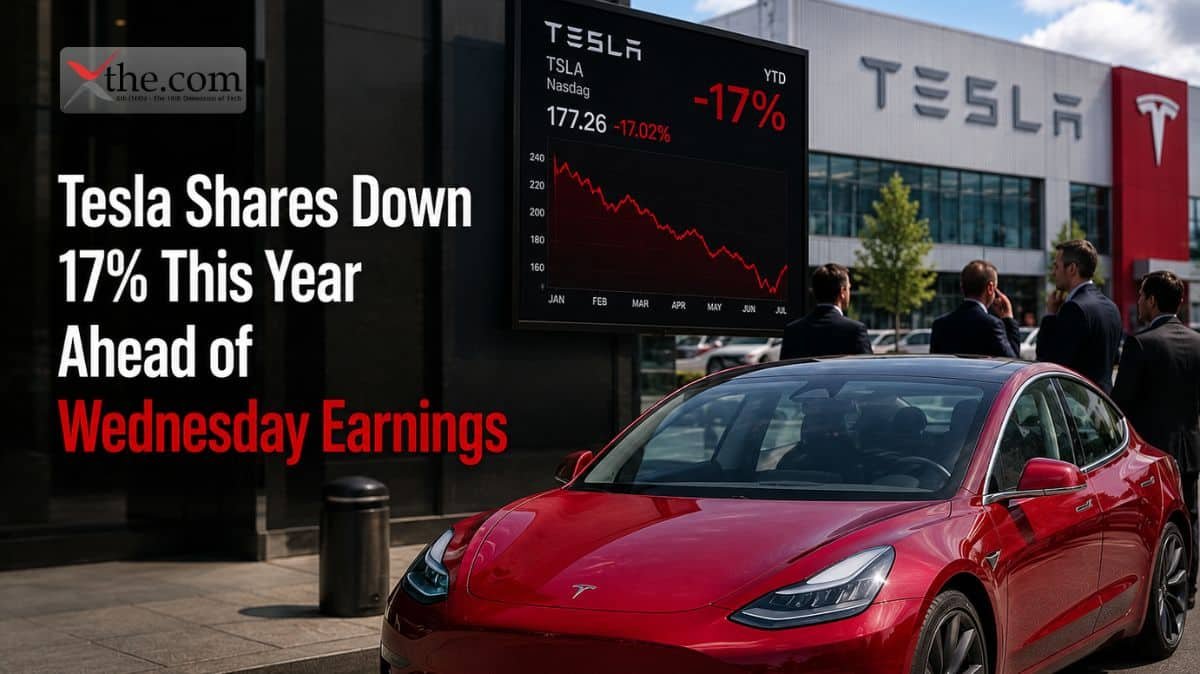
In 2026, Tesla investors have seen billions in market value vanish as the company deals with slower deliveries, tough price competition, and growing concerns about profits. With quarterly results coming after the market closes on Wednesday, Wall Street is weighing whether recent weakness represents a buying opportunity or another warning sign. Tesla shares down 17 percent, Tesla earnings Wednesday preview, and TSLA year-to-date decline have become some of the most closely watched market themes heading into one of the year’s most expected earnings reports.
Tesla earnings Wednesday preview: A Defining Quarter for Investors
This week’s Tesla earnings Wednesday preview comes at an important time. After years of rapid growth, Tesla now faces a more mature electric vehicle market, where keeping up demand means cutting prices and constantly innovating.
The company’s stock has retreated significantly in 2026, with Tesla shares down 17 percent, showing investor concerns over slowing revenue growth, thinner margins, and uncertainty surrounding future earnings. The TSLA year-to-date decline also emphasizes broader skepticism about whether Tesla can simultaneously defend market share and preserve profitability.
Many analysts are still confident in Tesla’s long-term technology leadership, but investors now want proof that the company’s big projects will actually deliver significant financial results.
Why Tesla shares down 17 percent this year Matters Beyond the Stock Price
The fact that Tesla shares down 17 percent this year is beyond just a short-term dip. It points to several continuing issues that have weighed on the company’s value.
At the start of 2026, Tesla faced weaker global demand for electric vehicles than many expected. While EV adoption is still rising, competitors have launched many new models in North America, Europe, and China. Established carmakers and new Chinese brands are also cutting prices, so Tesla has to balance making enough cars with keeping its profit margins healthy.
The result has been a Tesla struggled start of year, as investors questioned whether price reductions would stimulate enough demand to offset shrinking automotive gross margins.
Even with these worries, Tesla still brings in more cash than many of its competitors. This financial strength lets the company invest in artificial intelligence, robotics, driverless vehicle technology, and growing its factories.
Delivery Trends Remain the First Test
Perhaps the biggest issue during this Tesla earnings Wednesday preview investors watch is whether delivery momentum has stabilized after recent volatility.
Vehicle deliveries are still Tesla’s key performance measure because they affect revenue, manufacturing efficiency, and investor faith. If deliveries improve, it could show that demand is holding up even with higher interest rates and more competition.
Analysts are also watching how Tesla’s Miami robotaxi launch is going. While it’s still small, this is one of Tesla’s first real-world tests of self-driving ride-hailing. Investors want to hear what management says about customer interest, how much the fleet is used, costs, and plans to expand.
Even minor steps forward could help support Tesla’s long-term story about artificial intelligence, since automated driving technology is a big part of how the company is valued.
Tesla delivery margin watch Takes Center Stage.
After deliveries, the next big question is whether Tesla can stay profitable.
The ongoing Tesla delivery margin watch focuses on whether Tesla can protect automotive margins despite continued pricing pressure across the global EV market.
In the last two years, Tesla has cut vehicle prices several times to stay competitive. These moves have helped sales yet have also squeezed the profit margins that used to set Tesla apart from other carmakers.
The upcoming report may show if better manufacturing, more software sales, and decreased production costs are starting to make up for the lower prices.
Average selling prices across major vehicle models.
Operating expenses related to AI and autonomous driving investments.
Cash flow generation and capital expenditures.
If Tesla’s profit margins hold up, it could reassure investors that the company’s pricing strategy can work in the long run.
AI and Autonomy Continue to Drive the Bull Case
While earnings reports usually focus on cars, many big investors now see Tesla more as an artificial intelligence company than just a carmaker.
That explains why the Tesla earnings Wednesday preview investors watch extends well beyond delivery numbers.
Tesla’s management is expected to give updates on Full Self-Driving software, investments in AI infrastructure, Dojo computing power, and plans for future self-driving vehicles.
These projects are key to optimistic views of Tesla’s value, since software usually brings in much higher profit margins than making cars.
If Tesla’s leaders can show real progress on expanding robotaxi services or making money from AI, investors might be more willing to look past short-term drops in car profits.
On the other hand, if management is vague and doesn’t share clear milestones, it could make investors more doubtful about Tesla’s long-range growth.
Why the TSLA year-to-date decline Hasn’t Changed Every Long-Term Thesis
The current TSLA year-to-date decline shows urgent operational concerns rather than a complete rejection of Tesla’s long-term strategy.
Many professional investors separate short-term earnings challenges from Tesla’s long-term strengths.
Tesla still has several advantages, like its global manufacturing, control over its supply chain, battery know-how, software skills, and a strong brand.
But now, the market wants to see results, not just promises.
That explains why Tesla struggled start of year to remain an important narrative entering earnings season. Investors want evidence that management can convert technological leadership into consistent earnings growth in spite of industry-wide pricing challenges.
Market Expectations Ahead of Wednesday’s Report
As earnings approach, expectations seem fairly balanced.
Optimistic investors say the recent drop in Tesla’s share price already accounts for most of the short-term problems. They think better delivery numbers, more efficient manufacturing, and positive AI news could help the stock bounce back after earnings.
Prudent investors are still worried about shrinking profit margins and slower revenue growth. They believe that even exciting tech updates might not make up for weak financial results if profits keep falling.
This split in opinion is why options markets expect big swings in Tesla’s stock right after the earnings report.
The Tesla report after bell Wednesday therefore carries significance beyond one quarterly report. It may shape investor outlook for the wider EV sector while affecting perceptions of AI-powered automotive businesses.
Outlook
This earnings report comes at a time when Tesla is under close watch, having become the world’s most valuable automaker. With Tesla shares down 17 percent, investors want to see signs that deliveries are picking up, margins are steady, and the company’s AI plans are still on track. Whether management shows better financial results, clearer autonomous driving milestones, or updated guidance, Wednesday’s report can redefine expectations for the remainder of 2026. For both institutional and retail investors, this Tesla earnings Wednesday preview represents far more than another quarterly update—it is a decisive test of whether Tesla can win back confidence after a tough first half of the year.
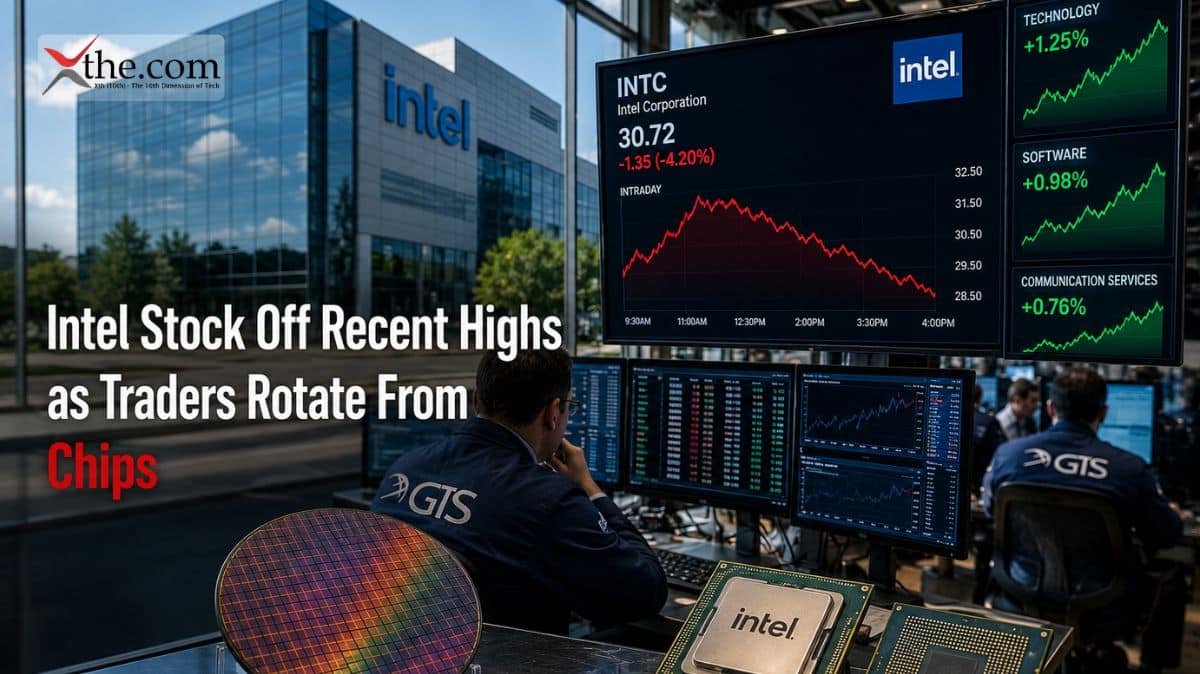
A few weeks ago, investors chased semiconductor stocks with little hesitation. Today, the mood has shifted. Momentum traders have begun locking in profits, valuations face renewed scrutiny, and companies that benefited from the artificial intelligence rally must now prove that earnings can justify elevated expectations. That backdrop explains why Intel stock off highs, despite growing optimism around Intel AI data center growth earlier this year. The latest chip sector rotation traders are watching has turned investor attention from momentum to execution.
Intel Stock Off Highs as Investors Review Semiconductor Valuations
Intel started the second half of 2026 with new momentum. Its stock rose as investors expected more spending on enterprise AI infrastructure and saw its foundry strategy as more credible. However, markets do not always move in a straight line.
The recent decline illustrates a classic semiconductor sector rotation rather than an outright rejection of Intel’s long-term strategy. Investors who aggressively accumulated AI-related names earlier in the year have rotated capital into sectors viewed as offering more attractive short-term risk-reward profiles.
This has left Intel stock off highs even as many of the underlying business catalysts remain intact. The shift shows changing investor psychology more than a fundamental deterioration in Intel’s operating outlook.
Now, Wall Street is asking whether this drop is just normal profit-taking or the start of a longer period of doubt.
Why Chip Sector Rotation Traders Are Taking Profits
Leadership in technology stocks can change quickly. Semiconductor companies have seen big gains from heavy investment in AI computing, but high valuations often lead investors to take profits.
Numerous factors have encouraged chip sector rotation traders to reduce exposure.
Uncertainty about interest rates has made investors pickier about high-growth companies. After big gains in AI stocks, many portfolio managers have shifted money into industrials, financials, and more defensive sectors.
Competition is also heating up. Nvidia still leads in AI accelerators, AMD is growing its enterprise products, and big cloud companies are making their own custom chips, adding more pressure.
Given all this, investors want more than just positive forecasts. They are looking for real results.
Intel Riding AI Data Center Story Faces Its Next Test
Much of Intel’s recent rally depended on Intel riding the AI data center story rather than instant financial performance.
This story was based on a few key developments.
Intel rolled out a more ambitious AI product plan to compete better in enterprise computing. Management pointed to new opportunities in AI servers, networking hardware, and accelerator tech, and stressed improvements in manufacturing advanced chips.
Investors also see Intel’s foundry plans as a possible long-term boost. If Intel can win more outside customers, its manufacturing could shift from being a cost to a real source of revenue.
These themes fueled enthusiasm surrounding Intel AI data center growth during 2026.
However, stories like these need to be backed up by real financial results. Quarterly earnings are when expectations are put to the test.
What the Intel Earnings Thursday Preview Must Deliver
The upcoming Intel earnings Thursday preview represents one of the company’s most important in recent quarters.
Wall Street will pay less attention to the headline earnings number and more to signs that Intel’s strategy is working.
Foundry Customer Wins
The biggest boost for Intel could come from new commercial deals for its Foundry Services.
Investors want to see that big tech companies trust Intel’s manufacturing enough to place large orders. Announcements of major customers would help prove that Intel’s investments can pay off over time.
AI Chip Roadmap Progress
Investors also want proof that Intel is closing the gap with competitors in AI hardware.
News about better accelerator performance, more customer adoption, faster production, and improved software could boost confidence in Intel AI data center growth.
More corporate customers now look for full AI platforms, not merely individual chips. Intel needs to show that its whole ecosystem is getting better.
Margin Stabilization
Profitability is just as important as growth.
Years of heavy investment have hurt Intel’s profit margins, but now investors want to see signs that things are stabilizing. Better manufacturing, careful spending, and a stronger product lineup would show that Intel can manage growth with returns for shareholders.
Margin improvement would strengthen confidence that Intel AI data center growth story fades is not becoming the dominant market narrative.
Is “Intel Stock Off Recent Highs Chip Rotation” Temporary?
The phrase “Intel stock off recent highs chip rotation” sums up how the market feels right now.
Short-term drops often happen after long rallies, especially in tech stocks where expectations run high.
History shows that good semiconductor companies often go through periods of consolidation before leading the market again. Investors look at earnings, execution, and management to tell if a drop is just a reset or a sign of deeper problems.
For Intel, this difference is very important.
If management demonstrates accelerating customer demand, improving margins, and tangible progress in AI infrastructure, today’s weakness could appear temporary. Conversely, disappointing execution could reinforce concerns that recent gains reflected excessive optimism rather than improving fundamentals.
Can Intel Prevent the Story That “Intel AI Data Center Growth Story Fades”?
Investor narratives evolve rapidly.
Earlier this year, enthusiasm centered on Intel riding AI data center story. More recently, skeptics have questioned whether “Intel AI data center growth story fades” will become the main theme for investors.
Intel still has chances to shift that conversation.
Big enterprise AI projects are still growing around the world. Both governments and private companies are committed to boosting computing power for generative AI, research, cybersecurity, and cloud services.
If Intel can win even a small part of these investments and show better manufacturing, investor faith could bounce back fast.
In the end, it’s execution, not hype, that will decide which story wins out.
Investor Outlook
The latest dip does not mean Intel’s long-term recovery plan is in trouble. It just shows that investors now expect more after months of interest about AI and chip growth.
For shareholders, Thursday’s earnings report is more than just another update. It’s a test of Intel’s credibility. Progress with foundry customers, AI products, and profits could show that the recent drop is only a short-term pause, not a sign of lasting doubt.
Semiconductors are still one of the most important parts of global tech. Whether Intel can turn its big plans into real financial results will decide if today’s traders come back as long-term investors or keep searching for AI growth elsewhere.
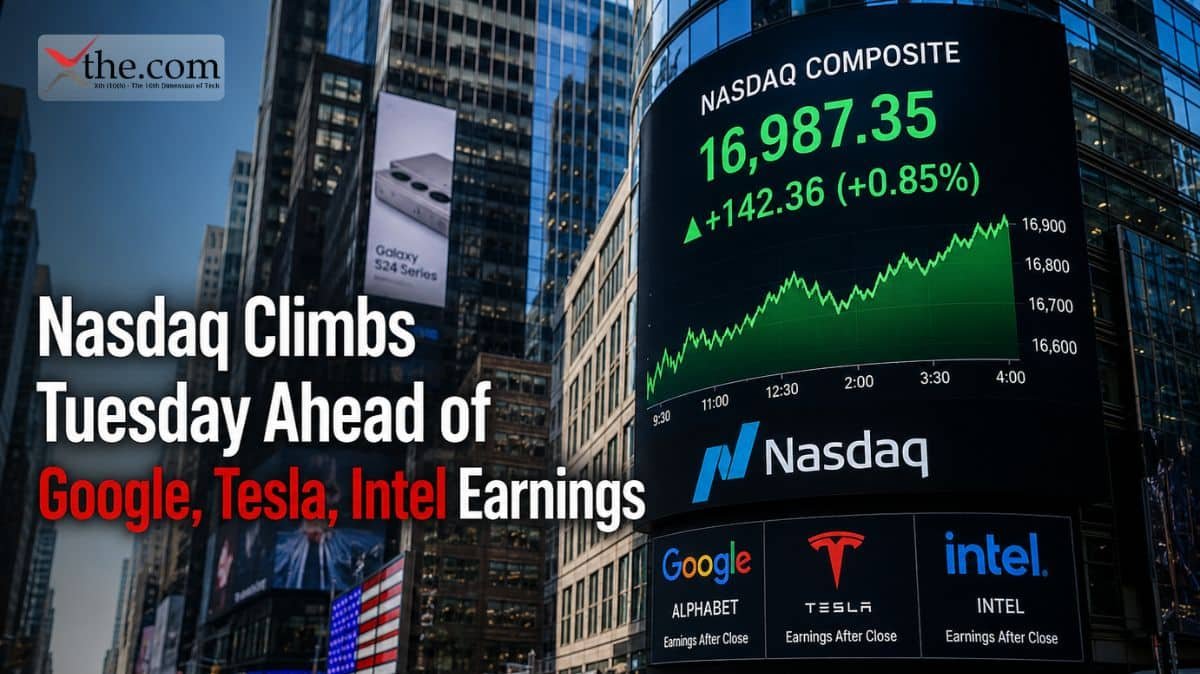
Semiconductor stocks recovered all of last week’s losses in just one day. The Philadelphia Semiconductor Index rose more than 5% on Tuesday, and the Nasdaq climbs Big Tech earnings narrative gained hold as investors repositioned ahead of three of the most closely watched corporate reports of the summer. The Nasdaq Composite ended at 25,837.21, up 329.13 points, or 1.29%, breaking a three-day losing streak. The S&P 500 climbed 0.89% to 7,509.20, and the Dow Jones Industrial Average increased by 385.38 points to close at 52,224.64.
This rally is important because it comes at a delicate time. Chip stocks had been falling for a week due to concerns about high AI valuations and weaker memory demand. Tensions between Iran and the United States also unsettled traders. On Tuesday, investors seemed willing to set aside these worries, at least for now, and focus on what comes next: the tech earnings kickoff July 2026 that begins in earnest Wednesday afternoon.
Big Tech Earnings Season Begins
Big Tech earnings season begins with Alphabet and Tesla reporting their second-quarter results after the market closes on Wednesday, followed by Intel on Thursday. This order is intentional. Wall Street sees these three companies as indicators for how the rest of the “Magnificent Seven” cohort will perform through the rest of earnings season, and the Google, Tesla, Intel earnings week carries outsized weight for a market that has leaned heavily on a small number of mega-cap names to sustain its gains.
The overall picture is positive. By Tuesday, about 66 S&P 500 companies had reported earnings, and nearly 88% beat profit estimates, according to FactSet. General Motors and 3M both exceeded expectations earlier in the day, with 3M shares rising more than 7% and GM up nearly 5%. This drive has set higher expectations for the tech companies reporting later this week.
Google Tesla Report Wednesday: What Analysts Want to See
Google Tesla report Wednesday, and expectations for Alphabet are high. Analysts expect adjusted earnings per share of $2.88, up 24.7% from $2.31 a year ago, and revenue to rise 21.3% year-over-year to $117 billion. Google Search is still the company’s biggest source of revenue, but investors are paying close attention to Google Cloud. The division backlog has grown to $462 billion thanks to strong enterprise demand, and the company recently introduced its eighth-generation Tensor Processing Units, which are custom chips for AI tasks. Alphabet has beaten earnings expectations for 13 straight quarters, and according to Bespoke Investment Group, the stock has typically gained an average of 1.3% on its reporting days.
Tesla’s outlook is less clear. The stock is down about 17% since the start of the year, and options traders expect a move of more than 7% in either direction after the results, which is much higher than the company’s average post-earnings change of 3.23% over the last four quarters. Second-quarter vehicle deliveries were better than expected, helped by demand in China and Europe. However, analysts are still cautious about slower Cybercab production and delays in the robotaxi launch. Tesla’s heavy spending on AI and manufacturing could also lead to negative free cash flow before the end of the year.
Intel Reports Thursday: The Foundry Test
Intel reports Thursday, closing out the week’s marquee reporting slate with a call arranged for 5 p.m. Analysts polled by LSEG expect year-over-year revenue growth of more than 12%, continuing the momentum from a first-quarter report that sent the stock higher. The company’s turnaround has been driven largely by its foundry ambitions and the wider AI data center buildout, though the stock has cooled somewhat as traders rotated out of semiconductors in recent weeks.
Not all the news is good. Susquehanna analyst Christopher Rolland has warned that personal computer production may be much weaker than usual, pointing to worsening memory-chip trends. This raises the main question for Intel’s report: can its foundry business grow quickly enough to make up for a weaker PC market? On Thursday, AMD will also hold its Advancing AI event in San Francisco, where it is expected to announce updates to its data-center products. This will add even more attention to an already busy day for semiconductor news.
Why This Week Sets the Mood
Markets don’t usually move in a straight line, and Tuesday’s gains do not guarantee a smooth ride through the rest of the week. But the fact that the Nasdaq climbs ahead of Big Tech earnings suggests investors are feeling more hopeful than last week’s selloff indicated. If Alphabet records strong results, it could support the idea that cloud and AI spending are still solid, even if other parts of the economy are struggling. But if Tesla disappoints, it could bring back worries about how much money the company can spend before it hurts profits.
These three companies also show how AI investment is affecting different types of businesses: an advertising and cloud leader, a carmaker focused on self-driving and robotics, and a chipmaker working to regain its manufacturing strength. Their results will influence not only their own stock prices but also the bigger story investors follow through the summer.
What to Watch in the Days Ahead
Investors have a clear list of things to watch for on Wednesday and Thursday. For Alphabet, the main focus is on Cloud revenue growth and any news about when AI might start making more money. For Tesla, trends in profit margins and news about Cybercab and robotaxi progress will probably affect the stock more than delivery numbers. For Intel, investors will pay close attention to foundry customer deals and any changes to full-year guidance, especially in light of Rolland’s warning about PC demand.
The Week Ahead
The Google, Tesla, Intel earnings this week storyline will not resolve on its own by Thursday’s close. American Express reports Friday, and the following week brings Amazon and Meta into the mix, extending the test of whether mega-cap technology companies can keep justifying the market’s faith in them. For now, Tuesday’s rally offers a vote of confidence. Whether that confidence survives three days of earnings reports from some of the market’s most consequential companies is the question Wall Street will spend the rest of the week trying to answer.
A single policy announcement can quickly change supply chains, raise import costs, and erase billions of dollars in market value within hours. That reality is back in focus after Greer new tariffs coming, USTR tariff hint July 2026, and Trump global tariff expiration emerged as dominant themes following remarks from U.S. Trade Representative Jamieson Greer. Businesses that depend on international suppliers, exporters concerned about market access, and investors watching global risks are now considering how the next phase of U.S. trade policy might affect prices, inflation, and global business.
President Donald Trump’s administration has already made tariffs a key part of its trade strategy. Now, Greer’s comments suggest that more policy changes could come before the current global tariff rules reach their next deadline.
Greer: New Tariffs Coming as Deadline Approaches.
The latest speculation intensified after Jamieson Greer’s Squawk Box remarks during CNBC’s morning program. Responding to questions regarding a Financial Times report, Greer said he expected “to see some action soon” regarding possible tariff announcements.
The interview immediately fueled discussions about Greer’s new tariffs coming, particularly because it coincided with growing attention on Trump’s global tariff expiration. According to the report under discussion, the administration is considering additional duties targeting dozens of countries new tariffs before the existing tariff structure changes.
Greer did not confirm any particular actions or name which countries might be affected, but his comments made it clear that trade policy is still a top priority for the administration in the weeks ahead.
What the Financial Times Report Suggests
Questions during Jamieson Greer Squawk Box focused on reports that President Trump might put new duties on imports from several trading partners.
The proposal reportedly involves dozens of countries new tariffs, broadening the administration’s current tariff strategy beyond earlier actions that focused on specific nations or industries.
This development also arrives as the 10 percent global tariff expiring deadline approaches. Market participants have been monitoring closely to determine whether the White House would extend existing policies, modify current rates, or introduce an entirely new framework.
Greer did not give a detailed plan, but his comments made analysts more confident that major trade news could come before the deadline.
Why USTR tariff hint July 2026 Matters
The USTR tariff hint July 2026 is important because trade policy affects much more than just customs duties.
Manufacturers who import machinery might see higher production costs. Retailers who rely on foreign suppliers could have smaller profit margins. Agricultural exporters might face retaliation if other countries respond with their own tariffs.
Even companies that do little business overseas often feel the impact through higher shipping costs, changing commodity prices, and currency shifts.
This wide economic impact is why investors pay close attention to every statement from top trade officials. Greer’s comments are not official policy, but markets often see them as signs of what the government might do next.
Greer Hints New Tariffs Coming Soon Raises Business Questions
The phrase “Greer hints new tariffs coming soon” is spreading quickly because businesses need certainty to manage inventory, work with suppliers, and set prices.
For example, an electronics maker importing parts from Asia could see production costs rise even with a small tariff increase. This might force them to renegotiate with suppliers or raise prices for customers.
Similarly, clothing retailers often lock in purchase agreements for holiday inventory months ahead of time. If tariffs alter suddenly, their profit margins can shrink a lot.
If Greer hints new tariffs coming soon, businesses may accelerate imports before any new duties take effect or diversify sourcing toward alternative markets.
Understanding the Trump global tariff expiration
The approaching Trump global tariff expiration stands for more than just a symbolic deadline.
The administration’s existing tariff framework includes a 10 percent global tariff expiring milestone that has attracted close attention from economists and global companies.
As the deadline nears, policymakers have several choices. They could let the current tariffs expire, keep them as they are, raise the rates, or switch to wider tariffs aimed at specific countries.
Greer’s recent comments have made it more likely that the administration will choose more tariffs instead of easing trade restrictions.
Could Trump’s plans for tariffs on dozens of countries expiring Become Reality?
The phrase “Trump plans tariffs dozens of countries expiring” shows that people expect the administration to take new action soon.
No official tariff schedule has been announced yet, but reports say officials are still reviewing many trading relationships.
If Trump plans tariffs dozens of countries expiring, the consequences could extend across numerous sectors, including manufacturing, automotive production, electronics, consumer goods, industrial equipment, and farming.
Financial markets usually react fast to trade policy uncertainty because tariffs affect inflation, company profits, and global investment choices.
Importers might speed up shipments before new tariffs start, while exporters look at possible retaliation from other countries.
Economic Impact Could Reach Beyond Trade
Tariffs almost always impact more than just international trade.
Higher import costs often move through supply chains and eventually reach consumers. Companies then have to choose whether to absorb these extra costs or raise their prices.
Central banks also watch tariff changes closely because ongoing increases in import costs can make it harder to handle inflation.
Investors often rethink which sectors to invest in based on how tariffs might affect them. Domestic companies that compete with imports could benefit from more protection, while global firms relying on international supply chains may face more uncertainty.
That explains why announcements linked to Greer’s new tariffs coming frequently influence equity markets, bond yields, commodity prices, and currency trading within hours.
Businesses Are Preparing for Multiple Scenarios
Company planning teams usually do not wait for official news before taking action.
Many companies are already running scenarios based on possible tariff changes. Procurement teams look for backup suppliers, logistics managers check shipping schedules, and finance teams estimate costs under different tariff situations.
This kind of preparation is becoming even more important as the 10 percent global tariff expiration deadline approaches.
Uncertainty about trade policy also affects investment decisions. Companies may postpone expanding factories or buying equipment until tariff rules are clearer.
For multinational companies working in many regions, even small changes in tariffs might change their sourcing plans for years to come.
Peering Forward
Greer’s comments did not set new policy, but they raised expectations that more trade action may be imminent. With Greer’s new tariffs coming, USTR’s tariff hint for July 2026, and the Trump global tariff expiration coming up, trade policy is once again a key focus for business planning. Whether the administration adds new tariffs on dozens of countries or changes the current rules, the next few weeks will likely affect supply chains, investment plans, and global trade for years. For business leaders, investors, and manufacturers, watching official announcements is now less about politics and more about preparing for real economic changes.
A stock that erased 47% of its value in five weeks does not usually find buyers on the way down. Yet on Tuesday, SpaceX rebounds Tuesday from a fresh record low, gaining roughly 3% and snapping a seven-session losing streak that had rattled even the company’s most patient believers. The bounce followed the company’s disclosure of an August 4 earnings date, which also triggers one of the largest share unlocks in capital markets history.
Still, the relief rally does not erase the deeper story. SpaceX below IPO price remains the headline that matters most to investors who bought into the June 12 debut. Shares priced at $135 in the offering, then rocketed to an all-time high of $225.64 within days as retail and institutional buyers alike chased the year’s most anticipated listing. That premium is now gone. At Tuesday’s session, SPCX traded in the $119 to $126 range, meaning the stock remains below both its IPO price and its post-debut peak even after the bounce.
A Selloff Five Weeks in the Making
Few IPOs in recent memory have swung this hard, this fast. SpaceX’s public offering in mid-June carried outsized expectations: a valuation north of a trillion dollars, a Nasdaq listing that dominated financial television for days, and a shareholder base keen to possess a share of Musk’s rocket and satellite empire. The SpaceX steep selloff recovery now underway tells a more complicated story than the euphoria of opening day suggested.
By mid-July, the stock dropped to $122.13 and then dipped even lower to about $119.68 before turning around on Tuesday. This is a drop of about 47% from the June 16 high, erasing all the gains since the IPO and more. Early SpaceX investor Gavin Baker told CNBC that this kind of drop is normal for a high-profile IPO, saying that things like lockup periods and momentum trading, rather than company fundamentals, explain most of the decline.
The market’s verdict, though, has been unforgiving. SpaceX shares below post-debut highs is not a temporary condition; it has been the daily reality for over a month. Tuesday’s gain, while welcome, does not change the numbers. A shareholder who bought at the IPO price is still underwater. A shareholder who bought near the June peak has lost close to half their position’s value.
Short Sellers Smell Opportunity
Where some investors see a buying opportunity, others see a target. SPCX short sellers’ bearish bets have expanded sharply as the stock has fallen, with bets against the company now representing roughly 32% of available shares, according to CNBC reporting. That is an unusually high level of short interest for a company barely five weeks removed from its public debut, and it reflects genuine disagreement over how quickly SpaceX can translate its Starlink broadband business, launch cadence, and emerging artificial intelligence infrastructure ambitions into consistent profit.
Musk has strongly criticized the short sellers, warning that they will not last if the rebound he predicts happens. Whether he is right will depend a lot on how the company performs in the next two quarters. For now, SpaceX’s financial reports show a mixed picture: the company showed a net loss of $4.28 billion last quarter, a big jump from the previous quarter’s $528 million loss. This highlights just how expensive it is to build satellite networks and new rocket programs.
Why Tuesday’s Bounce Happened
Tuesday’s rebound happened because of a number of factors coming together, giving worried investors a reason to hold on. Cathie Wood’s Ark Invest bought over 170,000 shares across its ETFs, including its main innovation and space funds. Ark has been buying almost every week since the IPO without selling any shares. This kind of steady buying from a well-known institutional investor can help calm the market, even if it doesn’t completely change the trend.
Retail investors felt differently. A Stocktwits poll of over 3,500 traders showed that more than a third were waiting for the stock to drop below $80 before buying more. Overall, sentiment on the platform had become very negative, even as the number of messages increased. This gap between big investors buying and retail investors holding back will be important to watch in the coming weeks, since it suggests the stock’s next move may depend more on investor reactions than on news.
The Analyst Gap
Wall Street’s models have barely budged despite the stock’s collapse. The average 12-month price target across covering analysts sits near $240, according to Koyfin data compiled by financial outlets, implying upside of more than 100% from current levels. Of the analysts tracking the stock, 27 rate it a buy, five rate it a hold, and only one recommends selling. That gap between a $120 share price and a $240 consensus target is unusually wide for a company this closely followed, and it reflects how much weight analysts place on AI compute ambitions in valuation models built around SpaceX’s Starlink network and satellite-based data infrastructure, alongside its traditional launch business.
Jamie Dimon has publicly commented on the company’s long-term potential, even as some advisors now call it a “broken IPO” because the stock dropped below its offer price so quickly. That label makes sense based on the numbers, but it could miss how common this pattern is for high-profile, expensive companies that start out with lots of hype and then get repriced based on fundamentals a few weeks later.
What Comes Next
The next big moment comes on August 4, when SpaceX will announce its first quarterly results as a public company. That day also marks the start of a phased lockup expiration, which will allow up to 911.5 million shares—worth up to $116 billion—to be sold starting August 6. SpaceX set up the unlock in stages to prevent a sudden wave of insider selling, but even a gradual release of this size will challenge demand at current prices.
For now, SpaceX’s rebound on Tuesday after its IPO price drop is more a sign of relief than a real solution. The next earnings report will need to show a clear plan for reducing losses and making money from its satellite and AI-related infrastructure if the stock is going to close the gap between its beaten-down share price and Wall Street’s far more optimistic targets. Until then, SpaceX shares below post-debut highs still remain the more accurate description of where the stock stands, one strong session notwithstanding. Investors who bought on IPO day are waiting to see if Tuesday’s bounce is a real turning point or just a brief pause before the next big test comes with the earnings report.
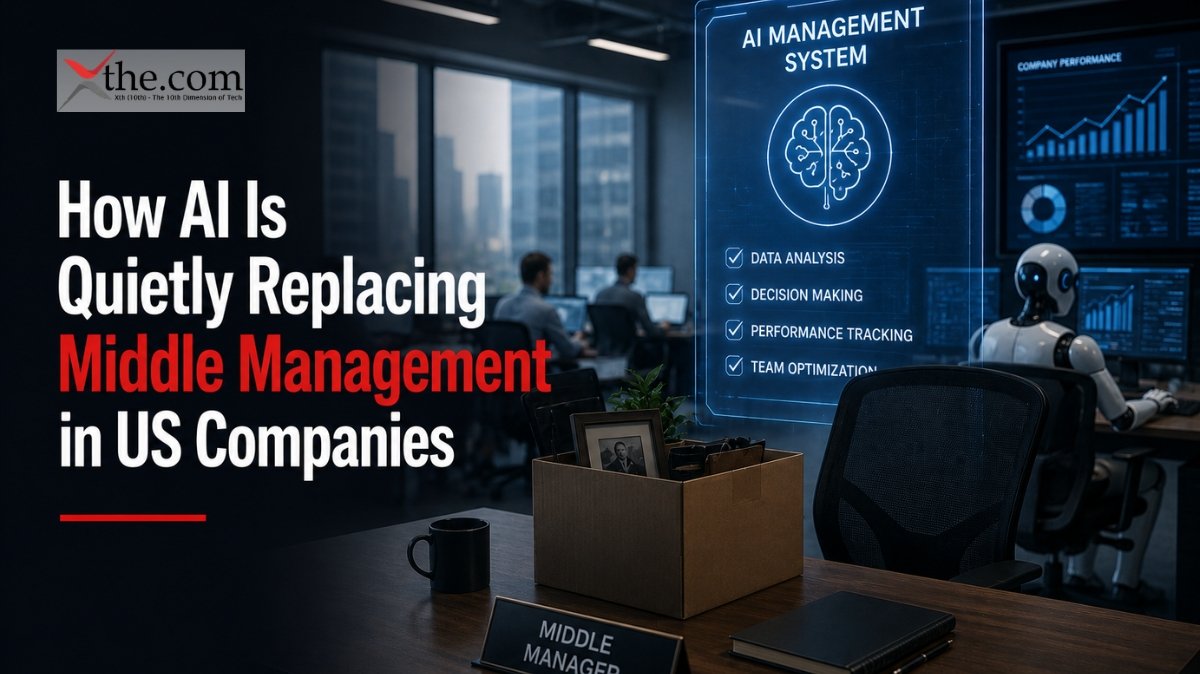
The title of “middle manager” has never been glamorous. But for decades, it was secure. Someone had to sit between the executives making decisions and the employees doing the work — translating strategy into tasks, collecting reports, running check-ins, monitoring progress, and flagging problems before they reached the top floor.
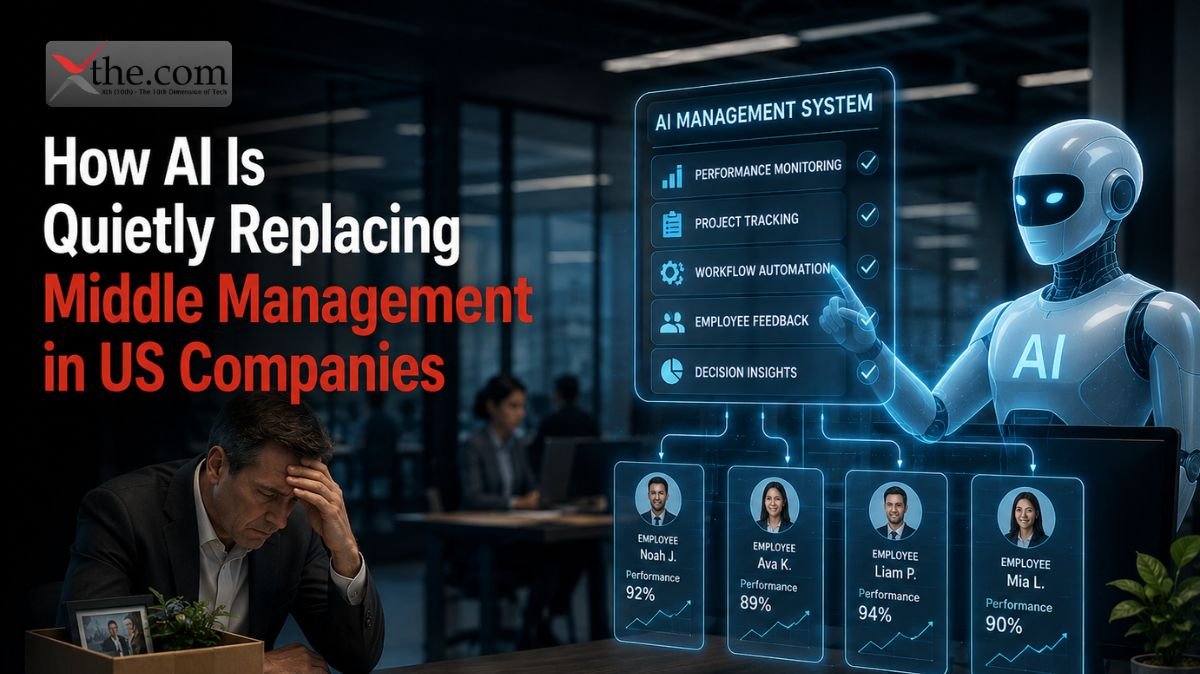
In 2026, AI does most of that. AI replacing middle managers is no longer a prediction — the org charts of major US companies are already changing to reflect it.
This is not a forecast anymore. The layoffs are already showing up in monthly tracking data. The companies restructuring around AI are not startups experimenting with new ideas — they are Amazon, Meta, Google, Microsoft, and Wall Street banks planning multi-year workforce reductions that are heavily concentrated in the management layer. Understanding what is actually happening, and what it means for anyone in or near a middle management role, is no longer optional.
What Middle Managers Actually Do — and What AI Has Already Taken
The honest starting point is understanding the job itself. A typical middle manager’s week, across most industries, breaks down into roughly four categories of activity.
Reporting — pulling data from multiple teams, formatting it into summaries, and presenting it to leadership. AI tools that connect directly to project management software, CRMs, and internal databases now generate these reports automatically, in real time, with more accuracy and zero time spent formatting.
Coordinating — scheduling meetings, assigning tasks, following up on deadlines, making sure the right people have the right information at the right time. Workflow automation tools and AI scheduling systems handle this without a human in the loop.
Reviewing — checking work before it moves up the chain, catching errors, ensuring quality standards are met. AI review tools now do this faster and with more consistency than a human reviewer who is distracted, pressed for time, or unfamiliar with one portion of the work.
Translating — taking executive decisions and turning them into team-level action items. This is the function most dependent on human judgment, and it is also the one AI is advancing into most aggressively through large language models that can interpret strategic direction and generate operational plans.
Research shows that roughly 60% of a typical middle manager’s week falls into these four buckets: reporting, coordinating, reviewing, and translating. AI handles all four. That is the core of what is happening.
The Numbers That Define What Is Actually Happening
This is no longer a theoretical conversation. The data in 2026 is specific and consistent.
Through the first half of 2026, US employers attributed 101,743 announced job cuts specifically to AI — nearly double the total for all of 2025. According to Challenger, Gray & Christmas, AI is now the single most-cited reason for job cuts in America, and has been for four consecutive months.
Gartner predicts that through 2026, 20% of organizations will use AI to flatten their organizational structure, eliminating more than half of current middle management positions.
Middle management positions declined 6.1% between 2022 and 2025, while job openings in this category remain down 42% from their peak.
MIT Sloan’s 2026 AI research shows that in companies deploying agentic AI at scale, span of control — meaning the number of direct reports per manager — has expanded from the historical norm of seven to as high as 15 in some divisions. When one manager can effectively oversee 15 people using AI tools, the math on how many managers a company needs changes dramatically.
McKinsey’s November 2025 report found that demand for AI fluency — the ability to use and manage AI tools — grew sevenfold in job postings between 2023 and 2025, faster than any other skill. The message from companies is consistent: we are not replacing management entirely, we are replacing management that cannot use AI with management that can.
Which US Companies Are Already Doing This
This is not happening at a handful of experimental startups. The companies restructuring around AI-enabled flatter hierarchies are some of the largest employers in the United States.
Amazon cut 14,000 corporate roles in 2025, explicitly citing AI-enabled efficiency as the justification. Workday, Meta, Google, and Microsoft have all publicly restructured to reduce managerial layers in 2025 and 2026.
Wall Street banks plan to eliminate approximately 200,000 roles over the next three to five years, heavily concentrated in middle-layer oversight functions. Goldman Sachs, JPMorgan, and Citigroup have each publicly discussed AI’s role in reducing headcount in roles that involve data analysis, reporting, and compliance monitoring — all functions that middle managers in financial services have traditionally owned.
The pattern is consistent across industries: companies are not announcing “we are replacing managers with AI.” They are announcing efficiency improvements, restructuring initiatives, and headcount reductions in corporate functions. The result is the same — fewer managers, more AI tools, and larger teams reporting to fewer human supervisors.
I Am a Middle Manager. Should I Actually Be Worried?
The honest answer: it depends on what you spend your time doing.
Research shows that 37% of employees report feeling directionless after their company removed middle management roles — which means the human functions of management have real value that AI has not replicated. The companies cutting managers are also discovering, sometimes painfully, that morale deteriorates and performance dips when the human layer disappears without a replacement for its non-transactional functions.
As Dr. Shannon Franklin, a licensed psychologist specializing in organizational behavior, put it: “Middle managers are typically in a position to interpret the emotions related to organizational change for their employees. They provide clarity regarding changes that employees do not understand, allow issues to be addressed before becoming major problems, and can establish an ‘us’ mentality that is difficult for technology to duplicate.”
The middle managers whose jobs are most at risk are those whose primary contribution is information routing — collecting reports, running status meetings, passing decisions up and instructions down. AI eliminates that function directly and completely.
The middle managers whose positions are most secure are those whose primary contribution is judgment, coaching, conflict resolution, and team development — the functions that require reading a room, understanding individual motivations, and making calls that cannot be reduced to a workflow.
The average span of control has grown to 12.1 direct reports, a 50% increase since 2013. Managers handling larger teams have less time for the human functions that justify their existence — which is part of why 45% of middle managers report burnout, higher than any other employee group. The role is being compressed from both sides simultaneously.
The Tasks AI Cannot Do — and What That Means for Your Job
Being clear about what AI actually cannot do well is more useful than generic reassurance about “human skills.”
Reading political dynamics. AI tools do not know that two team members have a history, that a project is politically sensitive for reasons that never appear in documentation, or that a particular executive will respond badly to a specific framing. Experienced managers navigate this constantly. AI does not.
Coaching through performance problems. Telling someone their work is not meeting expectations, understanding why, and creating a path forward is one of the most human and consequential things a manager does. AI can draft a performance review. It cannot sit across from someone and help them understand why they are struggling.
Making judgment calls with incomplete information. When a project has two viable paths and the right choice depends on team capacity, client relationship history, and business priorities that are partially undocumented, a manager makes a call. AI generates options. The responsibility for choosing belongs to a human.
Building the team identity that drives performance. According to Jeff Burnstein, president of the Association for Advancing Automation: “The people who thrive will translate business needs into technology decisions, coach teams through change, and use AI to make better operational decisions.” That is an accurate description of what secure middle management looks like in 2026 and beyond.
What Companies Are Getting Wrong About This Transition
The companies cutting fastest are not always cutting smartest. Several patterns are emerging that are creating problems for organizations that moved aggressively on flattening.
Cutting the human layer before AI is ready to replace it. AI tools for workflow management are strong. AI tools for the relational and judgment functions of management are not. Companies that eliminate managers before establishing what replaces those functions are discovering the gap quickly.
Confusing efficiency with effectiveness. A leaner org chart is cheaper to run. It is not automatically more effective. The 37% of employees who report feeling directionless after management cuts are less productive, less engaged, and more likely to leave — costs that do not show up in the headcount reduction announcement.
Treating middle management as overhead rather than infrastructure. The framing of “flattening hierarchies” presents management layers as bureaucratic waste. In healthy organizations, middle management is the connective tissue between strategy and execution. Removing it without replacing what it does creates a gap that shows up in missed deadlines, miscommunication, and declining morale.
The Middle Managers Who Are Thriving in 2026
Not all middle managers are under pressure. A specific profile is doing well — and understanding it is useful regardless of your current role or industry.
Managers who use AI as a tool rather than competing with it. These are the people who have offloaded their reporting and coordination functions to AI tools and reclaimed that time for coaching, relationship building, and strategic work. They are now doing the high-value parts of management more thoroughly than was possible before, because the low-value parts no longer consume their days.
Managers who develop AI fluency alongside their teams. In organizations deploying AI at scale, managers who can help their teams navigate new tools, identify which AI outputs to trust and which to verify, and adapt workflows to take advantage of what AI does well are indispensable. This is not a technical skill — it is a leadership skill applied to a technical transition.
Managers who build explicit human value. The managers who survive restructuring are typically those whose teams visibly advocate for them, because the relationship has real value that the team can articulate. Building that relationship deliberately — through coaching, consistent communication, and genuine investment in team members’ development — is what makes a manager difficult to remove without consequence.
What Happens to the Teams When Managers Are Cut
The employee experience of management cuts is under-reported compared to the business case for them. The data that does exist is worth understanding.
Research shows 37% of employees report feeling directionless after their company removed middle management roles. Directionless employees are less productive, more likely to disengage, and more likely to leave. In a labor market where replacing an experienced employee costs six to nine months of their salary, the math on cutting management to reduce costs becomes more complicated.
The loss of a management layer also removes a career development path. Entry-level employees in flat organizations often have no visible progression route beyond their current role. Companies that flatten aggressively are discovering that retention problems follow — particularly among high performers who see no room to grow within the structure.
Frequently Asked Questions
1. Will AI completely replace middle managers?
No — but it is replacing specific functions that middle managers have traditionally owned. Reporting, scheduling, coordination, and basic performance monitoring are being automated. Judgment, coaching, conflict resolution, and team development are not. Middle managers who spend most of their time on the first category are at significant risk. Those whose primary contribution is in the second category are considerably safer.
2. Which industries are cutting middle management fastest because of AI?
Technology, financial services, and corporate functions within retail and manufacturing have moved most aggressively. Amazon, Meta, Goldman Sachs, and Citigroup have all made public statements connecting management layer reductions to AI adoption. Industries with high volumes of structured, data-driven management work — compliance, reporting, process oversight — are experiencing the steepest cuts.
3. I am a middle manager and my company just announced an AI initiative. What should I do?
Two things immediately. First, become the person on your team who understands the AI tools being deployed — not as a technical expert, but as the person who helps the team use them effectively. Second, invest deliberately in the relational work that AI cannot do: regular one-on-ones, genuine coaching conversations, and team culture. The managers who survive restructuring are consistently those who are hardest to remove without damaging the team.
4. Does AI replacing middle managers mean fewer opportunities for younger workers to move up?
This is one of the most significant and under-discussed consequences of flattening. Middle management has historically been the first rung on the leadership ladder. As those positions disappear, the path from individual contributor to senior leader becomes less clear and less accessible. Companies that are not actively replacing that development pipeline with alternative paths are building a leadership deficit they will notice in five to ten years.
5. Are the companies cutting managers seeing better performance?
The data is mixed. Cost reductions are immediate and measurable. Performance impacts take longer to surface and are harder to attribute directly to the restructuring decision. Companies that cut management without replacing the coordination and coaching functions are seeing morale and retention impacts. Companies that thoughtfully transitioned management roles to focus on higher-value work are generally reporting better outcomes.
The Honest Assessment
Middle management in its current form — built around information routing, status reporting, and coordination — is being disrupted faster than most people in those roles are prepared to acknowledge. 46% of managers are, according to recent research, in denial about AI’s impact on their roles — a posture that is likely to be expensive.
What is replacing the old version of middle management is not nothing. It is a smaller number of managers who spend their time on higher-stakes work: building teams, making judgment calls, navigating complexity, and helping organizations make sense of what AI is producing. Those roles exist. They are not going away. But they require a different set of daily priorities than the management job of ten years ago.
The companies getting this transition right are not eliminating management — they are redefining what management is for. The companies getting it wrong are cutting headcount now and discovering what was lost later.
For anyone currently in a middle management role, the question worth asking is not whether AI is coming for your job. It is which parts of your job AI is already doing better than you, and what that frees you to do instead.
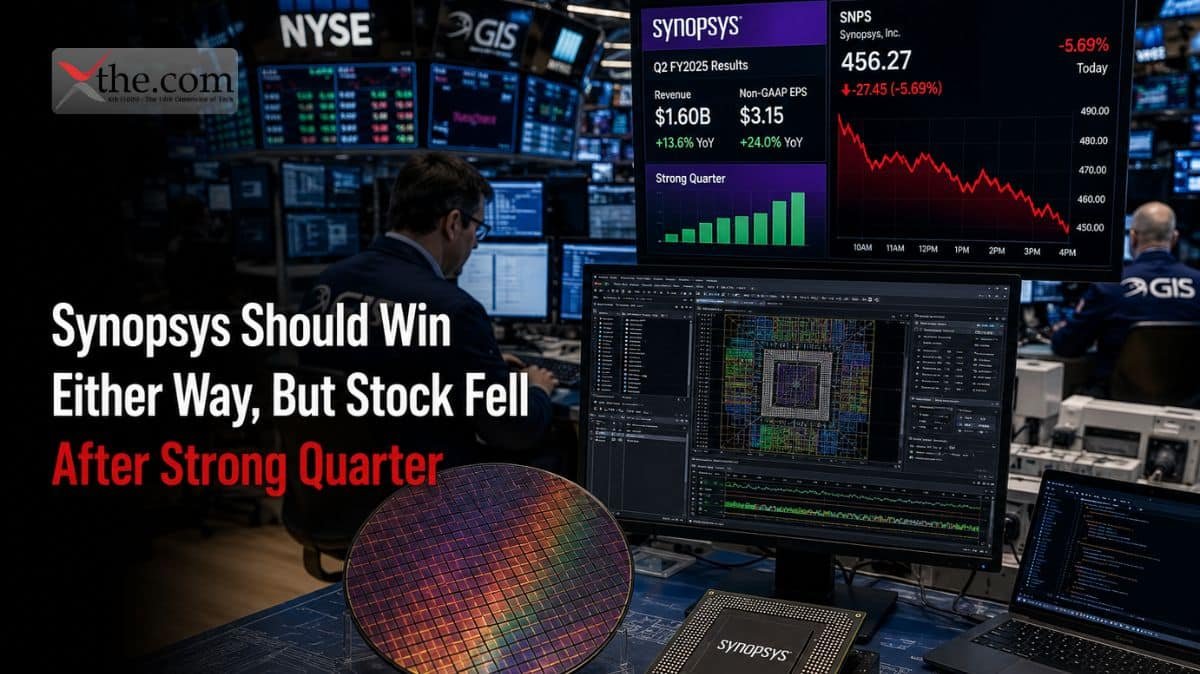
Synopsys delivered a classic beat-and-raise quarter, but the market still reacted negatively. The company reported second-quarter fiscal 2026 revenue of $2.276 billion, topping analyst estimates of $2.25 billion, and non-GAAP earnings of $3.35 per share versus a $3.15 forecast. Management also raised full-year guidance across the board. Yet Synopsys stock fell strong quarter results notwithstanding, sliding roughly 7% to 9% in the days after the May 27 report, leaving the stock down over 20% for the year. For a company whose software powers nearly every advanced chip, this sell-off seems, at first, like investors are ignoring the fundamentals.
The Case That Synopsys Wins Regardless
The bullish argument for Synopsys has always rested on a simple observation: it does not matter which company designs the fastest AI accelerator, because that company almost certainly used Synopsys tools to do it. This is the logic behind Synopsys’s benefits-AI-race-winner framing that dominates analyst notes. Nvidia, AMD, Broadcom, and a growing list of hyperscalers designing custom silicon all license from the same handful of electronic design automation vendors, and Synopsys is the largest of them. Whether the next breakthrough chip comes from Santa Clara or Beijing, the royalty check still gets written to Synopsys.
This is why investors keep saying that Synopsys benefits no matter who wins in AI. Instead of betting on one company, you are betting on the infrastructure that supports them all—like a toll bridge that collects from every car, no matter who is driving.
Synopsys Software Chipmakers Need, Not Optional
Chip design is now far too complex for engineers to do by hand, which is why the phrase ‘Synopsys software chipmakers need‘ is so common in the industry. Modern chips have tens of billions of transistors, and checking these designs before manufacturing requires advanced simulation software that only a few companies can provide. Synopsys, Cadence, and Siemens EDA share most of this market. Changing vendors during a project is costly and risky, giving Synopsys a pricing advantage that most software companies do not have. CEO Sassine Ghazi highlighted this in the earnings release, saying the company had a strong second quarter with solid execution and broad business strength.
So Why Did the Stock Fall?
Here the story gets more interesting. If chip design software Synopsys sells is genuinely indispensable, a beat-and-raise quarter should have pushed shares higher, not lower. Three specific factors explain the disconnection.
First, the company’s highest-margin segment, Design IP, dropped 6% year-over-year to $454 million. Investors see shrinking high-margin revenue as a red flag, even though the larger Design Automation business grew over 60%. Second, Synopsys still has about $10 billion in debt from buying Ansys. This deal boosted revenue growth to 42% year-over-year, but most of that came from the acquisition, not from the company’s own growth. Adjusted earnings per share fell nearly 9% year-over-year, even though adjusted net income rose 11%, because Synopsys issued about 23% more shares to fund the deal and to get a $2 billion investment from Nvidia. Third, the stock was already expensive before earnings, with a price-to-earnings ratio above 80, so there was little room for anything less than perfect results.
Put together, this is why Synopsys’s poor performance unclear remains the fairest description of the stock’s behavior. The headline numbers were strong. The reasons investors sold were narrower and more technical than the headline suggested, tied to segment mix, debt, and valuation rather than any erosion of Synopsys’s core competitive position.
A Business That Profits Either Way
None of these concerns change the underlying architecture of the business. Synopsys profits regardless AI breakthroughs arrive from Silicon Valley or Beijing, since all chip designs still need EDA software before manufacturing. Still, last week showed that Synopsys’s advantage is not completely safe. Shares fell further after Moonshot AI announced a chip-design project called Kimi K3, which erased about $6.3 billion in market value in one day. Investors are now wondering if AI could eventually automate parts of the design process that Synopsys currently handles. This is a long-term risk to watch, even though it has not affected the financial results yet.
What the Numbers Say About the Road Ahead
Management’s guidance shows confidence, not caution. Synopsys increased its full-year 2026 revenue outlook to between $9.625 billion and $9.705 billion, up from $9.56 billion to $9.66 billion before. It also increased its non-GAAP earnings per share projection to $14.72 to $14.80. For the third quarter, revenue is expected to be $2.41 billion to $2.46 billion, with non-GAAP EPS between $3.63 and $3.69. Wall Street still believes in the company: the stock has a consensus Strong Buy rating from the 20 analysts who cover it, and Piper Sandler raised its price target from $450 to $550 in late June, which is well above the current share price.
Why the Question of Why Synopsys Stock Fell Strong Quarter Results Still Matters to Investors
It is unusual to see a Strong Buy consensus while the stock is down more than 20% this year, and answering why Synopsys stock fell despite strong quarter results still matters. Management has said that Synopsys’s Investor Day in September will be the next chance to address key topics like Design IP growth, Ansys integration, and debt reduction. Until then, the market seems to be factoring in short-term uncertainty, even though most agree that Synopsys remains central to chip development, no matter who leads the AI race.
Investors now have to decide if short-term issues like integration costs and segment mix are more important than Synopsys’s long-standing position in the industry. Historically, businesses like toll roads last longer than any one customer, and Synopsys’s guidance suggests management expects their value to keep rising. The next two quarters, especially September’s Investor Day, should show whether Wall Street’s caution is a chance to buy or a warning sign that something is being missed in the headline numbers.
It’s unusual for Wall Street to give a 20% single-day boost to a company that has never generated meaningful revenue. On Monday, it did exactly that. Archer Aviation jumps 20 percent after it revealed a new autonomous aircraft developed with defense technology firm Anduril, and the rally reflects something bigger than a single product reveal: a bet that Archer can turn years of regulatory work into a real business by the time the world comes to Los Angeles for the air taxi 2028 Olympics.
Archer and Anduril announced their new aircraft, Thunder, at the Farnborough International Airshow in the UK. Thunder is a Group 5 autonomous vertical takeoff and landing aircraft intended for both military and commercial use. Archer’s stock, listed as ACHR, rose from about $4.44 to over $5.30 on Monday, marking its biggest single day jump in months. Nearly 96 million shares traded hands, far above the three-month average of 42.6 million, showing that big institutional desks, not just retail traders, drove the Archer stock surge Monday.
Why the Anduril Partnership Changes the Calculus
Archer became known for Midnight, its piloted electric aircraft that can turn a 60-minute car ride into a 10-minute flight across a city. This business model has always faced two main challenges: getting regulatory approval and managing high costs. While the new Archer-Anduril hybrid VTOL doesn’t solve these issues directly, it does create a new revenue stream through defense contracts, which usually have quicker deals and more reliable cash flow than consumer air travel.
Shane Arnott, Anduril’s senior vice president of maneuver dominance, called Thunder a brand-new, dual-use platform that constitutes a real major advance in vertical lift technology. Archer and Anduril began working together in 2024, and Monday’s announcement turned years of joint engineering into an official product. Archer expects to announce Thunder’s first commercial customers later this week, and the first flight is planned for 2027.
Analysts who follow the eVTOL sector are divided on what this news means for Archer’s short-term value. The defense partnership expands Archer’s potential market beyond just urban air travel, but it doesn’t fix the fact that the company still isn’t making revenue and continues to spend heavily. Even after Monday’s jump, Archer’s shares are down about 47% since going public in 2020 and have dropped more than half in the past year.
The Path to Air Taxi Certification in Los Angeles
Monday’s defense news matters even more because of the upcoming Olympics. Archer is the official air taxi provider for the LA28 Olympic and Paralympic Games, which means the company faces a high-profile, public deadline to achieve its biggest engineering goal: getting air taxi certification from LA regulators and the FAA before any paying passenger can board a Midnight aircraft.
Archer CEO Adam Goldstein spoke about the timeline in an interview with CNBC’s Phil LeBeau at Farnborough. Goldstein said the company is fully focused on getting certified and flying by the Games. He admitted the goal is ambitious and always has been, but Archer is committed to doing everything it can. This honesty is important. Goldstein didn’t guarantee certification, only effort, and for now, investors seem to see that as a positive sign.
Archer is currently advancing through Phase 4 compliance testing under the FAA’s Type Certification process, with the company targeting the start of U.S. commercial air taxi operations later in 2026, well ahead of the Olympic deadline. The company has also secured three winning applications under the FAA’s eVTOL Integration Pilot Program, spanning eight states, a sign that regulatory momentum goes beyond Los Angeles alone. Whether that momentum culminates in an Archer air taxi certified 2028 LA Games milestone remains the single biggest open question over the stock.
What the Rally Signals for eVTOL Investors
Archer’s stock surge on Monday affected the whole electric aviation sector. Joby Aviation and EHang also saw small gains, even though they had no news of their own. This shows that the market still sees eVTOL stocks as a group rather than separate companies. However, this connection can be risky. Joby shares are down 45% this year, and EHang is down 62%, showing how much Archer has outpaced its competitors in both news and investor support.
For readers tracking the sector as a proxy for advanced transportation infrastructure, the lesson from Monday is not that Archer has solved certification, cash burn, or commercial scale. It has not. The lesson is that Archer Aviation jumps 20 percent; Olympics plan headlines can now compete for investor attention alongside traditional aerospace and defense names, a shift that would have seemed implausible even two years ago, when eVTOL remained a niche curiosity rather than a line item in defense procurement conversations.
Archer’s $4 billion market value may seem low if urban air mobility and autonomous defense aircraft become common in the next decade, but there are real risks. Certification can be delayed, and defense contracts often take longer to bring in revenue than press releases imply. Investors considering ACHR should see Monday’s rally as a sign of market mood and diversification, not as proof that the toughest engineering and oversight challenges are over.
Glancing Ahead to 2028
The next eighteen months will reveal more than Monday’s headlines. Thunder’s first flight, planned for 2027, will show if the Anduril partnership can deliver hardware on time. Archer’s Phase 4 FAA testing will decide if commercial passenger flights can start in 2026 as planned. The countdown to the LA28 Olympic and Paralympic Games will keep the pressure on Archer to prove that its ambition and engineering can succeed together. If they do, Los Angeles could become the first place where people see autonomous, dual-use flights as part of daily life—not from a government project, but from a company that convinced Wall Street in just one day that it might make this happen.
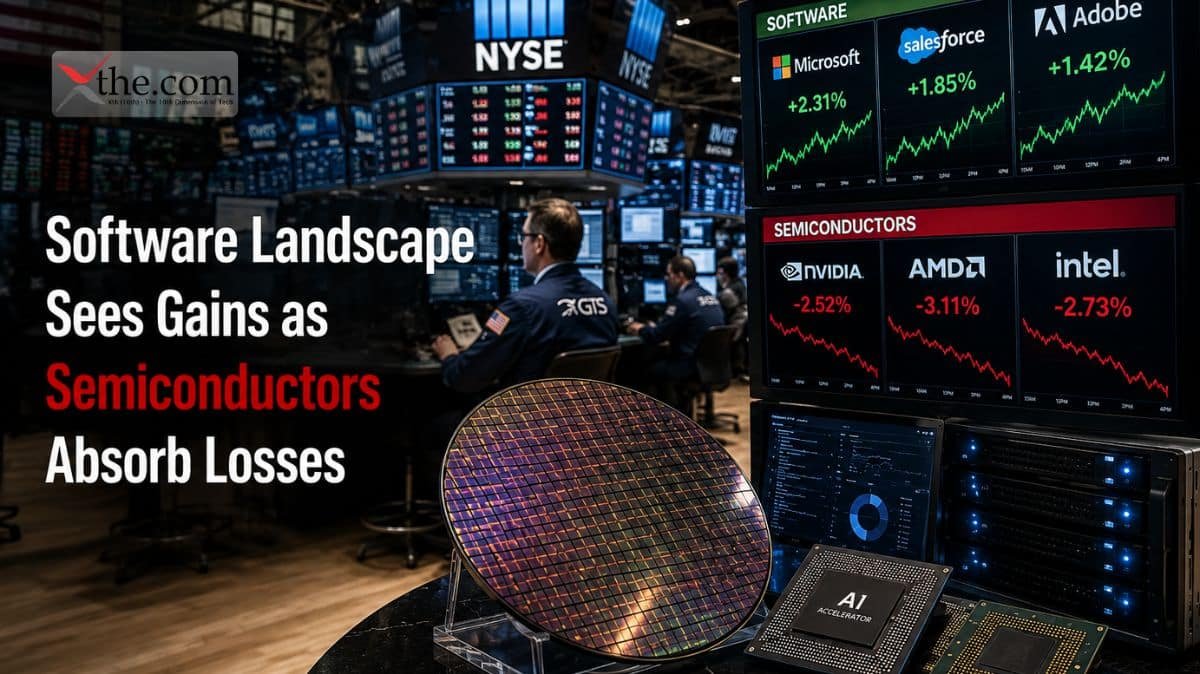
A 400-point decline in the Dow would normally indicate broad weakness across technology. Friday’s trading session told a subtler story. While semiconductor companies absorbed heavy selling pressure, software names attracted fresh buying, revealing that investors are becoming increasingly selective rather than abandoning technology altogether. That shift placed software stocks gain semiconductor losses, Nasdaq rotation software chips, and tech sector divergence in 2026 at the center of Wall Street discussions.
Software Stocks Gain Semiconductor Losses as Market Leadership Swaps
Friday’s market action highlighted one of the clearest examples this year of software stocks gain semiconductor losses. Rather than selling every technology stock indiscriminately, institutional investors appeared to rotate capital toward software developers while reducing exposure to semiconductor manufacturers.
The Dow Jones Industrial Average dropped about 400 points, or nearly three-quarters of a percent. All three major U.S. indexes ended the week down. Still, many software companies gained ground, while top chipmakers encountered continued selling.
This split in the market shows how investor thinking is changing. Over the past two years, semiconductor companies saw big gains from the rush to build AI infrastructure. Now, investors are asking which companies can earn steady revenue from AI, not just supply the hardware.
This difference matters more now for portfolio managers who want steady earnings growth.
The latest Nasdaq rotation software chips illustrate a wider change in market mood.
Earlier stages of the artificial intelligence rally rewarded businesses producing advanced processors, networking equipment, and AI servers. Those companies enjoyed exceptional valuation expansion as demand for computing power accelerated.
Now, investors are focusing more on software companies that can turn AI features into profitable subscription services. Enterprise software, cybersecurity, cloud platforms, and productivity app makers are becoming the next big players in AI.
The term “Nasdaq rotation software versus chips” sums up this change well. It doesn’t mean tech is weak overall, but shows that money is moving to different parts of the sector.
Shifts like this are common in mature bull markets. Investors often move from companies that build infrastructure to those that can make money from new tech through ongoing customer relationships.
Tech Sector Divergence 2026 Signals a More Selective Market
The growing tech sector divergence 2026 suggests investors are evaluating technology companies based on business models instead of broad industry classifications.
Semiconductor makers are still key to AI progress. Their top-performing chips power data centers, automated driving systems, and advanced machine learning. But high stock prices have made them more sensitive to earnings, production forecasts, and global supply chain risks.
Software companies face different economic drivers.
Many software companies use subscription schemes, which bring steady revenue, higher profit margins, and lower manufacturing costs. These traits often appeal to investors when the market is uncertain.
As a result, software landscape gains increasingly stand out even during sessions when broader technology indexes finish lower.
This split doesn’t mean investors have lost faith in semiconductor companies. It shows a more careful approach, with money going to businesses that offer better risk-adjusted returns.
Jared Blikre Market Moves Analysis Spotlights the Rotation
According to Jared Blikre’s market moves analysis, Friday’s session reinforced the contrast between software strength and semiconductor weakness.
Instead of seeing tech as one big group, investors separated AI infrastructure providers from companies that make everyday business and consumer apps.
This difference is important because software companies often see stable revenue growth once customers start using their products regularly. Semiconductor demand is strong over time, but it can swing with inventory, spending, and the economy.
The Jared Blikre market moves analysis therefore emphasizes an important message for investors: market leadership within technology remains evolving.
The AI investment cycle now seems to be focusing more on real-world uses, not only building more hardware.
Why Software Companies Are Attracting Fresh Capital
Numerous factors explain the recent gains in the software landscape.
Artificial intelligence is no longer just experimental. More companies want software that increases productivity, automates tasks, analyzes big data, and improves cybersecurity.
Companies offering these solutions can grow their revenue without needing to spend a lot on factories or chip-making equipment.
Cloud-based subscriptions also make it easier to predict future earnings.
For big investors managing billions, steady cash flow is especially appealing when markets are shaky.
This mix of factors has led to “Software stocks gain as semiconductors lose,” even as the overall market fell for the week.
Dow Drops 400 Points Friday, but Market Story Runs Deeper
Headlines understandably focused on the fact that the Dow drops 400 points Friday.
But looking only at the indexes can hide important changes happening within sectors.
Not all tech stocks fell the same way.
Financial, industrial, healthcare, software, semiconductor, and consumer companies all reacted differently to changing economic outlooks.
Professional investors watch these shifts closely because sector rotation can give early hints about new investment trends.
The Dow’s 400-point drop on Friday, along with software stocks beating semiconductor stocks, shows that investors are still moving money around instead of leaving the stock market entirely.
What This Means for Investors
It’s not a choice between software developers and semiconductor makers.
Both industries continue to be essential to artificial intelligence.
Chipmakers provide the hardware that lets AI models run. Software companies build the business tools that keep customers coming back.
But stock prices still matter.
After years of strong performance from chipmakers, some investors now think software companies might offer better earnings than the market expects.
That explains why software stocks gain, semiconductor losses, Nasdaq rotation, software chips, and tech sector divergence in 2026 have become key topics in recent trading.
The rise in software stocks doesn’t take away from the long-term value of semiconductor innovation. It just shows that markets are maturing, and investors now favor companies that can turn new tech into steady profits.
The trend of “Software stocks gain as semiconductors lose” and “Nasdaq rotation software versus chips” could keep going if software companies keep growing revenue while chip stocks stay under pressure. Investors are no longer treating all AI companies the same. Now, they’re looking for the difference between those building AI infrastructure and those turning it into long-term business value—a shift that could shape tech investing for the rest of 2026.