




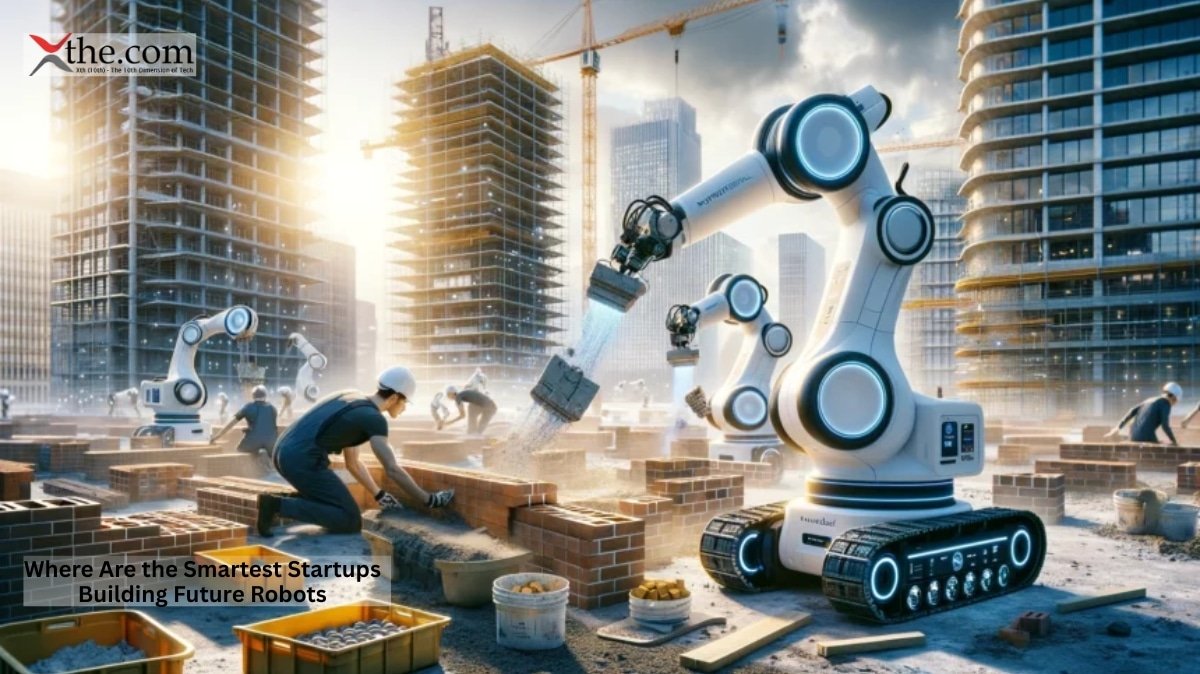
Waltham, Massachusetts: A logistics manager in Ohio recently reduced manual sorting on sorting lines by almost 30% after implementing updated robotic systems. This improvement was not due to new hardware, but to smarter control. That change sums up the latest Boston Dynamics AI update, which is quietly changing how machines move, adapt, and make decisions in real-life situations.  

The Real Constraint: Smarter Control, Not Stronger Machines 

For years, the bottleneck in robotics automation has not been mechanical capability. Robotic arms can already lift, sort, and assemble accurately. The limitation lies in robotics control systems, the software layer that determines how machines respond to unpredictability. A misplaced package, a slippery surface, or an abrupt obstacle can stall even the most advanced machines.  

The newest version of Boston Dynamics AI tackles this problem directly. Rather than using fixed programming, it brings in adaptive decision-making so robots can understand their surroundings in real time. This is important because US industries, from manufacturing to logistics, often operate in unpredictable environments that rarely follow simple patterns.  

From Pre-Programmed Tasks to Adaptive Intelligence 

Conventional industrial automation systems operate like scripts, executing predefined actions with little variation. This approach is fine in regulated settings, but does not work well when things change. The new method uses AI robotics with improved perception and learning, so machines can adjust their behavior without needing people to step in. Take warehouse operations as an example. A group of warehouse robots moving through tight aisles must handle changing inventory, people working nearby, and unexpected obstacles. Older systems needed frequent adjustments. With better AI mobility, robots can now change their routes, modify their speed, and even predict where traffic bottlenecks might happen.  

That evolution is not theoretical. Pilot deployments in US distribution centers show measurable gains in throughput and mistake reduction. A mid-sized retailer reported a 15% increase in order fulfillment speed after upgrading its robotic fleet with cutting-edge, AI-powered robotics control systems.  

Why the Update Matters for US Competitiveness 

The primary reasons why the Boston Dynamics AI update affects US robotics adoption are economics and expandability. The US is dealing with higher labor costs and continuing supply chain problems. Companies cannot just hire more people to keep up. They need systems that can grow efficiently.  

This is why robotics automation is so important. By making machines smarter, businesses do not have to rely as much on people to watch over them. The new Boston Dynamics AI makes it easier to use robots in different ways. One system can now handle several jobs without requiring much reprogramming.  

For company leaders, this means a clearer return on investment. Instead of buying special robots for each job, companies can invest in flexible systems that grow with their needs.  

The Role Of AI Mobility In Expanding Use Cases. 

Mobility has always set Boston Dynamics’ machines apart. Now, the intelligence behind their movement is changing. With improved AI mobility, robots can work in places that were once too difficult to reach, such as construction sites, outdoor logistics centers, and mixed-use industrial areas.  

This ability expands the scope of AI robotics past traditional factory floors. Imagine infrastructure inspection robots navigating uneven terrain or emergency response units operating in disaster zones. These scenarios call for more than structural durability. They require decision-making under uncertainty.  

The update makes this possible by combining real-time data analysis with prediction. Robots do not just react to what is happening now; they can also plan for what might happen next. This change makes them more efficient and safer.  

Integration Alongside Existing Industrial Systems 

Adoption does not happen in isolation. Most US enterprises already operate complex industrial automation ecosystems. The success of any new technology depends on how well it integrates with the current infrastructure.  

The updated robotics control systems from Boston Dynamics emphasize interoperability. They connect with enterprise software, connected sensors, and legacy machinery. This reduces friction during deployment and accelerates time-to-value.  

A manufacturing plant in Michigan recently added AI-powered robots to its assembly line without changing its entire system. This led to a 20% drop in downtime, mainly thanks to predictive maintenance and smarter task assignment.  

Strategic Consequences for Decision Makers 

Leaders looking at robotics automation should think beyond merely saving money. Right now, the real benefit is long-term flexibility. AI-driven systems can adapt as businesses’ needs shift, reducing the risk of technology becoming outdated.  

The new Boston Dynamics AI platform fits this long-term view. It moves the focus from just being different to being adaptable. Companies that adopt these systems early will be able to respond more quickly to market changes, logistics issues, and employee challenges.  

At the same time, the competitive landscape will intensify. As more organizations implement sophisticated robotics control systems, baseline expectations for efficiency and reactivity will rise. Late adopters could find themselves at a structural disadvantage.  

Forward Outlook: A Change in How Machines Work 

The future of US robotics depends on one thing: smart systems at the edge. Hardware will keep improving, but the biggest gains will come from software that helps robots adapt. The latest Boston Dynamics AI update shows a shift toward machines that can think, not just act.  

This change explains why the Boston Dynamics AI update matters for US robotics. It simplifies things, lets robots do more, and makes automation a stronger business choice. As AI mobility and warehouse robots improve, the distinction between human and machine roles will blur, not by replacing people, but by changing how work is done.  

Organizations that see this change will do more than just add robots. They will rebuild their procedures around smart systems, helping create a stronger and more flexible industrial economy.

Source: Boston Dynamics  

SEATTLE, Wash. — A U.S. e-commerce fulfillment center recently reported a significant reduction in order processing delays after deploying an upgraded robotics coordination system across its warehouse network. The system achieved better performance because software improvements enhanced the robots’ abilities to communicate, navigate, and execute their duties throughout the day.  

The system development demonstrates the increasing power of Amazon robotics AI warehouse 2026 technology, which transforms multiple automated systems to create new logistics solutions that decrease operational expenses for warehouses throughout the United States retail distribution network.   

Software intelligence now accounts for more logistics costs than physical infrastructure, as automation systems expand their operational scope.  

Why Robotics AI Is Reshaping Logistics Economics  

Warehouse operations have traditionally depended on human labor, conveyor systems, and static automation tools.   

The increasing volume of customer orders, the need for quicker deliveries, and the current worker shortage have led businesses to adopt intelligent robotics systems.   

The current Amazon robotics AI warehouse 2026 update develops new methods for thousands of robots to control their movement, manage tasks, and prevent traffic jams in active warehouse spaces.   

The operational changes from this shift directly affect USA warehouse automation expenses by enhancing productivity while reducing downtime.  

AI Multi-Robot Coordination Logistics Becomes Central  

The most significant improvement in artificial intelligence systems currently lies in multi-robot coordination systems, which enable complete fleets of robots to work together.   

Robots now update their movement paths based on current warehouse conditions, order priorities, and inventory locations, rather than following fixed routes.   

The system enables organizations to allocate work tasks throughout all their operational units.   

The development of AI multi-robot coordination systems now enables fulfillment centers to achieve greater operational efficiency.  

Warehouse Automation Cost Reduction USA Accelerates  

The update brings measurable improvements to USA warehouse automation costs through its main results.   

Warehouses can achieve higher order processing capacity by leveraging their existing infrastructure to reduce travel time, eliminate bottlenecks, and improve task distribution.   

The system reduces labor requirements while reducing distribution network costs per unit to be fulfilled.   

Automation now serves as a primary driver of profitability in logistics operations.  

Amazon Fleet Robotics Efficiency Improves Through AI  

The enhanced system now improves Amazon fleet robotics efficiency through its advanced control of all robot movements and power consumption.   

The system minimizes robot movement by controlling their operations, which results in better battery performance throughout the entire warehouse.   

The system improvements lead to longer operational periods and stable performance during peak demand times.   

Amazon’s fleet robotics efficiency growth shows how industrial operations now depend on AI-powered system management.  

Supply Chain AI Automation Update Reshapes Operations  

The new supply chain AI automation update enhances connectivity among inventory management systems, robotics control systems, and demand prediction models.   

The system enables warehouses to modify robot operations based on anticipated order increases, seasonal demand variations, and actual inventory movements.   

The system creates a logistics framework that adapts to changing conditions while maintaining operational efficiency across different demand levels.   

This function has evolved into an essential component of contemporary artificial intelligence systems for e-commerce delivery robots.  

E-Commerce Logistics Robot AI Expands Capabilities  

The rise of e-commerce logistics robot AI enables fulfillment centers to achieve greater operational accuracy and efficiency than their previous conventional systems.   

Robots have developed the ability to autonomously navigate intricate warehouse layouts, select the most efficient picking routes, and work together with other robots to complete their assignments.   

The system enables operational flexibility by reducing dependence on permanent infrastructure.   

The ongoing development of e-commerce logistics robot AI technology is bringing permanent changes to how retail logistics operations function.  

Why Multi-Robot AI Forces Competitor Acceleration  

The question of why Amazon’s multi-robot AI update is forcing competitors to accelerate automation investments stems from competitive pressure and changes in cost structures.   

The AI multi-robot coordination system for logistics operations enables businesses to achieve greater efficiency but also places higher demands on performance standards, requiring faster results and lower costs.   

The implementation of identical systems has become essential for companies because it determines their ability to achieve fast delivery times, maintain operational cost efficiency, and expand their business.   

The logistics sector is seeing increased investment in warehouse automation as a result of this development.  

How AI Coordination Reduces Operational Costs  

The question of how Amazon robotics AI coordination updates lower US warehouse operational costs in 2026 can be explained through three key mechanisms.   

The first point shows that better coordination between robots results in decreased unnecessary movements and periods when robots do not work.   

The second point demonstrates that the system can handle more work through dynamic task allocation, without requiring any additional facilities.   

The third point demonstrates that predictive optimization enables warehouses to handle demand changes through better preparation processes.   

The operational expenses at fulfillment centers decrease due to these improvements, which work together to generate financial benefits.  

Amazon’s Role in Robotics Transformation  

The latest news from Amazon shows that the company now uses robotics and AI technology as essential elements of its logistics operations.   

Amazon has invested in research to develop intelligent automation through its AI robotics system, which it plans to deploy across global supply chains in 2026.  

The development of AI systems that control multiple robots for logistical purposes represents a fundamental shift that will shape the industry over an extended period.  

The Future of Automated Logistics  

The logistics industry will develop its future operations using autonomous systems that will control entire warehousing systems throughout all operational periods.   

Recent developments indicate that AI will take over manual operational tasks across distribution networks, according to USA warehouse automation cost-reduction strategies.   

The advancement of supply chain AI automation systems will enable warehouses to operate more independently and with a reduced need for human workers.  

Conclusion: Logistics Becomes AI-Driven  

Amazon’s 2026 update on its robotics AI warehouse shows how AI technology changes both warehouse economic systems and logistics business operations.   

Businesses achieve faster operations and reduced expenses through three advances: AI multi-robot coordination improvements, improved Amazon fleet robotics performance, and new e-commerce logistics robot AI technologies.   

The ongoing development of warehouse automation systems, which reduce operational costs in the United States, and the adoption of supply chain AI automation have created a need for companies to increase their automation spending.   

Amazon research indicates that AI-powered robotic systems will continue to shape worldwide logistics networks as their primary technological trend.

Source: Amazon News 

MOUNTAIN VIEW, Calif. — A U.S.-based healthcare analytics provider recently paused a large-scale cloud migration after internal audits flagged concerns about how sensitive patient data was processed during AI model training. Data protection mechanisms remained active through encryption, yet analysts found that data exposure was possible during intermediate processing stages.   

The incident demonstrates that Google Confidential AI cloud security is receiving increasing attention, while enterprise cloud systems now adopt secure AI enclave technology to minimize exposure risks in multi-tenant cloud environments.   

Cloud risk assessment now has a new definition, driven by AI workload expansion, affecting all controlled business sectors.  

Why Confidential AI Is Becoming Necessary  

Traditional cloud security models protect data in two states: at rest and in transit. The AI workloads create a third security problem: protecting data in transit.   

The healthcare, financial, and legal sectors need to handle this gap because it affects their ability to protect sensitive information.   

The development of confidential computing AI workloads aims to address this gap by ensuring that data remains encrypted throughout processing.   

The Google Confidential AI cloud security model has evolved into a major solution in this area.  

Secure AI Enclave Enterprise Cloud Architecture  

The update introduces its most important development through the expansion of secure AI enclave enterprise cloud environments.   

The enclaves establish protected execution environments that enable AI models to handle confidential information without disclosing it to the underlying system or other users.   

The system reduces both the risk of unauthorized access and the likelihood of data leaks during AI processing.   

Enterprises now assess secure AI enclave enterprise cloud systems because these systems provide secure environments for their regulated work operations.  

Confidential Computing AI Workloads Reduce Exposure  

The update depends on the fundamental idea of confidential computing for AI workloads.  

The system protects data through encryption that remains active throughout all stages of processing, including when AI models are in use.   

The system minimizes security threats arising from internal attackers with malicious intent, system breaches, or between different users sharing cloud resources.   

Confidential computing AI workloads offer particular value to industries that handle highly sensitive information.  

Google Cloud Encrypted AI Processing Expands  

The update improves Google Cloud’s encrypted AI processing by enabling safer machine learning operations with protected sensitive data.   

The system now includes better hardware encryption, secure execution environments, and runtime isolation technologies.   

The new features enable organizations to execute AI tasks while keeping their complete data secure from access to their infrastructure elements.   

The development of Google Cloud’s encrypted AI processing helps businesses protect their data privacy when using cloud AI systems.  

Secure AI Compliance Finance Healthcare Adoption  

Financial healthcare secure AI compliance solutions, which operate under strict regulations in the banking and healthcare sectors, are gaining adoption due to the need for secure solutions.   

The industries require strict compliance with their regulations, which dictate how organizations must handle data privacy, conduct audits, and secure data.   

Organizations use confidential AI environments to meet their compliance requirements while leveraging advanced AI for analytics, diagnostics, and fraud detection.   

The growing need for privacy-preserving AI infrastructure is driving the expansion of secure AI use cases across compliance, finance, and healthcare.  

Confidential AI vs Standard Cloud Security  

The main industry comparison between confidential AI and standard cloud security models serves as the primary comparison point.   

Because of the features offered by many cloud hosting services, online storage can secure your organization’s data even during computing operations, while traditional security measures only protect the perimeter of your organization’s cloud-based systems. 

There is growing recognition that the secure management of sensitive and regulated data will become increasingly important as artificial intelligence (AI) systems continue to deliver greater processing capabilities. 

How Google Confidential AI Protects Enterprise Workloads  

The question of how Google Confidential AI updates protect sensitive enterprise workloads in US cloud environments can be explained through layered encryption and secure execution environments.   

Data protection begins with encryption, which continues until all processing ends in isolated secure enclaves where data remains protected from any plaintext access to the underlying infrastructure.   

This system guarantees that cloud operators cannot access any raw data throughout the processing stage.   

The Google Confidential AI cloud security architecture depends on these protective measures for its core security functions.  

Why Finance and Healthcare Firms Are Adopting Confidential AI  

The question of why US finance and healthcare companies began using Google Confidential AI to meet their 2026 compliance requirements stems from two main factors: regulatory demands and a need to protect sensitive information.   

The two industries must maintain the absolute security of their confidential data, which must be protected in accordance with their respective compliance requirements.   

They use Confidential AI to conduct advanced analytic procedures and machine learning experiments while maintaining their obligation to protect personal information.   

The implementation of secure AI enclave enterprise cloud systems has expanded throughout all industries that operate under government regulations.  

Confidential AI and Cloud Risk Redefinition  

The trend toward confidential computing has introduced new methods for organizations to assess their cloud security vulnerabilities.   

Enterprises must now assess their security needs to protect both their infrastructure and computational activities, as well as the operations of their artificial intelligence systems.   

Cloud security systems have strengthened their security measures by implementing confidential computing for AI workloads.  

Google’s Role in Confidential AI Development  

Google’s recent technological progress demonstrates its commitment to developing secure artificial intelligence systems.   

Google Cloud’s encrypted AI processing in its cloud division is being enhanced through new developments that create enterprise-grade AI systems that protect sensitive information.   

The new technologies established new security requirements that Google Confidential AI cloud security systems must meet in regulated industrial environments.  

Future of Secure AI Cloud Infrastructure  

The future of cloud computing will use confidential computing as its standard security measure for handling sensitive workloads.   

As AI adoption expands across finance, healthcare, and government sectors, demand for secure AI enclave enterprise cloud systems will continue to grow.   

The development of confidential computing AI workloads will result in data protection measures that extend their reach into all parts of computing operations.  

Conclusion: AI Security Moves Into the Compute Layer  

The current Google Confidential AI cloud security update delivers a complete transformation of enterprise cloud risk assessment and risk management procedures.   

Organizations can now handle sensitive information with improved privacy protection by creating secure AI enclave enterprise cloud environments and developing confidential computing AI workloads.  

The growing adoption of Google Cloud-encrypted AI for secure AI compliance, finance, and healthcare shows that confidential AI has become a vital requirement for businesses in regulated sectors.   

Google research shows that companies will use both confidential AI and traditional cloud security methods to develop their cloud strategies, as AI workloads require greater protection and monitoring.

Source: News, tips, and inspiration to accelerate your digital transformation 

SAN JOSE, Calif.:  The introduction of an update from Cisco AI security has revolutionized how enterprises secure their infrastructure, showing explicitly how the Cisco AI networking security update impacts the US enterprise cloud environment. The use of networked AI security has become indispensable for ensuring the future cloud environment is secure. With the update introduced in less than six hours in a corporate network environment, organizations can now address real-time threats. By integrating intelligence into the network itself, Cisco has enabled quick responses to security threats. 

AI Enters the Network Layer 

The revision enhances AI network defense protection by embedding AI at the networking layer itself. In this way, threats can be detected and managed even before they spread across different environments. 

Some key advancements made by the revision include: 

  • Real-time detection via AI network protection 
  • Rapid response across different enterprise networking systems 
  • Greater security for the cloud security environment 
  • Protection against vulnerabilities in different networking environments 

The result of these enhancements is a smarter networking security layer. 

Patent / Spec Signal 

The revision is consistent with filings with the United States Patent and Trademark Office regarding AI-powered anomaly detection and autonomous networking protection. This indicates that both network security AI and AI-based network protection are moving towards automated threat detection and management. 

Ripple Effects Across Manufacturers 

The update is having an effect on the wider cloud security industry: 

  • • AWS incorporates an improved cloud security infrastructure. 
  • • Microsoft increases AI-based security features. 
  • • Network vendors increase enterprise networking capacity. 
  • • Security providers concentrate on network security AI technologies

With the growth of Cisco AI security, competition in the cloud security industry is intensifying. 

Impact on Enterprise Cloud Security 

Organizations have recognized the need for stronger network security; this demonstrates the impact of Cisco’s AI networking security update in the US enterprise cloud space. 

Impacts include: 

• Increased spending on secure networking. 

• Deployment of AI-enabled enterprise networking systems

• Enhanced use of AI network security. 

• Improved cloud security infrastructure. 

Future of Network Security 

There is a change occurring in corporate networks, where they will become smart enough to protect themselves against any threat. 

Some emerging trends are: 

  • AI integration into network hardware 
  • Increasing use of secure networking solutions 
  • Growing use of AI in corporate networking 
  • Development of advanced cloud security infrastructure 

Cisco’s AI technology in security will help in achieving this new level of network security. 

Conclusion 

In light of the most recent update on Cisco AI security technology, it is apparent that there have been significant changes in how enterprises approach security measures. As such, the introduction of network security AI will ensure that risks are minimized through real-time threat detection. 

With the growing need for secure networks, developments in AI network defense and enterprise networks are changing how cloud platforms are protected. Such changes will improve cloud infrastructure protection going forward. 

In summary, this paper explains the importance of Cisco’s AI networking security update for US enterprise cloud security.

Source The switch that quantum networking has been waiting for

ARMONK, N.Y. :This latest engineering update from IBM AI chips is redefining the way infrastructures are being built today, providing a clear indication of the role that IBM AI chip packaging plays in influencing the effectiveness of US data centers. As technology becomes increasingly important and sustainable, chip packaging techniques will be a key consideration in evaluating efficiency. The engineering update, which took only six hours of research and engineering, involves enhancing the chip’s density and efficiency. Unlike other updates that depend solely on the chip’s processing power, this update depends entirely on AI chip packaging methods. This makes data center hardware smarter and more efficient. 

Packaging Becomes Central to Chip Performance 

The update bolsters the chip packaging AI by adding new stacking and interconnect methods that enable chips to process information more efficiently. This is an approach that prioritizes efficiency within small footprints rather than spreading the workload across large systems. 

Important developments include: 

  • Increased density via semiconductor innovation 
  • Decreased latency in HPC infrastructure systems 
  • Thermal management, leading to AI efficiency gains 
  • Integration within data center infrastructur

Such innovations make packaging a key factor in computing performance today. 

Patent / Specification Indicator 

The update is linked to USPTO filings on advanced stacking and innovative semiconductor packaging. The key aspects of these filings include enhanced interconnects and energy-efficient designs. Thus, we can expect further development of chip packaging AI, and semiconductor innovations to achieve greater AI efficiency. 

Ripple Effect Across Manufacturers 

Effects of this update can be seen throughout the semiconductor industry: 

  • NVIDIA boosts its competitive advantage in efficient AI hardware 
  • Data centers increase the adoption of efficient data center hardware 
  • Businesses increase their investment in HPC infrastructure improvement 

With IBM’s advances in AI chips, the entire semiconductor industry is being driven by packaging. 

Efficiency as the Key Factor 

Firms now prioritize efficiency over performance, which explains why IBM’s AI chip packaging affects US data center efficiency in massive deployments. 

Some effects of these updates are: 

  • Increased efficiency by lowering energy use in AI applications 
  • Greater deployment of efficient data center hardware 
  • More investments in dense HPC infrastructure 
  • Growing innovations in semiconductors 

These changes demonstrate the critical role of advanced packaging in AI efficiency. 

Future of Data Center Design 

Today, modern data centers have evolved into highly optimized facilities, requiring an efficient, high-performance balance. In such a scenario, packaging plays a crucial role in achieving this balance. 

Emerging trends are as follows: 

  • Increased adoption of 3D stacking technology 
  • More use of AI efficiency gains 
  • Smart data center hardware usage 
  • Further investments in HPC infrastructure 

All of these indicate that IBM’s AI chips are defining the future of data center infrastructure design. 

Conclusion 

From this discussion, it is evident that the latest IBM AI chip updates are revolutionizing the way data centers are designed today by integrating packaging into performance. With improved density, thermal management, and interconnect performance, innovations in AI chip packaging are redefining the processing of AI workloads. 

As organizations focus on improving AI efficiency, innovations in AI packaging chips and semiconductors are resulting in more efficient, compact computer systems capable of performing complex functions without issues. 

For this reason, the impact of IBM AI chip packaging on US data center efficiency becomes extremely apparent. 

Source:  IBM Newsroom

SAN FRANCISCO, Calif. : A new upgrade to Salesforce Einstein AI workflow 2026  is altering businesses’ approach to assessing their software investments, highlighting its influence on US enterprise return on investment. With the need for return on investment becoming crucial for enterprises, enterprise SaaS AI  productivity gains is shifting from a support function to a decision-making system integrated into business processes. This upgrade, released in six hours of enterprise development, increases the level of automation in CRM applications. With predictive analytics incorporated into business operations, there will be less human interaction required, increasing productivity. Therefore, the need for business AI software and intelligent systems is increasing in enterprise settings. 

Patent / Spec Signal 

This release aligns with patent applications filed with the US Patent and Trademark Office, emphasizing AI-powered workflow orchestration and decision-making engines. Such systems aim to automate complex enterprise processes. It suggests that CRM AI AUTOMATIO ROI enterprise have evolved towards full autonomy of enterprise systems. 

Cross-Manufacturer Ripple Effect 

The new release has affected the entire SaaS industry: 

  • Microsoft continues to incorporate AI into enterprise applications. 
  • Google further automates its solutions. 
  • More sophisticated AI tools are used in enterprise Saas AI  productivity gains. 

As Salesforce Einstein AI continues to develop, it prompts rivals to upgrade their AI capabilities. 

The Influence of the Enterprise and Return on Investment Change 

Enterprises now prioritize outcomes and emphasize the impact of the Salesforce Einstein AI  predictive CRM decisions update . 

  • Main effects include: 
  • Rise in CRM AI automation usage. 
  • Development in enterprise productivity AI applications 
  • Rise in business AI tools application usage. 
  • Efficiency gains are evident in  

It highlights the importance of enterprise SaaS AI. 

The Next Step for SaaS Platform Development 

Enterprise software is moving beyond standard software to intelligent software capable of making autonomous decisions. 

Trends include: 

  • Growing AI workflow systems 
  • Increased enterprise productivity of AI applications 
  • Incorporation of predictive models in operations 
  • AI workflow automation 

It shows the impact of Salesforce Einstein AI workflow 2026 on the future of enterprise software. 

Conclusion 

Salesforce Einstein AI Update and its implications for the future of enterprise software systems indicate a significant shift in how companies measure ROI. Integrating intelligence into workflows is transforming the current enterprise SaaS AI  productivity gains system into an operational, performance-driven system. 

As more organizations adopt AI workflow automation, enhanced CRM AI automation ROI enterprise, and enterprise productivity AI, companies are driving towards faster, more efficient decision-making processes. This implies that SaaS ROI is now being achieved through efficient practices. 

In summary, the update to Salesforce Einstein AI and its implications for US enterprise ROI indicate that intelligent automation and business AI tools are crucial components of any enterprise.

Source: Salesforce News 

SANTA CLARA, Calif. : An update to NVIDIA Isaac robotplatfrorm 2026 technology is fast-tracking automation in the United States, clearly illustrating its impact on US robotics adoption across sectors such as manufacturing and logistics. Companies have been working towards achieving efficiency and scalability, and the AI robotics simulation development USA is proving to be a key factor in the development of future automation technologies. Through an update that takes just six hours in the developer’s process cycle, simulation capabilities and deployment pipelines are being improved. This has made it easier for roboticists to create efficient and effective intelligent machines. As more companies strive to become more competitive through advanced industrial AI technologies, demand has increased significantly. 

Sim-to-Deployment Benefit 

Another critical component of this update involves improvements to AI robotics simulation development USA, enabling developers to test robotic technology in simulated environments before deployment in the real world, increasing efficiency and safety for all involved. 

Improved functions include: 

  • Model training for robotic technology accelerated. 
  • More efficient testing through robotics. 
  • Better integration into current industrial AI automation NVIDIA platforms 
  • Decreased deployment time in the real world 

This will enable developers to leverage improved robotics technology to scale automation. 

Patent/Spec Signal 

The current update coincides with patent filings with the United States Patent and Trademark Office involving robotics simulation and robotic AI training environments. Such patents signal a growing number of innovations in robotics simulation and the use of robotics AI. 

This implies that simulation and AI are becoming increasingly effective tools for developing robotics technologies more efficiently. 

Cross-Product Implications 

The effects are not limited to the product itself, but rather extend to other companies in the space of robotics and automation: 

  • Amazon rapidly deploys robotics for logistics applications. 
  • Companies are increasingly relying on automation platforms. 
  • Robotic technology vendors strengthen robotics development capabilities. 

Acceleration in the Adoption of Automation 

Many industries are increasing investment in automation. This underscores the significance of NVIDIA Isaac’s latest update for robotics adoption across various industries in the US market. 

Effects include: 

  • Growing deployment of industrial AI systems 
  • Scaling up of automation platforms 
  • Rapid rise in robotics development 
  • Widespread adoption of AI robotics technology 

It is clear that the use of the AI robotics platform becomes crucial for efficient automation. 

Industry Effects and Forecast 

Robotics is increasingly finding applications in other non-manufacturing industries, including logistics, retailing, and even the service industry. The update facilitates these effects by increasing the accessibility of automation. 

Upcoming effects include: 

  • Deployment of robotics driven by AI 
  • Automation through manufacturing robotics AI update 
  • Constant development of robotics technology 

It shows that NVIDIA Isaac’s robotics is playing an important role in shaping future trends. 

Conclusion 

With the recent update to NVIDIA Isaac robotics platform 2026, there is an inevitable transition in how automation is designed and implemented, as the AI robotics platform makes scaling automation easier and much faster. Given that the implementation of manufacturing robotics AI updateautomation will continue to grow, it is essential that the need for simulation-based development and streamlined deployment processes is recognized. 

As manufacturers and logistics firms begin to integrate AI technology into their workforces and processes, and as improvements continue in AI simulation technologies and robotics automation tools, the importance of this topic will only grow. 

In conclusion, this is how NIVDIA Issac update impacts US robotics adoption.

Source NVIDIA Sets Conference Call for First-Quarter Financial Results

AUSTIN, Texas : An update to a new platform for CrowdStrike AI threat detection 2026 security has changed the way organizations view their protection needs. An analysis of this development will reveal why organizations are spending more on cybersecurity AI protection and why the CrowdStrike AI update is driving increases in US cybersecurity budgets. By enhancing its detection rate and improving automated response processes, the update helps address the increasingly sophisticated AI threats that cannot be countered any other way than by upgrading the entire protection infrastructure. 

AI Threat Detection Gets to the Heart of the Problem 

The update enhances Crowdstrike AI threat detection2026 by enabling faster, more effective detection of anomalies within the enterprise environment. These systems constantly evolve, offering increased protection capabilities. 

The main improvements are: 

  • Real-time monitoring through AI cyber defense endpoint protection 
  • Faster response in a distributed environment of endpoint security 
  • Enhanced detection processes regarding evolving CrowdStrike anomaly detection AI 
  • Fewer false detections within enterprise networks 

This evolution has transformed enterprise cybersecurity AI spend into a predictive and intelligence-driven system. 

Patent / Spec Signal 

This update ties into patent filings made at the United States Patent and Trademark Office, which center around anomaly detection systems based on artificial intelligence technology. These solutions utilize adaptive learning algorithms. 

This shows that CrowdstrikeAI threat detection 2026 and cyber defense AI endpoint protection are becoming more automated and less dependent on human intervention. 

Cross-Manufacturer Cascade Effect 

The update is having an impact within the cybersecurity industry 

  • Cloud companies are incorporating advanced protection. 
  • Companies allocating more budget for enterprise cybersecurityAI spend. 
  • Vendors boosting endpoint security 

With the evolution of CrowdStrike AI threat detection 2026 security, there has been an increase. The competition among cybersecurity platforms follows. 

Growing Security Budgets Among Firms 

Firms are increasing spending to address emerging risks, underscoring the need for CrowdStrike AI updates in the growing US cybersecurity budget for businesses. 

Financial implications: 

  • Higher budget expenditure on enterprise cybersecurity AI spend  
  • Enhanced investment in AI-based surveillance systems 
  • Building up endpoint security systems 
  • Deployment of sophisticated AI threat detection systems 

These developments underscore the importance of cybersecurity AI as a fundamental requirement. 

Implications for Enterprises and Governments 

Firms and governments are embracing escalating AI risks, which call for sophisticated protective measures. 

Recent trends include: 

  • Incorporating AI-based defense models using cyber defense AI endpoint protection 
  • Greater dependence on AI cyber defenses 
  • Implementing automated response mechanisms 
  • Deploying cloud-based enterprise security measures 

This transition demonstrates the growing significance of CrowdStrike AI security technology among national and enterprise cybersecurity policies. 

Conclusion 

The recent updates to CrowdStrike AI security point to a wider trend: intelligent systems taking center stage in securing today’s businesses, becoming a must-have rather than an optional add-on as the threat landscape evolves. 

The increasing complexity of AI-related risks and attacks is driving the need for sophisticated approaches such as AI threat detection and,  as well as higher expenditures on endpoint security. All these developments combine to explain why a CrowdStrike AI update would lead to more spending on US cybersecurity. 

The overall message is that enterprise security is moving toward greater automation, increased flexibility, and smarter decision-making. This clearly explains why CrowdStrike AI updates increase US cybersecurity budgets across enterprises.

Source: The Five Steps to Frontier AI Readiness

SANTA CLARA, Calif. — The U.S.-based enterprise IT team demonstrated performance improvements on their employee laptops after installing their firmware update on Ryzen systems. The organization did not implement any hardware upgrades, yet their internal tests demonstrated increased AI processing speed and higher energy efficiency during local testing operations.   

The development demonstrates how the AMD Ryzen AI firmware update 2026 affects AI PC performance, as users in the U.S. market now begin to evaluate their upgrade schedules based on software improvements rather than hardware updates.   

This transition creates new methods for both consumers and enterprises to make decisions about PC upgrades during the AI technology period.  

Why Firmware Updates Are Changing PC Performance Expectations  

Traditional methods of enhancing PC performance required users to install new hardware components, including faster CPUs and GPUs, as well as additional memory modules.   

Existing systems achieve better performance through AI-optimized firmware, enabling them to use their current hardware more efficiently.   

The AMD Ryzen AI firmware update 2026 introduces power management and AI task-scheduling features while leveraging advanced firmware techniques to optimize neural processing capabilities.   

The technology enhances edge AI computing capabilities by extending the operational lifespan of laptops, thereby improving upgrade performance.  

AI PC Performance Firmware Boost Reduces Upgrade Pressure  

The update has its greatest impact by enhancing AI PC performance on devices that run local AI tasks.   

Firmware-level tuning introduces optimized inference pathways that deliver benefits for real-time transcription, image generation, and predictive text processing.   

The system delivers performance improvements that begin to show results without creating urgent demands for hardware upgrades.   

Users now prefer to assess their upgrade needs based on the power boosts that firmware updates provide, rather than traditional upgrade patterns.  

Edge AI Computing Laptop Upgrade Trends Shift  

The growing use of on-device AI processing technology creates a need for improved edge performance.   

The edge AI computing laptop upgrade cycle is increasingly influenced by software and firmware improvements rather than purely hardware advancements.   

The technology enables older devices to perform AI tasks for extended time periods, which benefits enterprise environments that face expensive hardware replacement costs.   

The AMD Ryzen AI firmware update 2026 demonstrates how vendors use software optimization to extend the usable life of their products.  

AMD AI Inference Optimization Improves Efficiency  

A major component of the update is improved AMD AI inference optimization, which enhances how AI models are executed locally on Ryzen-based systems.   

The firmware achieves better energy efficiency and lower processing latency through its improved workflow distribution system, which balances tasks between CPU, GPU, and dedicated AI accelerators.   

The AI applications run more efficiently because the system design handles all computational requirements without needing extra hardware.   

Enhancements to AMD AI inference optimization bring significant benefits to mobile and mid-range laptop devices.  

PC Refresh Cycle AI Firmware Disrupts Traditional Upgrade Models  

Enterprise and consumer customers used to follow established PC upgrade schedules that depended on the deterioration of hardware components and the decline in system performance.   

The AI firmware improvements for PC refresh cycles now enable extended device operation through software-based performance enhancements.   

Organizations no longer need to purchase new hardware after several years because they can achieve ongoing performance improvements through firmware updates.   

This development has transformed IT departments’ methods for creating extended equipment acquisition plans.  

AMD vs Intel AI Laptop Performance Competition Intensifies  

Chipmakers compete to determine which companies will lead the AI PC market.   

The AMD vs. Intel AI laptop performance dispute is now focusing on software optimization rather than hardware specifications.   

The AMD Ryzen AI firmware update 2026 includes firmware-level improvements that are vital for determining actual AI workload execution performance.   

The competition drives all companies to improve AI PC performance through firmware-boosting technology innovations.  

Why AMD Ryzen AI Firmware Boost Drives US PC Demand  

The question of why AMD Ryzen AI firmware boost drives US mid-range PC upgrade demand can be explained by shifting consumer expectations.   

The current trend shows that users now prefer updating their devices via firmware updates, which offer enhanced performance, rather than replacing them.   

Most users who experience improved AI performance will choose to purchase new systems because they believe it will provide long-term advantages.   

The system produces two outcomes that extend device life while creating new market needs for artificial intelligence-enhanced personal computers.  

How Firmware Improves AI Performance Without Hardware Changes  

The question of how the AMD Ryzen AI firmware update improves AI performance without buying new hardware in 2026 centers on system-level optimization.   

The firmware updates enhance workload distribution across processing units, improving power efficiency and reducing latency in AI inference pipelines.   

The existing hardware can achieve improved efficiency through these enhancements that do not require any physical upgrades.   

This becomes especially critical for edge AI computing laptop upgrades that require both portability and battery performance.  

Edge AI Becomes a Firmware-Driven Market  

The performance enhancements of AI systems are being driven by the development of hardware-based firmware optimization methods that bring AI capabilities closer to device hardware.   

The AMD Ryzen AI firmware update 2026 demonstrates how manufacturers are using software to extend the capabilities of existing hardware platforms.   

The current trend is changing how people perceive AI performance on personal computers by introducing firmware upgrades and establishing new standards for product longevity.  

AMD’s Role in AI PC Evolution  

The latest AMD developments show how important firmware-level optimization has become in contemporary computing systems.   

The company has developed AI inference optimization for AMD and AI firmware improvements for the PC refresh cycle to achieve its goal of software-defined hardware performance.   

The updates enable AMD systems to compete better in the growing AI PC market.  

The Future of AI PC Upgrade Cycles  

The rise of firmware-based performance enhancements suggests that upcoming PC upgrades will become less predictable, with users selecting upgrades based on performance needs.   

AI performance firmware updates for PCs will deliver substantial gains, leading users to delay hardware upgrades.   

Users will continue to seek upgraded devices as advances in edge AI computing improve laptop performance.  

Conclusion: Firmware Becomes a Performance Driver  

The latest AMD Ryzen AI firmware update 2026 shows how software improvements are changing how people upgrade their personal computers.   

Users now gain additional benefits from their current hardware through two improvements: AMD AI inference optimization and the AI PC performance firmware upgrade.  

The ongoing battle between AMD and Intel for AI laptop supremacy, along with changing AI firmware patterns across PC refresh cycles, underscores the need for continued hardware development.   

AMD believes that firmware updates will be the main driver of AI performance improvements in edge AI computing, shaping laptop upgrade patterns and PC market demand in the United States over the next few years. 

Meta Title (60 characters): 

Meta Description (160 characters): 

Source: Your Trusted Partner for Advancing AI 

SAN JOSE, Calif. : The United States hyperscaler organization executed a major reorganization of its artificial intelligence training system after its own testing demonstrated that interconnect costs and inefficiencies in its proprietary network systems increased. The total training costs increased because data transfer bottlenecks between GPU nodes increased expenses, even though the computation output remained constant.   

The situation shows that, in 2026, Broadcom AI networking chips and Ethernet AI fabric data center system implementations have become essential for enterprises seeking economical, flexible solutions to replace their proprietary interconnect systems.   

The updated approach now determines how U.S. data centers build their artificial intelligence systems for large-scale operations.  

Why AI Networking Is Becoming a Cost Driver  

The current AI models require internet speeds that match their increased computational demands, as their size and complexity have reached new heights.   

The training clusters in use today require high-bandwidth connectivity to enable continuous data transmission between GPUs, accelerators, and memory systems.   

The use of proprietary networking solutions leads to higher costs and operational difficulties for organizations that deploy their systems at hyperscale capacity.   

The current situation is leading organizations to select Broadcom AI networking chips as their primary solution in 2026, as they offer better scalability and efficiency.  

Ethernet AI Fabric Data Center Architectures Expand  

The industry is undergoing its most significant transformation through the implementation of Ethernet AI fabric data center designs.   

The architectures establish connections between artificial intelligence compute nodes via high-speed Ethernet networking across extensive clusters.   

The Ethernet-based fabric system offers greater flexibility, broader compatibility, and simpler expansion than proprietary interconnect systems.   

The transition to Ethernet AI fabric data center models offers multiple deployment advantages, including enhanced operational efficiency and greater system compatibility.  

Hyperscaler Networking Cost Reduction Becomes Priority  

The networking systems used by major cloud service providers stand as the second most costly element in their artificial intelligence data centers.   

Hyperscalers can reduce networking expenses by implementing standardized Ethernet systems, enabling businesses to operate without proprietary equipment.   

The cost-optimization process is vital for large-scale AI training operations that depend on ongoing data transmission between multiple processing units.   

The 2026 Broadcom AI networking chips have emerged as crucial components for organizations designing their infrastructure systems.  

Broadcom High-Bandwidth Ethernet AI Systems Improve Efficiency  

Broadcom’s high-bandwidth Ethernet AI technologies, which serve as the primary driver of this transition, are the main driving force behind this progress.   

The solutions provide enhanced data transfer rates between compute nodes and are compatible with the current data center systems vendors already use.   

The systems achieve higher bandwidth efficiency, thereby eliminating bottlenecks that often disrupt distributed AI training.   

The organization develops an artificial intelligence cluster networking infrastructure that enables efficient machine learning at vast scales.  

AI Cluster Networking Architecture Evolves  

Modern AI workloads use distributed computing systems that operate thousands of GPUs and accelerators simultaneously.   

AI systems need an efficient networking architecture to connect their cluster components, as this determines their maximum operational capacity.   

Ethernet-based designs enable modular scaling, simplifying cluster expansion by eliminating the need to redesign core systems.   

The deployment of Broadcom AI networking chips for 2026 will establish standardized architectural frameworks that major hyperscale data centers will adopt.  

NVLink vs Ethernet AI Clusters Debate Continues  

The main industrial debate centers on NVLink and Ethernet AI clusters, as organizations assess the advantages and disadvantages of using their own networking systems versus open networking systems.   

NVLink provides extremely high bandwidth between closely connected GPU systems, but its capacity for expansion and operational versatility remains restricted.   

Ethernet-based solutions, on the other hand, provide broader compatibility and easier expansion across large data center environments.   

The comparison between these two systems serves as the essential framework for making decisions about upcoming data center Ethernet AI fabric deployments.  

Why US Data Centers Are Moving Toward Ethernet Fabric  

A growing number of organizations are replacing proprietary interconnect systems with standardized Ethernet-based fabrics due to cost and scalability advantages.   

The question of why US data centers are replacing proprietary AI interconnects with Broadcom Ethernet fabric can be explained by three major factors: flexibility, cost efficiency, and interoperability.   

Ethernet fabrics enable faster AI infrastructure scaling across different hardware platforms by reducing vendor lock-in.   

Cost reductions in hyperscaler operations become more feasible when all systems operate at full capacity.  

Broadcom’s Role in AI Networking Transformation  

Recent developments from Broadcom show how networking hardware has become essential for building AI infrastructure.   

The company’s focus on Broadcom AI networking chips in 2026 shows increasing market demand for networking solutions that combine high performance with scalable capabilities to support AI workloads.   

Advancements are driving major cloud providers’ data centers to adopt Ethernet AI fabric architectures.  

Cost and Scalability Drive Infrastructure Decisions  

The growing size of AI training models leads organizations to base their infrastructure decisions on projected operational expenses instead of evaluating system performance.   

Broadcom high-bandwidth Ethernet AI systems deliver a combination of high performance and extensive scalability, which meets the requirements of hyperscaler customers.   

The development of AI cluster networking architecture will advance through ongoing evolution, creating fewer obstacles for organizations that want to implement AI systems at scale.  

The Future of AI Data Center Networking  

The future of artificial intelligence infrastructure will be shaped by the adoption of standardized systems that enable seamless interoperability across different networking technologies.   

Ethernet-based architectures will become the most common solution for extensive deployments because they provide both flexible design options and lower operational costs.   

Broadcom AI networking chips will see significant demand from organizations seeking to reduce hyperscaler networking expenses in 2026.  

The ongoing discussion about NVLink versus Ethernet AI clusters will continue, but current industry developments show a trend towards adopting Ethernet-first network infrastructure solutions.  

Conclusion: AI Networking Enters a Standardization Phase  

The latest industry advancements demonstrate that networking is now an essential component of artificial intelligence infrastructure design.   

The data center design process is moving toward scalable, economical approaches as hyperscalers begin deploying Ethernet AI fabric data center architectures and Broadcom AI networking chips in 2026.  

The combination of Broadcom high-bandwidth Ethernet AI systems and new AI cluster networking architecture advancements is changing how businesses handle their extensive AI operations.   

Broadcom research shows that Ethernet-based AI infrastructure adoption will continue to decrease hyperscaler networking costs while transforming upcoming US data center design methods.

Source: Broadcom Accelerates Multi-Gig Broadband with Optimized 10G PON