




The United States will have more efficient and reliable operations by utilising artificial intelligence (AI) from NVIDIA within the energy grids throughout the U.S. Utilities will have access to AI platforms, which will allow them to better monitor the supply & demand for energy, add renewables to their grids, and increase resiliency within their systems. This aligns with NVIDIA’s plans to apply advanced computing technology to real-world challenges using machine learning algorithms; as such, they have identified AI as an important component of intelligent and sustainable energy systems.  

AI for Smarter Energy Management  

As energy grids become ever more intricate by integrating not only conventional methods of energy production but also sustainable types of energy such as the sun or wind, there is now a growing need for innovative digital solutions to enable the collection, management, dissemination and analytical interpretation of vast amounts of data generated through sensors, meters and grid operations in real time and assist in providing predictive analytical tools in order to help operators predict the fluctuation of energy demand, locate areas of potential bottlenecks and optimally distribute electrical power throughout their respective networks.  

NVIDIA provides utilities with decision-support tools based on Artificial Intelligence (AI) that improve service reliability by reducing outages, preventing overload conditions, and ultimately increasing operational efficiency. AI technologies will further support proactive maintenance, helping utility companies detect potential faults before they result in costly service disruptions.  

Enhancing Grid Reliability and Resilience  

The functioning of an energy system relies heavily on reliability, which is essential to modern systems. AI software from NVIDIA can assess the current state of transmission and distribution networks to identify anomalies or issues that could lead to future failures. By identifying problems early and addressing them before they cause disruptions, operators can reduce the likelihood of service interruptions, thereby ensuring reliable power delivery to their customers.  

As more variable renewable sources are added to electrical grids, resilience becomes increasingly important. AI models can dynamically balance electricity supply and demand over time by adjusting generation and storage to keep the grid stable even as weather conditions change. This ensures that the electrical grid can facilitate the transition to a decentralised, lower-carbon energy future.  

Integrating Renewable Energy Sources  

Due to the variable supply of power from renewable sources (e.g., solar and wind), integrating them into the grid poses challenges. One way AI is being used to help resolve these issues is by providing analyses of current weather patterns, projected energy generation, and historical consumption data. This will assist utilities with better capacity planning for integrating renewable resources while ensuring their capacity is not over-utilised.  

Further, AI will assist in managing energy storage. By combining real-time demand information, utilities can appropriately time charging and discharging their batteries. This improved connection between generation (renewable), storage (batteries), and distribution (the grid) will create a more sustainable energy system overall.  

Real-Time Analytics and Decision Support  

Operators can make faster and more precise operational decisions by leveraging high-speed computing, machine learning, real-time analytics, and predictive analytics.  

Predictive analytics can also streamline processes, such as adjusting generator output and rerouting electricity, in response to an unusual increase in demand or equipment failure. Fewer administrative errors increase efficiency, thereby enabling quicker and easier management of energy use/transmission levels on the electrical grid. This results in safer operations since there are fewer mistakes.  

Simulation and Digital Twins  

An essential component of NVIDIA’s strategy is the application of digital twin technology – virtual representations of physical energy systems that replicate real-world conditions through simulation. Digital twins enable utilities to assess operational strategies, evaluate infrastructure upgrades, and prepare for potential challenges without disrupting the live electricity grid.  

NVIDIA uses a combination of AI and high-performance computing to deliver detailed digital twin models of energy flow, grid stress points, and equipment behaviour. This enables operators to make better decisions, thereby increasing the reliability and safety of the overall electricity network.  

Operational Efficiency and Cost Savings  

The AI optimisation system enables utilities to reduce operational expenses by enhancing energy management, reducing waste, and improving equipment longevity. The system uses automated monitoring and predictive maintenance to reduce unexpected system failures, while its energy distribution system generates savings in both fuel and operational costs.   

Efficiency improvements enable organisations to steer operators to a dual advantage in cost reductions and environmental sustainability, which increases their operational value.  

Industry Collaboration and Partnerships  

NVIDIA has ongoing partnerships with energy companies, grid management organisations, and technology companies to implement AI solutions across the power industry. Partnering enables organisations to create custom AI systems tailored to specific regions, infrastructures, and regulations.  

By working together, organisations share knowledge and expertise, helping them quickly implement AI systems that transform the energy industry into intelligent, resilient systems. 

Competitive Landscape  

AI adoption in energy grid operations is increasingly competitive as both tech companies and electric utilities invest heavily in developing new technologies. An example of a significant vendor is NVIDIA, which continues to exhibit strength in the marketplace through its mature position in GPUs (graphics processing units) and A.I.-based computing capabilities. This allows them to provide quality, performance, and scalable solutions to their end customers. 

The market will hinge on AI capabilities that help utilities operate efficiently and maintain resilience, as utilities must handle increasing demand while adapting to new regulations and integrating renewable energy.  

Challenges and Considerations  

Challenges exist in using AI for precision in optimising grid operations (both technical & operational access). There are three requirements for making accurate forecasts: effective data collection, advanced modelling capabilities, and seamless integration of systems into the existing infrastructure. Energy systems (which are significant national assets) need to ensure that organisations protect cybersecurity and data privacy. 

Utilities need to provide training programmes that help staff understand AI recommendations and respond appropriately. The process of conducting operations needs both automated systems and human operators to guarantee safety and operational dependability.  

Sustainability and Future Outlook  

The sustainable energy systems depend on AI-driven optimisation as their essential technology. The NVIDIA platforms achieve sustainable energy management through three main features that increase operational efficiency, support renewable energy sources, and minimise environmental waste.  

The future of energy grid operations will undergo transformation through ongoing advancements in artificial intelligence, high-performance computing, and predictive analytics. The United States energy sector modernisation process relies on NVIDIA’s active work in these fields.  

Setting a New Standard in Energy Grid Operations  

NVIDIA demonstrates how its AI technology transforms energy grid management through its research into intelligent systems, which are now essential components of infrastructure. The company develops energy sector solutions that achieve operational efficiency, reliability, and sustainability through its machine learning, real-time analytics, and digital twin simulation technologies.  

The increasing use of AI-powered energy grids will make them essential elements of modern utilities, enabling them to deliver power with greater intelligence and resilience while protecting the environment.

Source: NVIDIA is the pioneer of GPU-accelerated computing 

Samsung Electronics has kicked off its expanded presence at Mobile World Congress (MWC) 2026 in Barcelona, Spain, from March 2 to 5, building on the momentum from Galaxy Impact. Samsung is demonstrating how Galaxy AI is now central to delivering personalized, connected experiences across its devices. The company is also showcasing new AI-powered network innovations and asserting its leadership across the connectivity ecosystem.  

The Galaxy S26 series — Samsung’s third-generation AI phone — leads these changes, launched alongside the Galaxy Buds 4 series. They demonstrate how Galaxy AI seamlessly connects mobile phones and wearables to anticipate user needs and enhance daily life.  

“MWC is an opportunity to show not only where Samsung Galaxy AI is today, but where it’s going next,” said TM Roe, Chief Executive Officer, President, and Head of Device eXperience (DX) Division at Samsung Electronics. From the Galaxy S26 series to emerging form factors like Galaxy XR and TriFold, the company was expanding the limits of what mobile technology can be while keeping the user experience at the center of every innovation.  

Galaxy S26 Series: The Most Intuitive Galaxy AI Phone Yet. 

The Galaxy S26 series delivers strong performance and an easy-to-use experience, highlighting how Galaxy AI simplifies daily tasks by understanding and predicting user needs.  

Key experiences will highlight:  

  • Industry-first built-in privacy display lets users control screen visibility, maintaining a strong viewing experience.  
  • Powerful performance built on the most powerful hardware ever in a Galaxy S series keeps sophisticated capabilities running smoothly in the background.  
  • A Custom Snapdragon 8 Elite Gen 5 delivers top performance on Galaxy S26 Ultras.  
  • A redesigned vapor chamber in the S26 Ultra delivers stable thermal performance for AI features.  

Galaxies, an industry-leading camera system, unifies capture, editing, and sharing into one fluid experience.  

  • The S26 Ultra has wider camera apertures designed to improve photo clarity and detail in low-light conditions.  
  • The updated Nightography function on the S26 Ultra enhances low-light video sharpness and vibrancy.  
  • The upgraded Super Steady video enables a horizontal lock option for cinematic stability and consistent framing.  
  • The Photo Assist feature on Galaxy S26 devices lets users edit or restore images using voice commands right on their phone.  
  • Creative Studio is available on the S26 series, allowing users to apply styles and create custom stickers or wallpapers on their devices.  

Proactive AI speeds up daily tasks, paving the way for agentic AI.  

  • Now Nudge provides real-time suggestions, such as recommending gallery images when needed.  
  • Now Brief provides personal briefings and timely reminders based on daily schedules.  
  • Circle to search with Google allows rapid, multipart image searches.  
  • Upgraded Bixby offers natural language device control for easier interactions.  
  • Choice of agents: along with Bixby, Gemini, and Perplexity. These agents can help with everyday tasks such as searching and coordination. Actions across apps for the user. All of these options are available through one simple entry point.  

Expanding The Galaxy Ecosystem Experience 

At MWC, Samsung is showing how deeper integration across its products makes Galaxy AI more convenient, seamless, and customized for users at every step.  

Some highlights of the galaxy ecosystem are:  

  • Visitors experience Galaxy AI working across products: Galaxy Buds 4 Series, Galaxy Book 6 Pro, Book 6 Ultra, and Tab S11, which provide improved convenience, performance, productivity, and seamless multitasking.  
  • Hands-on demos of the Galaxy Book 6 Pro and Ultra reveal how their enhanced performance and productivity tools help users work efficiently, impacting multitasking and workflow management.  
  • The Galaxy Tab S11 offers better AI experiences, especially for large-screen viewing and multitasking.  
  • The Galaxy Watch 8 series expands personalized health and wellness, offering enhanced insights and support for running, sleep, and mindfulness within the Galaxy ecosystem.  

Cognitive Infrastructure 

Samsung is taking its AI strategy beyond consumer devices into smart infrastructure, building on its leadership in mobile innovation to expand into AI-powered manufacturing and connected health.  

With its AI-driven factories initiative, Samsung is moving faster toward autonomous, AI-powered manufacturing. The company plans to shift its worldwide operations towards AI-driven factories by 2030 and is demonstrating how AI agents, digital twin simulations, and real-time data analysis can work together to improve production, quality control, and reliability.  

Samsung Connected Care Vision, Strengthened by the 2025 Xealth Acquisition, enables continuous, proactive health management worldwide. Cross the galaxy ecosystem. In healthcare settings, Xealth integrates digital health tools, care programs, and patient data into clinicians’ workflows, enabling more accurate and efficient patient management and improving real-world care outcomes.  

Next Generation Leadership and Innovation 

Reinforcing this, Samsung is presenting its design heritage by sharing a vision for new form factors and emerging technologies, demonstrating its ongoing devotion to innovation. Visitors can get hands-on with Galaxy XR and Galaxy TriFold to see how Samsung is leading the way into the mobile AI era. NY is also featuring the Galaxy Foundation, spotlighting its commitment to privacy, security, sustainability, and responsible development — including advancements in Samsung Knox and hardware-based protection.  

Expanding Satellite Connectivity Through Regional Partnership 

By adding satellite communication to select Galaxy smartphones, Samsung supports emergency responses and essential communications during mobile network outages. Ongoing partnerships ensure that users across regions have reliable access to these critical tools, increasing safety and connectivity in challenging conditions.  

Networks Business AI Vision Column: Bringing AI into Every Layer of the Network 

Software-driven networks let operators quickly deploy AI features, expanding revenue opportunities and driving operational efficiency. This innovation enables networks to adapt to changing demands and positions them for AI-powered growth. The Samsung Cognitive Network Operations Suite (NOS) with agent fabric enables AI agents to optimize network planning, maintenance, and performance, ensuring smoother operations and better user experience. Live demos show how these agents reduce downtime and enhance service quality.  

Samsung will also introduce a network-in-a-server. It’s a new software-based edge AI solution that creates new business opportunities for companies by combining many network functions into a single server powered by the latest processors. Enterprises can easily use AI services and processes, such as safety monitoring and AI overlays, that require fast local processing.

Source: Samsung Advances Galaxy AI and Its Connected Ecosystem at MWC 2026 

Microsoft has rolled out a major update to its security tools, adding new features to help prevent sensitive information from leaking through workplace automation. Announced in late March 2026, these updates are built into Microsoft Purview and Defender and focus on the risks posed by fast-paced data processing at work as more companies use digital assistants for tasks such as internal messaging and document creation. IT teams are increasingly worried about accidental data sharing. The new update launches a central dashboard that tracks how information is used, ensuring that company data is maintained securely, even when handled by advanced AI systems.  

Strengthening Data Loss Prevention for Web Grounding 

A key part of this update is the addition of sophisticated data loss prevention (DNP) controls made for web-based activities. Many workplace assistants use web searching to find real-time answers by searching the internet for context. But this can sometimes send confidential information, such as Customer IDs or project identifiers, in search requests to external services. With the new purview features, organizations can now block sensitive data from appearing in web searches while still allowing the system to use approved internal information.  

With these protections now covering web traffic, the software can spot and block sensitive information in real-time across web browsers. This inline protection prevents employees from accidentally pasting regulated data into public websites or third-party services in fields such as finance and healthcare, where compliance with regulations is required. This feature serves as a safety net. It lets organizations use digital tools without risking the security of protected information.  

Identity Resilience And Tenant Governance 

The update also focuses on strengthening the identity perimeter, which is often targeted by data breaches. Microsoft has added new features to Entra, its identity and access management platform, to help manage user identities and credentials more securely. One highlight is the preview of Entra-tenant governance, a tool that helps large organizations discover and control shadow or unmanaged environments outside their main data protection policies. By consolidating these separate areas into a single system, administrators can enforce the same data protection rules across the entire organization.  

Microsoft has also improved its use of passkey technology. Stronger authentication comes from using sync passkeys. With Windows Hello, the aim is to replace weak passwords with secure hardware-based credentials. This reduces the risk of stolen credentials, which often lead to data breaches. To help security teams, Microsoft Defender now includes an identity dashboard. This dashboard provides a single risk score to prioritize the most sensitive threats.  

Automated Reporting and Risk Visibility 

Transparency is essential for enterprise security. The March 2026 update enables customizable data security reports. Starting March 31, administrators gain a dynamic reporting interface in the Microsoft 365 admin center to review in-depth AI data. These reports clarify how business data flows through automated workflows. They also pinpoint abnormal access or repeated policy breaches. Enhanced visibility lets teams shift from reactive to proactive security management.  

The copilot control system enhances this visibility by allowing administrators to monitor high-volume users and block automated tools from accessing restricted domains. Organizations can define approved use cases and set up automated approval workflows, ensuring that digital assistants operate only in low‑risk environments. This detailed control is especially helpful for managing agentic software, which can perform tasks on its own. It guarantees every action is less than a good idea. Logs, audits, and makes security standards.  

Securing The Agentic Workspace 

As digital assistants evolve from basic drafting tools to active agents, the risk of data leaks increases. These agents can edit files and manage projects. Microsoft’s update tackles this by adding security controls directly into the developer frameworks for these agents. The Purview SDK now supports automatic classification of data as it is created. For example, a sensitive report made by an agent is immediately labeled with the correct sensitivity tags. This protects data from the start and helps prevent accidental sharing or storage in the wrong place.  

These controls also apply to in-app intelligence features in tools like SharePoint and Excel, using work, IQ, Context, and the system. It can judge a project’s sensitivity based on who is involved and what files are being accessed. If a user attempts to make multiple changes to a highly confidential spreadsheet, the system can automatically apply stricter access controls and prevent the file from being shared outside the organization. This context-aware security module offers smarter protection that recognizes the importance of the information it protects.  

The Alert Framework of Trust 

As our digital environments become more automated, we are building a new basis of trust. Security is becoming more fluent and less noticeable, making it easier to work without constant interruptions. Over time, the fear of accidental data leaks may fade as our tools become better at protecting our information. This progress allows us to focus on our work, knowing our data is secure and well-protected.  

Source: Secure agentic AI end-to-end 

A few times each year, Google makes big changes to our search algorithms and systems. We call these core updates, and we announce them on our list of Google Search ranking updates.  

Most sites don’t need to worry about core updates and might not even notice when one happens. But if you see a change in your site’s traffic that corresponds to the body, once with a core update, this page can help; it explains how core updates work and what you can do to review and improve your content.  

How Do Core Updates Work? 

Core updates help us ensure that people searching online receive helpful, reliable results. These updates are broad and do not target specific sites or pages. As web content changes, we update our systems to keep up.  

A core update is like updating your list of favorite restaurants as new places open and experiences change, shifting your favorites. Lower-ranked spots are not bad — they just moved down because new choices entered the top list.  

Check If There’s A Traffic Stop In Search Console 

If you notice your site’s ranking has dropped and suspect it may be due to a core update, use Search Console to determine if you need to make any changes.  

  • Ensure the core update has fully rolled out. Refer to the search status dashboard and note the start and end dates of the update.  
  • After the core update finishes, wait at least a week before analyzing your site in Search Console, then compare this week’s performance with the week before the update started. This helps you see what has changed.  
  • Review your top pages and queries, assess, and look at your top pages and search queries. Check how they ranked before and after the core update to see if the drop is small or large. Sections 2 to 4. There is no need to take drastic action (in fact, we recommend avoiding changes to content that’s already performing well).  

If your ranking drops sharply, such as from position 4 to 29, conduct a thorough review.  

  • To further understand ranking changes, check each search type separately. This helps you see if the drop happened in web search, Google Images, Video, or the News tab.  

Assessing A Large Drop In Position 

If your whole site has dropped significantly in rankings for a while, move to a self-assessment to see whether it has dived overall. Not just certain pages, Dash offers helpful, reliable, and people-first content. Keep these points in mind:  

  • Start by reviewing your entire site carefully and try to be objective. You can also ask trusted people who are not connected to your site to assess it using the provided questions.  
  • Examine the pages most affected. Compare them to the self-assessment questions. For instance, competitor pages may be serving users more effectively.  

Things to Keep in Mind When Making Changes 

  • Avoid quick fixes, such as removing a page element, just because you heard it might hurt SEO. Instead, focus on changes that benefit your users and deliver lasting value.  
  • Aim to improve your content in meaningful ways. Rewriting or reorganizing your site can make it easier for users to read and use.  
  • Only delete content as a last resort and only if you believe it can’t be improved. If you’re considering removing entire sections, it may mean those parts were made for search engines rather than people. In that case, deleting unhelpful content can help your good content do better.  

How Long Does It Take to See an Effect in Search Results? 

After making improvements, it may take days or several months to see changes in search results as our systems need time to recognize the updates. If there are no changes after a few months, wait for the next core update.  

However, you don’t always have to wait for a major core update to see results from your improvements. We consistently update our search algorithms, including smaller core updates. These aren’t announced because they are less noticeable, but they can still help your content move up if you’ve made improvements.

Source: Google Search’s core updates and your website 

Intel has launched a new phase in semiconductor manufacturing with the introduction of the Intel Core Ultra Series 3 processors. First announced at CES 2026 and coming to global markets this spring, these chips, known as Panther Lake, are the first consumer platform built on the Intel 18A process node. This achievement is the result of years of work to reclaim transistor leadership. Using an advanced ribbon-fit gate-all-around architecture and backside power delivery—by moving the power circuitry to the back of the silicon wafer—Intel has greatly reduced voltage drops and interference. As a result, the Series 3 offers impressive energy efficiency and computing power in a mobile device.  

The Architecture of Panther Lake 

Building on this momentum, the Ultra Core Series 3 introduces a new architecture that separates different tasks into specialized sections, or tiles. The main compute tile, built on the 18A node, features a hybrid setup with up to 16 cores. These include high-performance Cougar Cove cores for demanding single-threaded tasks, and Darkmont efficiency cores for background operations that use little power. There is also a third group, the SkyMont Low Power Efficiency course, on a separate ID area called the Low Power Island. This handle handles system functions and media streaming, helping laptops achieve up to 27 hours of video playback on a single charge.  

This new design is not simply about speed, but about using resources much more efficiently. The Series 3 uses a fast on-chip network to move data quickly between the CPU, GPU, and memory controller, supporting LPDDR5X memory speeds up to 9600 MT/s. The platform offers the fast data connections needed for today’s multitasking. Even in slim laptops, users can see a 60% boost in multi-threaded performance compared to earlier models, bringing workstation-level performance to portable devices.  

Advancing Integrated Graphics and Visual Computing 

Graphics performance has improved significantly with the new XE3 architecture, also known as Celestial. This integrated GPU features 12 XE cores and delivers a 77% boost in gaming performance over Series 2 by adding features once found only in desktop graphics cards, such as hardware ray tracing and XESS upscaling. The Core Ultra Series 3 lets users enjoy smooth, high-quality gaming at 1,080P without needing a separate graphics chip.  

Beyond gaming, the XE3 engine is also great for creative work. Its dedicated media engine can fully handle hardware encoding and decoding for the latest AV1 and VVC video codecs, which are important for 8K streaming and professional video. For creators. This means tasks like 3D rendering or exporting 4K videos are much faster. So there is less waiting and more time to create. Thunderbolt 5 support adds even more flexibility, making it easy to connect several 8K displays and fast external storage with just one cable.  

The Dedicated Compute Framework 

A key feature of the Series 3 platform is its distributed compute model. Intel’s NPU5 (neural processing unit) delivers up to 50 TOPS (tera operations per second) specifically for AI inference. In conjunction with the x86 CPU and GPU, which offer high-throughput vector and matrix computation, respectively, the platform can reach an aggregate of 180 TOPS. The architecture assigns computational workloads based on processor specialization: the NPU accelerates continuous, low-latency AI workloads such as real-time noise cancellation and background blur during video processing. The GPU executes graphics and parallel-intensive creative tasks.  

This cooperation between processors is what makes the platform an AI PC. It allows complex models to run directly on the device, eliminating the need for cloud servers. Processing on the device improves privacy and reduces delays for tasks such as real-time language translation. For professionals, the system appears more reactive and can automatically adjust power and connectivity settings without manual intervention.  

Expansion Into Edge and Industrial Sectors 

For the first time, Intel is certifying the Core Ultra Series 3 for edge and industrial users, not just for customers. These specialized versions are built for 24/7 dependability in tough environments, from autonomous robots in factories to cutting-edge medical imaging in hospitals. The Edge First chips can handle wider temperature ranges and deliver precise, consistent performance, enabling important tasks to be completed within milliseconds.  

Integrated advanced video analytics and vision-based automation into a single system-on-a-chip (SOC), simplifying and reducing the cost of industrial setups with a unified architecture that supports both high-end consumer laptops and rugged industrial controllers. Intel is building an ecosystem that enables software to move easily between environments. This suppleness is central to Intel’s plan to bring its latest technology into every part of the world’s digital infrastructure.  

The Crystalline Pulse Of Progress 

As these processes enter everyday devices, our relations with technology change. Chips work more closely with us, almost anticipating our needs. Over time, the line between our actions and computer tasks may blur. We will rely on technology’s steady power and shape a future where it supports our ideas with dependable performance.

Source: Client Computing 

Apple announced new updates throughout its platforms to give users more control over their data. Private Cloud Compute brings iPhone’s strong privacy protections to the cloud, so users get both smart switches and privacy. New tools, such as Locked and Hidden Apps, help secure sensitive information on devices. Other updates focused on privacy and security include new ways to organize mail, send messages via satellite, and use Presenter Preview.  

Private cloud compute enables Apple Intelligence to handle complex user requests with groundbreaking privacy, says Craig Federighi, Apple’s Senior Vice President of Software Engineering. With extended iPhone security in the cloud, we believe this is the most advanced security architecture ever deployed at scale. Private cloud compute uses your data only to fulfill your request and never stores it, ensuring it’s never accessible to anyone, including Apple. We designed the system so that independent experts can verify these protections.  

Superior Privacy for AI Capabilities 

Apple Intelligence is a personal intelligence system that uses advanced generative models on iPhone, iPad, and iMac, making these devices more helpful, full, and enjoyable to use.  

A key part of Apple Intelligence is on-device processing, meaning tasks are completed directly on your device using its own computing power. This provides smart features without collecting user data for many tasks. When more computational power is needed, Cloud Compute enables Apple Intelligence to use larger, server-based AI models for complex tasks, while still protecting customer privacy.  

When a user makes a request, Apple Intelligence checks if it can handle it on the device. If more power is needed, it uses private cloud compute, sending only the necessary data to Apple Silicon servers. This data is not stored or shared with Apple and is used only to complete the request as it does on a user’s iPhone. Secure Boot ensures the OS running on the server is signed and verified, just like in iOS. A trusted execution monitor makes sure only signed and verified code runs, and attestation enables a user’s device to securely verify the identity and configuration of a private cloud compute cluster before sending a request. To verify Apple’s privacy promise, industry-independent experts can inspect the code that runs on private cloud compute servers.  

More Privacy Features Meant To Enable Users 

Locked and Hidden Apps help users keep their information private when sharing their screen or device. You can lock an app to protect its contents, requiring authentication, or hide it so others can’t see it. If someone tries to open a locked app, they must use Face ID (facial recognition), Touch ID (fingerprint authentication), or a passcode for extra privacy. You can move hidden apps to a special folder that also requires one of these authentication methods to open.  

“We relentlessly deliver on our devotion to give users the strongest and most innovative privacy protections,” said Erik Neuenschwander, Apple’s Director of Customer Privacy. This year is no exception, and the ability to lock and hide apps is just one example of Apple helping users remain in control of their information, even when they are sharing their devices with others.  

Apple has long aimed to let users share only what they want with whomever they choose. In 2020, the photo picker (a tool for selecting specific photos) allowed users to pick individual photos or videos for apps without granting full access. This year, two new features were added with similar intentions. Permissions improvements in iOS 18 let users choose which contacts to share with an app, rather than granting access to all contacts. Accessory Setup Kit gives developers a way to pair their accessories without allowing apps to see other devices on the network—helping keep things private and making pairing easier.  

Apple’s latest updates make privacy and security simpler and stronger for every user.  

The new Passwords app builds on Keychain, which Apple launched over 25 years ago. It lets users easily access their account passwords, passkeys, Wi‑Fi passwords, and two‑factor authentication codes — all stored securely. The app also warns users about weak, reused, and leaked passwords.  

The updated Privacy and Security section in Settings now provides clear information, making it easier for users to see what access each app has to their data and device features.  

More Features Created For Privacy 

Apple has continually added privacy and security protections to its apps and services, and with iOS 18, iPadOS 18, and macOS Sequoia, the discourse continues.  

In iOS 18, Mail now automatically sorts messages directly on the user’s iPhone. It organizes emails into Primary, Promotions, Transactions, and Updates categories so users can focus on what matters most.  

Additionally, with iOS 18, users can send messages to friends and family over satellite when they lack cellular or Wi-Fi access. Regular iMessage and SMS conversations remain supported, and iMessage stays end-to-end encrypted when messaging off the grid.  

Presenter Preview in macOS Sequoia further supports privacy by helping users avoid oversharing on video calls, AirPlay sessions (wireless screen sharing), or when connecting a device by cable. In apps like FaceTime and Zoom, users can choose to share their entire screen or just one app, and the presenter’s preview window appears automatically to show exactly what will be shared.

Source: Apple extends its privacy leadership with new updates across its platforms 

Several upcoming smartphones launching in April 2026 are already creating excitement among tech enthusiasts. Several big names are getting ready to release powerful devices at a range of prices, from cheap AI-powered phones to high-end mid-range flagships that focus on performance. 

Manufacturers are working harder than ever to outdo each other by making their products faster, giving them bigger batteries, better camera systems, and smarter AI features. Because of this, people who want to buy a new smartphone this year might want to do so in April. 

Upcoming Smartphones Launching in April 2026 

Several brands including Realme, Vivo, OnePlus, and iQOO are preparing to launch new smartphones in April 2026. These upcoming phones are expected to bring larger batteries, faster processors, better cameras, and improved AI features across multiple price segments. 

Realme 16 Series Expected Features 

Realme is still making its popular number series better, and in April 2026, the company is expected to release two new models: the Realme 16 and the Realme 16T. These smartphones will probably be aimed at the competitive mid-range market. 

Expected Features of the Realme 16 

The Realme 16 is likely to focus on battery life and durability while still performing well overall. 

Some of the most important features that are expected are: 

  • AMOLED screen that refreshes at 120Hz 
  • Processor from the MediaTek Dimensity series 
  • Battery with 7000mAh 
  • LPDDR4X RAM and UFS 3.1 storage with 60W fast charging 
  • IP68 and IP69 protect against dust and water. 

There are rumors that the Realme 16 will have a rear mirror system that lets users take selfies with the main rear camera. This may seem like a small change, but it could help users take better selfies with the main sensor. 

Price range: ₹25,000 to ₹30,000 

Overall, the Realme 16 could be a good choice for people who want a phone with a long battery life, good durability, and good performance. 

Expected Specs for the Realme 16T 

The Realme 16T is likely to be a more powerful version in the lineup, and it will compete with other mid-range flagship phones. 

Rumored specs: 

  • The MediaTek Dimensity 8300 chip 
  • Display with AMOLED 
  • Main camera with 50MP 
  • Battery with 7000mAh 
  • Fast charging at 80W 
  • Durability rating of IP68/IP69 

The Realme 16T may be appealing to people who want flagship-level performance without paying flagship prices because it has a stronger processor and charges faster. 

Price range: ₹30,000 to ₹35,000 

If it is priced competitively, the Realme 16T could go up against phones from OnePlus, iQOO, and Poco. 

Vivo V70 FE – Camera Focused Smartphone 

The Vivo V70 FE is another phone that Vivo is likely to add to its V-series lineup. It’s made for people who care about photography. 

Vivo’s top-of-the-line phones usually have ZEISS camera partnerships, but the V70 FE might not have that partnership to keep the price down. 

Expected Features 

  • 50MP front-facing camera for taking selfies 
  • Processor: MediaTek Dimensity 7360 
  • AMOLED screen with a 6.8-inch diagonal 
  • 7000mAh battery and 120Hz refresh rate 
  • LPDDR5X RAM and 90W fast charging 
  • Storage space of UFS 3.1 

The high-resolution front camera is the best thing about this phone. It seems like Vivo is trying to appeal to people who often take selfies or make content for social media. 

Price range: ₹30,000 to ₹35,000 

The Vivo V70 FE could be a great choice for people who want a mid-range smartphone with a good camera. 

OnePlus Nord 6 – Performance and Battery Upgrade 

The OnePlus Nord 6 is one of the most eagerly awaited smartphone releases of April 2026. The Nord series has been very popular because it offers flagship-level performance at a price that isn’t too high. 

OnePlus seems to be putting a lot of emphasis on performance and battery life with the new model. 

What to Expect 

  • 165Hz AMOLED display and Qualcomm Snapdragon 8s Gen 4 processor 
  • The highest brightness is 5000 nits. 
  • LPDDR5X RAM 
  • Storage for UFS 4.1 
  • Big 9000mAh battery and 80W fast charging 
  • Rating of IP68/IP69 

The device is expected to work very well for gaming, multitasking, and heavy use. 

Setting up the camera 

But early leaks say that the camera setup might not be the best part this time. 

Expected setup: 

  • Main camera 
  • Depth sensor with 2MP 

Compared to the last generation, the front selfie camera is smaller. 

Some photography fans might be disappointed by this, but the Nord 6 could still be a hit with people who care more about performance, battery life, and display quality. 

Price range: ₹35,000 to ₹40,000 

iQOO G1 Series – New Mid-Range Competitor 

People say that iQOO is also going to release a new line of smartphones in India called the iQOO G1. 

The phone is expected to compete directly with performance-focused phones like the OnePlus Nord 6. 

Expected Features 

  • MediaTek Dimensity 8500 processor 
  •  1.5K resolution display 
  • 165Hz refresh rate 
  •  9000mAh battery 
  • 100W fast charging 
  • 200MP main camera 
  • 8MP ultra-wide camera 
  • Camera for selfies with 32MP 

If these specs are correct, the iQOO G1 could be one of the most powerful mid-range smartphones. 

Power users might really like it because it has a high-resolution camera, a big battery, and fast charging. 

Expected cost: less than ₹35,000 

AI+ Nova Series – Budget Smartphones with AI Features 

In April 2026, Madhav Sheth started a new smartphone brand called AI+. This is another interesting thing that happened. 

The company is going to release two devices: 

AI+ Nova 2 and AI+ Nova 2 Ultra 

AI+ is different from other brands that mostly focus on hardware. Instead, it wants to make AI-driven features available on cheap smartphones. 

What to Expect 

  • Display at 120Hz 
  • Camera with 50MP 
  • Battery with 6000mAh 
  • Features of software that focus on AI 

Made for people on a budget 

These phones are likely to have smart AI features like AI photography, smart assistance, and tools for getting things done. 

Expected cost: Less than ₹20,000 

Most phones in the budget range only compete on hardware specs, but this strategy could help AI+ stand out. 

What’s so special about April 2026? 

One interesting thing about these new phones is that each one is aimed at a different kind of user. 

For instance: 

  • The OnePlus Nord 6 had the best performance. 
  • Vivo V70 FE is the best phone for taking pictures. 
  • The iQOO G1 and OnePlus Nord 6 are the best smartphones for battery life. 
  • Realme 16T is the best value in the middle range. 
  • The AI+ Nova series is the best budget AI smartphone. 

This means that buyers will have more options than ever before, based on what is most important to them. 

Some people might care more about the quality of the camera, while others might care more about the battery life, speed, or new AI features. 

Upcoming Smartphones April 2026 – Quick Comparison 

Phone Processor Battery Camera Expected Price 
Realme 16 Dimensity 7000mAh 50MP ₹25K–₹30K 
Vivo V70 FE Dimensity 7360 7000mAh 50MP front ₹30K–₹35K 
OnePlus Nord 6 Snapdragon 8s Gen 4 9000mAh Dual camera ₹35K–₹40K 
iQOO G1 Dimensity 8500 9000mAh 200MP < ₹35K 


Frequently Asked Questions 

1. What smartphones are launching in April 2026? 

Several upcoming smartphones launching in April 2026 include the Realme 16 series, Vivo V70 FE, OnePlus Nord 6, iQOO G1, and the AI+ Nova series. These phones are expected to feature powerful processors, larger batteries, and improved camera systems. 

2. Which upcoming phone has the biggest battery in 2026? 

Based on current leaks, the OnePlus Nord 6 and iQOO G1 could feature massive 9000mAh batteries, making them some of the largest battery smartphones expected in 2026. 

3. Should you wait for upcoming smartphones in April 2026? 

If you are planning to buy a new smartphone soon, waiting for the upcoming smartphones launching in April 2026 might be a good idea because many of them offer improved performance, better cameras, and longer battery life. 

Final Thoughts on Upcoming Smartphones in April 2026 

April 2026 could be one of the biggest months of the year for new smartphone releases. Companies are going all out to get different kinds of users by making processors more powerful, batteries bigger, charging technology faster, and AI smarter. 

It might be a good idea to wait a little longer to see how these new phones work once they come out if you’re going to upgrade your phone soon. 

With so many new and exciting options coming out soon, buyers may get more for their money and better performance than ever before. 
 
Which upcoming smartphone are you most excited about in April 2026? Let us know in the comments. 
Source links : Upcoming smartphones launching in April 2026 to look out forUpcoming smartphones launching in April 2026 to look out for

News Summary 

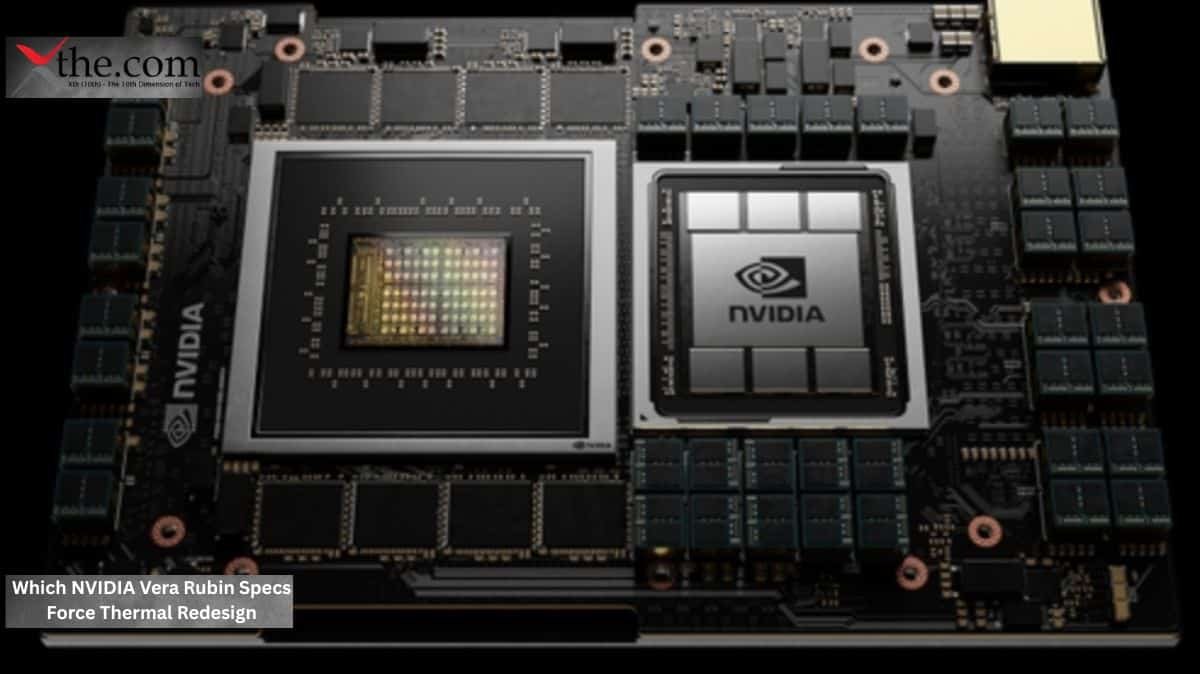
The NVIDIA Vera Rubin Platform leads the next era of AI with integrated features:  

  • Vera Rubin NVL72 GPU Racks  
  • Vera CPU racks (servers with central processing units for handling calculations)  
  • NVIDIA Groq 3 LPX inference accelerator racks (systems designed to speed up AI model predictions)  
  • NVIDIA Bluefield 4 STX storage racks (high-speed storage and networking hardware)  
  • NVIDIA Spectrum 6 SPX Ethernet Racks (Advanced Switches for Fast Data Networking)  

Following the introduction of the platform’s key features, Nvidia made a significant announcement at GTC: the Nvidia Vera Rubin platform is initiating a new chapter in Agentic AI. Seven new chips are now in full production to help scale the world’s largest AI factories.  

The platform features the Vera CPU, Rubin GPU, NVLink 6 switch, ConnectX9 SuperNIC, BlueField DPU, Spectrum 6 Ethernet switch, and Growth 3 LPU. These work as a unified AI supercomputer, powering all stages of AI, from pre-training to real-time agentic inference.  

Vera Rubin represents a leap with seven breakthrough chips, five racks, and one supercomputer powering every AI phase, said Jensen Huang, founder and CEO of Nvidia. The agentic AI inflection point has arrived, and Vera Rubin is driving historic infrastructure growth.  

Enterprises and developers are using cloud for increasingly intricate reasoning, agentic workflows, and mission‑critical decisions that demand infrastructure that can keep pace, said Dario Amodei, CEO and co‑founder of Anthropic. NVIDIA’s platform provides the compute, the network, and system design to keep delivering while improving the safety and reliability our customers depend on.  

“Nvidia infrastructure is the foundation that lets us keep advancing the frontier of AI,” said Sam Altman, CEO of OpenAI. With Nvidia, Vera Rubin will run more powerful models and agents at a massive scale, delivering faster, more reliable systems to hundreds of millions of people. AI infrastructure is changing quickly, moving from separate chips and standalone servers to fully integrated Rack Scale systems, POD-scale deployments, AI factories, and sovereign AI. These changes are leading to big improvements in performance and cost efficiency for organizations of all sizes and industries, from startups and mid-sized businesses to public and private institutions and enterprises. They also help make AI easier to use and improve energy efficiency for the world’s most challenging workloads.  

By integrating compute, networking, and storage—with support from over 80 Nvidia NGX partners—Vera Rubin offers a unified, extensive POD-scale platform comprising multiple AI racks working together as one system.  

NVIDIA Vera Rubin NVL 722 Rack  

The Vera Rubin NVL 72 connects 72 Rubin GPUs and 36 Vera CPUs for efficient large model training, requiring only a quarter of the GPUs used by Blackwell and delivering up to 10x higher inference throughput per watt and lower cost per token. It’s built for hyperscale AI factories, reducing both training time and costs.  

NVIDIA Vera CPU Rack 

Reinforcement learning and agentic AI workloads rely on many CPU-based environments. These environments test and validate the model’s results. They are running on GPU systems.  

The Nvidia Vera CPU RAC offers a dense, liquid-cooled setup based on Nvidia MGX. It includes 256 Vera CPUs, providing scalable, power-efficient capacity with top single-core performance, enabling large-scale agentic AI.  

Integrated with Spectrum X networking, Vera CPU racks keep environments synchronized across the AI factory. Paired with GPU racks, they form the CPU base for large-scale agentic AI and reinforcement learning, delivering results twice as efficiently and 50% faster than traditional CPUs.  

NVIDIA Groq 3 LPS Rack 

The Nvidia Groq 3 LPX is a major step forward in accelerated computing, built for the fast, large-scale needs of API and genetic systems. LPX and Vera Rubin combine their high performance to deliver up to 35 times more inference throughput per megawatt and up to 10 times more revenue potential for trillion-parameter models.  

When scaled up, many LPUs can work together as a single large processor. This speeds up inference tasks. The LPX rack includes 256 LPU processors, 128 GB of on-chip SRAM, and 60 TB of bandwidth when used with Vera Rubin MVL 72. Rubin, GPUs, and LPUs work together to process every layer of the AI model. They handle each output token.  

The LPX architecture is built for trillion-parameter models and million-token contexts. It works with Vera Rubin to maximize power, memory, and computing resources. Its higher throughput per watt and better token performance open up new possibilities for advanced inference. These also mean more revenue for AI providers; with full liquid cooling and MGX infrastructure, LPX will fit easily into the next generation of Vera Rubin AI factories. It will be available later this year.  

NVIDIA Bluefield 4 STX Storage Rack 

The NVIDIA Bluefield for STX Rack Scale system is an AI storage solution. It extends GPU memory across the POD, combining the Vera CPU and ConnectX-9 SuperNIC for high-bandwidth storage and retrieval of key-value cache data.  

NVIDIA DOCA memos are a new system that improves BlueField 4 storage. It enables dedicated KV cache storage processing, boosting MPs’ inference throughput by up to 5x and making power use much more efficient than with general-purpose storage. These changes lead to faster multi-turn interactions with AI agents. AI services become more scalable, and infrastructure is used more effectively across the POD.  

The Nvidia BlueField 4 STX Rack Scale Context Memory Storage System will enable a critical performance boost needed to exponentially scale our Agentic AI efforts, said Timothee Lacroix, co-founder and chief technology officer of Mistral AI. By delivering a new storage tier purpose-built for an AI agency’s memory, STX is ideally positioned to ensure our models can retain logic and speed when reasoning across large datasets.  

NVIDIA Spectrum 6 SPX Ethernet Rack  

Spectrum 6 SPX Ethernet accelerates data movement between the AI factory, using Spectrum X Ethernet or NVX. Quantum X800 InfiniBand switches ensure high-speed rack connections at scale.  

Spectrum X, Ethernet, and Photonics use co-packaged optics. It offers up to five times better optical power efficiency and ten times greater resiliency than traditional pluggable transceivers.  

Improved Resiliency And Energy Efficiency 

NVIDIA, along with more than 200 data center partners, has announced the NVIDIA DSX platform for Vera Rubin. DSX Max Q dynamically manages power across the entire AI factory, enabling data centers to deploy 30% more AI infrastructure without increasing power consumption. The new DSX Flex software also helps AI factories use grid power more flexibly, unlocking 100 gigawatts of unused grid power. We released the Vera Rubin DSX AI factory reference design, a blueprint for code-signed AI infrastructure that maximizes tokens per watt and overall goodput, improving system resiliency and accelerating time-to-first-production.  

By integrating compute, networking, storage, power, and cooling, Vera Rubin’s architecture boosts energy efficiency, scales reliably under heavy workloads, and maintains high uptime for AI factories.  

Broad Ecosystem Support 

Partners will start offering Vera Rubin–based products in the second half of this year. These products will be available through major cloud providers like Amazon Web Services, Google Cloud, Microsoft Azure, and Oracle Cloud Infrastructure, as well as NVIDIA cloud partners such as CoreWeave, Cursoe, Lambada, Nebius, NScale, and Together AI.  

Within this broad ecosystem, global system manufacturers such as Cisco, Dell Technologies, HPE, Lenovo, and Supermicro are expected to offer a variety of servers built with Vera Rubin products. In addition, other companies such as Aivres, Asus, Foxconn, Gigabyte, Inventec, Pegatron, Quanta Cloud Technology (QCT), Wistron, and Wiwynn will also provide these servers.  

On this foundation, leading AI labs and developers, including Anthropic, Meta, Mistral AI, and OpenAI, are embracing Vera Rubino to train larger models and accelerate long-context multimodal systems, aiming for greater speed and efficiency. 

Source: NVIDIA Vera Rubin Opens Agentic AI Frontier 

AI on Google Search is releasing Search Live in the Google app. It uses a real-time camera and voice input. The feature runs on the Gemini 3.1 Flash Live model. Users can now show their surroundings to the AI in Google Search and ask questions in a true dialogue.  

Important Details 

  • Real-time communication: users benefit from seamless voice conversations with AI, enabling faster, more natural searches.  
  • Camera and voice integration: with instant camera and voice activation, users can quickly get answers about any object or place they encounter.  
  • Location: the feature is in the Google app (Android and iOS), accessible via the live icon under the search bar.  
  • Availability: expanding to 200+ countries and several Indian languages, Search Live benefits a broad global audience.  

How Search Alive Works 

  • Open live mode in the Google app, tap the Live button, or access it via Google Lens (a tool for searching by images captured from a camera).  
  • Point and ask, enable the camera, and ask questions allowed.  
  • The AI gives audio feedback. It also shows relevant web links.  
  • Continuous conversation—the feature permits follow-up questions for natural interaction.  
  • Background operation: users can keep interacting with the AI while multitasking, maintaining efficiency even though camera sharing pauses.  

Use Cases 

  • Troubleshooting: users can point the camera at electronics to ask how to connect specific cables.  
  • Traveling users can identify landmarks.  
  • Hobbies and learning: users can request explanations for items in a matcha set or about educational experiments.  
  • Shopping, getting shook, product details, and reviews.  

This is part of a shift toward multimodal search where imagery, visual cues, and speech replace text input.  

Google has launched Gemini 3.1 Flash Live, a real-time audio and voice AI model for faster, more natural conversations. It reduces latency, improves reliability, and enhances dialogue quality for advanced, voice-first, multimodal AI applications.  

Gemini 3.1 Flash Live  

Gemini 3.1 Flash Live manages real-time conversations with enhanced responsiveness and context awareness. It supports natural dialogue flow, multi-term interactions, extended conversations, and dynamic user inputs.  

The model delivers reliable, natural-sounding conversations and completes complex tasks, achieving benchmarks that exhibit significant improvements over previous versions. For example:  

  • ComplexFunkBench audio: Gemine 3.1 Flash Live achieves 90.8% on multi-step function calling with various component constraints, outperforming earlier models.  
  • Scale AI audio multi-challenge: it scores 36.1% with thinking enabled, excelling at complex instruction following and long-horizon reasoning, despite interruptions and hesitations typical of real-world audio.  

Key Features And Improvements 

  • The model delivers faster responses and maintains fluid, instant interactions, even in noisy environments, by filtering out background noise for reliable performance.  
  • Better reliability in real-life conditions: Gemini 3.1 Flash Life executes tasks more reliably in noisy environments by filtering out background noise such as traffic or television, ensuring agents remain responsive to instructions.  
  • It closely follows complex instructions and guardrails, ensuring dependable performance even as conversations shift.  
  • The model accurately interprets pitch, tone, and place, adapting responses to user sentiment and enabling more natural dialogue.  
  • More natural dialogue flow: The model maintains conversation threads for longer periods, preserving context throughout extended interactions and idea generation. Mission Sessions  
  • It enables real-time conversations in over 90 languages for global accessibility and consistent performance.  

Developers can use the Gemini Live API (a platform for building features using real-time data) to build real-time conversational agents that process voice and video inputs and respond instantly. Key capabilities include:  

  • Handling real-time audio and multimodal input  
  • Function calling and external tool integration  
  • Session management for long-running conversations  
  • Ephemeral tokens for secure interactions  
  • Building interactive voice-first AI agents  

In addition to these foundational capabilities, the Google Gen AI SDK (a software toolkit for building generative AI features) enables asynchronous connections to audio sessions and supports instant interaction. Actions  

Search Live Expansion And Use Cases 

Search Live now works in 200+ regions with AI mode, using Gemini 3.1 Flash Live for real-time voice and camera queries. AI mode is available in Bengali, Gujarati, Kannada, Malayalam, Marathi, Odia, Tamil, Telugu, Urdu, and more.  

Key Features Of Search Live Include: 

  • Voice-activated conversation through the Google app  
  • Follow-up questions in ongoing sessions  
  • Camera input for context-aware queries  
  • Google Lens integration for visual L-word interaction  
  • Helpful audio responses with supporting web links  

This allows users to perform tasks that require real-time interaction, such as troubleshooting, learning, or investigating real-world objects.  

Ecosystem And Integrations 

Gemini 3.1 Flash Live delivers scalable infrastructure and partner integration for production environments:  

  • WebRTC-based systems for live voice and video  
  • Global edge routing for distributed applications  
  • Partner integrations for handling diverse input systems  

Companies such as Verizon, LiveKit, and the Home Depot report positive results using the model in conversational workflows.  

Safety And Content Authenticity 

All generated audio includes a synth ID watermark imperceptibly embedded in the output. This enables the detection of AI-produced content, supporting honesty and reducing misinformation.  

Availability 

Gemini 3.1 Flash Live is available across multiple Google platforms.  

  • Developers: preview access via Gemini Live API in Google AI Studio  
  • Enterprises: Gemini Enterprise for Customer Experience Applications  
  • End users: Gemini Live and Search Alive  
  • Global Reach: Search Live is available in 200+ countries and territories with AI mode.  
  • Languages: real-time conversation support in more than 90 languages  
  • The Platforms column is accessible via the Google app on Android and iOS, as well as through Google Lens for camera-based interactions.  

SourceGoogle rolls out Gemini 3.1 Flash Live for real-time voice AI conversations, expands Search Live globally 

Microsoft 365 Copilot is your AI work assistant built on Work IQ and Enterprise Data Protection. Copilot integrates with your current apps and workflows, supporting tasks from simple to complex. As new models emerge, Copilot grows more powerful. Today, we are excited about the next one. To announce new features on this journey  

We recently announced that the technology behind Claude Cowork is coming to Microsoft 365 Copilot. Now, Co-pilot Co-work, built for long-running, multi-step work in Microsoft 365, is available through the Frontier program. Join Frontier to get early access to Microsoft’s newest AI features and find out more about Co-pilot Co-work.  

Co-pilot Co-Work helps you delegate and finish tasks more easily. Just describe what you want to achieve, and Co-pilot Co-Work will create a plan, use your tools and files, and keep the work moving forward with accurate updates and chances for you to guide Co-pilot Co-Work. Help tune, delegate, and complete tasks more efficiently. By simply describing your goal, Copilot, Co‑Work, creates actionable plans, leverages your tools and files, and sends status updates and images. You guide the process as needed. Key benefits include streamlining repetitive work, organizing meetings, summarizing information, and automating regular workflows — such as monthly budget reviews. Which features, like calendar management and daily briefings from Cloud and Microsoft Copilot for coworkers, empower users to handle one-off tasks and recurring responsibilities. Early adopters like Capital Group have experienced more effective scheduling, planning, and executive preparation.  

We started using Copilot when it launched in 2024. Now, co-workers know the features help us automate and expand our Copilot use instead of just creating content or answers. Co‑work connects steps, coordinates tasks, and ensures work gets done across daily processes. Co‑work uses our enterprise data and fits within our security and risk guidelines, so we can experiment and grow confidently. This helps us move faster and use AI where it truly matters.  

— Barton Warner, Senior Vice President of Enterprise Technology at Capital Group  

We’re also excited to share the latest features in Researcher. Now with Multimodal Intelligence, the researcher continues to answer complex questions by combining information from different sources, creating a thorough analysis and giving you cited, well-explained responses you can trust.  

The new critique feature in Researcher goes further by clearly separating tasks. It uses models from Frontier Lab, such as Anthropic and OpenAI. One model plans the tasks and writes the first draft, then another model reviews and improves the work, acting as an expert before the final report is ready.  

The results are clear. Researcher now scores 13.8% higher on the deep research accuracy, completeness, and objectivity (DRACO) benchmark, which is the industry standard for deep research quality.  

With the researchers’ new Model Council, you can compare answers from different models side by side. This allows you to easily see where the models agree, where they differ, and what unique insights each provides. It’s like having several researchers working for you. Learn more here.  

Try These Features Today 

All these new features are introduced as part of Wave 3 of Microsoft 365 Copilot, which is transforming how AI supports work. Now, AI can better understand your work’s context and scale securely across teams. When intelligence and trust combine, AI becomes integral to daily operations. To start exploring these capabilities, visit Microsoft 365.com/Copilot or download the Microsoft 365 app.  

Source: Copilot Cowork: Now available in Frontier