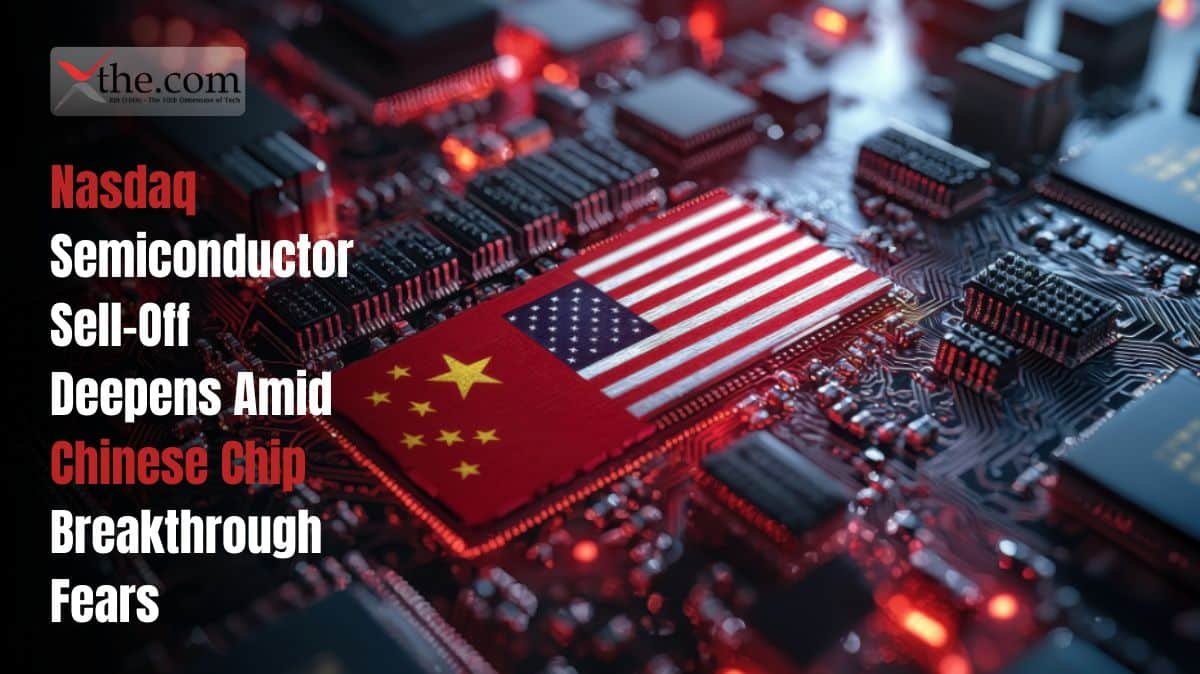
Wall Street’s confidence in semiconductor stocks is facing one of its toughest tests of 2026. The latest wave of selling has pushed the Nasdaq closer to a technical correction as investors digest a China chip breakthrough report, question the durability of artificial intelligence infrastructure spending, and prepare for another round of closely watched earnings from leading semiconductor companies. The combination has intensified concerns over Nasdaq correction territory chips, leaving traders to reexamine valuations that only weeks ago appeared unstoppable.
Nasdaq Correction Territory Chips Signal a Change in Market Sentiment
Over the past two years, the semiconductor field has led the wider technology rally. Investors gave high valuations to companies supplying AI data centers, expecting strong demand for advanced processors, memory chips, networking equipment, and manufacturing tools.
Now, that story has become more complex.
Reports that Chinese companies have made real progress in domestic chip manufacturing have added new uncertainty to an already uneasy market. The advances focus on deep ultraviolet (DUV) lithography systems developed in China, eliciting questions about how soon the country could rely less on imported manufacturing equipment. Although these technologies still lag behind the most advanced extreme ultraviolet (EUV) systems used by global leaders, investors are paying more attention to the long-term competitive impact. (Reuters)
As a result, the semiconductor’s sell-off deepens as portfolio managers cut back on chip stocks that had soared during the AI boom.
Understanding the China Chip Breakthrough Report
The China chip breakthrough report has become the latest catalyst for market swings.
Industry analysts say Chinese manufacturers have begun making their own immersion DUV lithography equipment, a key step toward growing local semiconductor production. While this technology does not yet match the world’s most advanced manufacturing platforms, it marks real progress in China’s long-term plan to become more self-sufficient in semiconductors. (Reuters)
For investors, what they believe is almost as important as what is actually happening.
If Chinese manufacturers continue to close the technology gap, equipment makers and memory-chip producers outside China could face tougher competition in the years ahead. This possibility has led traders to cut back after one of the biggest rallies the semiconductor industry has seen in decades.
The discussion about why semiconductor stocks are selling off in 2026 now goes beyond earnings. It also includes issues like global competition, supply chain strength, and who leads in technology.
AI Capital Spending Faces New Questions
Another factor driving volatility is growing concern about AI capital spending jitters.
Big tech companies have invested hundreds of billions of dollars in building AI infrastructure. Huge spending on data centers, networking hardware, advanced memory, and graphics processors has driven record revenue growth for semiconductor companies.
But now, investors are starting to question if this level of spending can last.
Recent reports have brought up concerns about how large AI projects are being financed and whether big tech companies can keep investing at this pace without hurting profits. These questions have made investors rethink companies whose high valuations depend on years of nonstop AI growth. (Reuters)
Instead of giving up on AI, big investors now want more proof that future spending will lead to steady returns.
Earnings Could Determine the Next Direction
Attention now shifts toward KLA, Seagate, and NXP earnings today.
Each of these companies plays a unique and important role in the semiconductor industry.
KLA provides advanced inspection and process-control equipment that chip manufacturers rely upon to improve production yields. Seagate Technology caters to enterprise storage markets benefiting from expanding AI workloads and cloud infrastructure. NXP Semiconductors remains heavily exposed to automotive chips, industrial automation, and connected devices.
Together, these earnings reports could give one of the clearest pictures of semiconductor demand as we move into the second half of 2026.
Investors will pay less attention to the actual numbers and more to what company leaders say about customer spending, inventory, AI demand, pricing, and future investment plans.
Strong guidance could stabilize sentiment. Conservative forecasts, however, may reinforce concerns that chip stocks near a correction have further room to decline.
Why Investors Are Reacting So Quickly
Semiconductor stocks are rarely valued just on their current earnings.
Instead, their prices frequently reflect what investors expect to happen years from now. If people think AI demand will grow quickly, chip companies get higher valuations. But if doubt rises, even a little, those valuations can drop fast.
That explains why chip stocks near correction have experienced outsized declines despite relatively healthy operating fundamentals.
Many big investors are choosing to take profits from the AI rally now rather than wait to see what happens with Chinese competition, Federal Reserve decisions, and tech earnings.
This situation shows why ‘Nasdaq correction chip stocks 2026′ has become a key topic for investors this year.
Global Competition Is Changing the Industry
China’s ambitions in semiconductors are not new.
Years of export controls, government funding, and local innovation programs have pushed Chinese companies to accelerate development across many parts of semiconductor manufacturing.
Many specialists warn that China’s latest manufacturing capabilities still lag behind leading global technologies, but even small improvements can affect investor expectations. Each new advance raises questions about future prices, market share, and competition among global chip suppliers. (Reuters)
For global equipment makers and chip designers, staying ahead now means investing in research and expanding their manufacturing capacity.
Investors Face Opportunity Alongside Risk
Times of big market swings often make investment decisions harder.
Some investors see the current drop as a needed correction after huge gains during the AI boom. Others think the recent weakness is a chance to buy top semiconductor companies at better prices.
In the end, the quality of company earnings will probably matter more than the latest headlines.
Companies that can show reliable demand, growing profits, careful spending, and strong customer support should do well even if the market is shaky in the short term.
Meanwhile, companies that rely on high-valuation assumptions may continue to see large price swings as investors rethink long-term growth prospects.
The next earnings season could show whether the recent semiconductor sell-off will turn into a bigger tech correction or be a short break in the AI investment cycle. With the China chip breakthrough, worries about AI spending, and today’s earnings from KLA, Seagate, and NXP in focus, semiconductor stocks are at the heart of a major market debate. Whether chip stocks in correction territory will recover will depend more on evidence of innovation, demand, and profits than on investor sentiment, especially as the industry faces new risks worldwide.
A company that wrote off billions on electric vehicles just handed investors one of its best trading days of the year. On Wednesday morning, Ford stock jumps premarket to roughly $15.90 a share, a gain of nearly 7% that stretched the stock’s year-to-date advance to 17%. The rally follows Tuesday’s after-the-bell release and stands out precisely because it occurred against a backdrop of wider market unease over Federal Reserve policy and rising technology capital expenditures. While semiconductor and software names wobbled, Dearborn’s century-old carmaker delivered a Ford strong quarterly results headline that Wall Street wasn’t positioned for.
The numbers explain the enthusiasm. Ford posted adjusted earnings per share of 42 cents, comfortably ahead of the roughly 34-to-36-cent consensus analysts had penciled in heading into the print. That represents a genuine Ford Q2 2026 earnings beat, not a low-bar comparison against a weak prior year. Automotive revenue came in at $44.89 billion, a touch below the $45.3 billion to $45.7 billion range analysts expected, which makes the earnings outperformance more impressive: Ford grew profit despite selling into softer-than-forecast top-line demand.
A Beat Built on Pricing and Mix, Not Volume
Dig into the Ford Q2 2026 earnings results, and a clear pattern emerges. This wasn’t a story of Ford simply moving more metal. That was a story about Ford making more money on every vehicle it sold. Resilient net vehicle pricing held steady even as unit sales declined, and a higher share of profitable products—especially high-margin trucks and commercial vehicles—helped boost results. Ford Pro, the company’s commercial vehicle and services arm, was a key driver this quarter. Paid software subscriptions in Ford Pro reached over 900,000 in the first half of 2026, up about 20% from last year, and total hands-free BlueCruise driving hours exceeded 12 million. These numbers are important because they show recurring, high-margin revenue beyond hardware sales, which is the kind of business mix investors value.
Ford also increased its full-year outlook. The company currently expects 2026 EBIT of $10 billion to $11 billion, up from its earlier estimate of $8.5 billion to $10.5 billion. Adjusted free cash flow is now forecast at $6 billion to $7 billion, up from $5 billion to $6 billion. It’s unusual for a company to raise its guidance in the same quarter it reports a GAAP net loss, but Ford did just that. A $3.6 billion charge related to its BlueOval SK battery joint venture, part of a scaling back of its electric vehicle plans, pushed GAAP results into the red even as the core automotive business improved.
The EV Drag Hasn’t Disappeared
Still, Ford’s electric vehicle challenges endure. The Model e segment lost $4.8 billion in 2025, and the unit is still struggling to regulate supply with weak demand while investing in new products. Wall Street’s ongoing “Hold” rating on the stock, even after Ford’s strong first quarter in April, shows this concern isn’t resolved. Investors are confident in Ford’s traditional and commercial vehicle business, but they remain wary of the company’s EV strategy from three years ago. The BlueOval SK charge is less a one-time setback and more a sign that management is recognizing this hesitation and moving to limit further losses.
How Ford Stacks Up This Earnings Season
Context matters, and the automaker earnings season underway across Detroit and beyond makes Ford’s results look even stronger. General Motors shares were flat near $90.30 that morning, with no similar boost. Tesla, on the other hand, is down about 32% for the year after a weak second-quarter report last week, which is a sharp contrast to Ford’s momentum. This difference stands out because Ford is often compared to Tesla within investor discussions. This quarter, the two companies had very different stories.
Analysts’ actions in response to these results indicate a shift in sentiment. Jefferies upgraded Ford to Buy before earnings, raising its price target from $14.50 to $17.50. Citi also upgraded Ford to Buy after the results. Ford has beaten revenue estimates for five straight quarters and exceeded earnings estimates in seven of the last ten, a record that had been largely ignored by a market fixated on the company’s EV losses. The Ford stock reaction suggests that view may be starting to change.
What Analysts Are Watching Next
Bernstein analyst Philippe Houchois described this quarter as a low point, not a peak. He believes the second quarter was likely the bottom for production volume, and that output from Ford’s Novelis-supplied aluminum operations should increase from here. If he’s right, future quarters should look better by comparison, giving Ford a boost for the rest of the year, even as EV losses continue to affect profits.
The Road Ahead
Ford’s July 2026 earnings could mark a turning point in how the market values the stock, separating its improving core automotive business from the older EV strategy that management is now moving away from. The premarket jump in Ford’s stock this week shows that shift is happening. Whether the gains last will depend on how well Ford delivers in the second half of the year: turning higher guidance into real cash flow, keeping Ford Pro’s subscription growth strong, and handling the EV wind-down without further unanticipated charges. Investors have shown they’ll reward the first two. The third is still something Ford needs to prove it can manage.
Wall Street faces a defining 24 hours. Investors have already digested the Federal Reserve’s latest policy decision, but attention has shifted almost entirely to Meta Microsoft Q2 earnings. The reports arrive after the closing bell and could determine whether the technology rally extends through the second half of the year or loses momentum. At the center of the debate are big tech capex guidance and the wider impact of the Fed decision tech earnings outlook on valuations across the artificial intelligence ecosystem.
The impact goes far beyond just these two companies. Major AI suppliers, cloud providers, chip makers, and software vendors will all be watching Meta and Microsoft’s updates on spending and revenue growth.
Meta Microsoft Q2 earnings Put AI Spending Under the Microscope
This earnings season has shown strong results. Of about 190 S&P 500 companies that have reported so far, 88% beat analysts’ expectations, up from 81% last year. Average earnings growth is around 23%, boosting investment confidence despite high interest rates and uncertainty. That performance has fueled discussion about the S&P 500’s 88% beat rate and raised expectations for the technology sector.
With this in mind, Meta and Microsoft’s earnings after the close are now the most anticipated news for the market.
Investors want to see Microsoft show steady growth in Azure cloud, software subscriptions, and AI services in its products. Meta, on the other hand, needs to prove that its AI investments are driving higher ad revenue, greater customer engagement, and higher earnings across its platforms.
The Federal Reserve Adds A Further Layer of Complexity
The latest Fed decision and tech earnings backdrop complicate investor expectations.
Higher interest rates usually lower the value of future earnings, so pricey growth stocks are more affected by Fed policy. Tech companies have largely eased these worries with strong earnings, but investors remain cautious about where they put their money.
The Fed’s guidance now directly affects how companies decide to invest. Firms spending heavily on AI need to show shareholders that these investments will pay off in the future.
This fine balance is why what executives say during earnings calls can matter more than the actual financial results.
Big tech capex guidance Could Move the Entire AI Supply Chain.
Capital spending is now the key measure in the AI era.
Last week’s reaction to Alphabet showed how prudent investors are. Strong revenue growth isn’t enough to boost stock prices anymore. Now, Wall Street is looking at whether increased infrastructure spending will really lead to better returns.
If Meta or Microsoft reports lower-than-expected AI infrastructure spending, investors might doubt demand cutting-edge chips, networking gear, and data centers. This could quickly put pressure on semiconductor suppliers as future order expectations drop.
On the other hand, much higher spending brings its own worries. Investing heavily can support long-term AI leadership, but it reduces near-term free cash flow. Shareholders want clear explanations of how each extra billion spent will lead to bigger profits later.
That dynamic places AI monetization capex watch at the center of investor discussions.
Microsoft Must Demonstrate AI Is Becoming a Business, Beyond an Investment
Microsoft started this earnings season with strong momentum.
Business customers keep adopting Microsoft’s AI-powered tools, and Azure is still one of the fastest-growing cloud platforms. Now, investors want proof that AI services are generating steady revenue, not just increasing infrastructure costs.
Analysts will closely watch growth in AI subscriptions, cloud demand, software performance, and management’s outlook on future spending.
Investors also want clear information about Microsoft’s growing data centers. Each new AI project requires more computing power, but shareholders want to see real financial returns alongside tech leadership.
Meta Faces Questions About Advertising and AI Returns
Meta is coming into earnings from a different place.
Meta’s ad business has bounced back over the last two years, thanks to better recommendation algorithms and more AI features. The company is still investing a lot in large language models, suggestion engines, and advanced computing power.
The central question involves efficiency.
Can Meta keep boosting ad performance while keeping costs in check? Will all the money spend on AI lead to more revenue without hurting profit margins too much?
Executives also need to talk about spending on Reality Labs and whether investments outside the main ad business still make sense in today’s economy.
How Meta answers these questions could affect how investors feel about the digital ad industry as a whole.
Why AI monetization capex watch Matters More Than Quarterly Earnings
Quarterly earnings are just one part of what investors look at.
Wall Street is now focused on whether AI spending leads to real business results. Just growing revenue isn’t enough if infrastructure costs are rising faster than profits.
That’s why company guidance often has a bigger impact on markets than past financial results.
Executives who clearly show how AI spending will boost future cash flow usually get more investor support. Those who don’t give enough details frequently see their stock price swing, even if they beat earnings expectations.
In this environment, investors are especially interested in topics like ‘Meta Microsoft earnings capex 2026’ as they try to figure out whether AI spending can continue at this pace.
Outside of tech, most U.S. companies have also reported good results.
The high S&P 500 earnings beat rate in Q2 reflects steady consumer demand, disciplined expense management, and persistent investment even with economic obstacles. An S&P 500 88 percent beat rate is one of the best in years and increases confidence in overall corporate profits.
Still, tech companies have an outsized impact on the main market indexes.
Since Microsoft and Meta are among the largest publicly traded companies, their earnings could significantly affect index performance, institutional investing, and overall market mood as we head into August.
What Wall Street Will Watch After the Closing Bell
Several questions will dominate analyst discussions once Meta and Microsoft earnings are released after closing.
Revenue growth still matters, but investors will look even more closely at operating margins, free cash flow, AI adoption metrics, and future-oriented commentary. Above all, executives must provide credible big tech capex guidance that weighs innovation with financial discipline.
No matter if spending goes up or down, markets will care more about why management made those choices than the exact amount.
The mix of monetary policy, AI investment, and company profits is now forming the next stage of the tech cycle. As investors look at Meta and Microsoft’s Q2 earnings, the bigger story about Fed policy, tech spending, and AI business models could matter more than the numbers themselves. Companies that show both steady innovation and smart spending will probably lead the way for tech stocks for the rest of 2026.
Walk into a Best Buy or scroll through Amazon for a new TV and you will hit the same wall every time. OLED. QLED. Neo QLED. QD-OLED. Mini-LED. The terminology has multiplied faster than the actual differences between the TVs, and most product pages do nothing to explain what any of it means for the picture you will actually see in your living room.
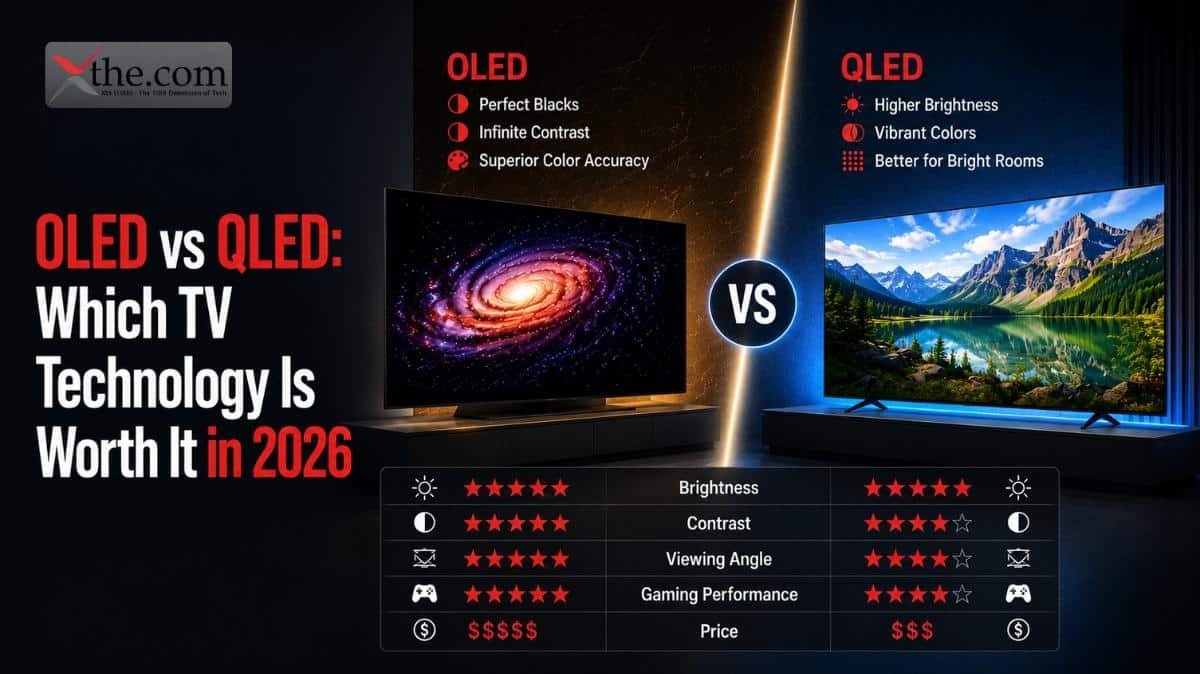
OLED vs QLED is still the core decision for most US buyers in 2026 — and the honest answer is that neither technology is universally better. OLED produces the most cinematic picture quality available in a home TV. QLED handles bright rooms and daytime viewing better than any OLED can. Which one you should buy depends almost entirely on your room, your viewing habits, and your budget. This guide answers that question directly, without the jargon.
The Short Answer Before Everything Else
Buy OLED if: You watch movies and TV shows mostly in a dark or dimly lit room and want the best picture quality your money can buy.
Buy QLED if: Your living room gets significant natural light, you watch sports during the day, or you want the largest screen size at the lowest price.
Buy QD-OLED if: You want the closest thing to having both — OLED’s black levels with meaningfully more brightness than standard OLED — and your budget reaches $1,500 or higher for a 55-inch.
If those three sentences answered your question, the rest of this article tells you which specific TV to buy. If you want to understand why, keep reading.
How Each Technology Actually Works
Understanding what you are buying takes about three minutes and makes the rest of the comparison make sense immediately.
OLED — Organic Light Emitting Diode Every pixel in an OLED panel is its own light source. When a pixel needs to show black, it turns off entirely — not dimmed, completely off. This is why OLED produces what reviewers call “perfect blacks.” There is no backlight bleeding into dark areas, no gray where black should be. Contrast is effectively infinite because the difference between the brightest white and the darkest black is the difference between full brightness and no light at all.
The limitation: because each pixel generates its own light, the total brightness of an OLED screen is lower than a backlit display of the same size. Showing a very bright scene across the full screen requires more power than the organic compounds can sustain long-term without degradation.
QLED — Quantum Light Emitting Diode QLED is Samsung’s marketing term for LCD TVs with a quantum dot filter layer. The quantum dots convert the backlight’s blue light into more precise red and green wavelengths, which produces more accurate and saturated colors than standard LCD TVs. A QLED is still an LCD TV at its core — it has a backlight behind the screen rather than individual self-emitting pixels.
The limitation: because there is a backlight, black areas on screen are never truly black — they are very dark gray, because the backlight cannot be completely shut off without affecting the surrounding pixels.
Neo QLED — The Upgrade Worth Knowing Neo QLED replaces the standard backlight with thousands of tiny Mini-LED backlights that can be controlled in smaller zones. This dramatically improves contrast compared to standard QLED because dark zones of the screen can be dimmed more precisely without affecting bright areas. Neo QLED is not a different technology from QLED — it is a significantly improved version of it.
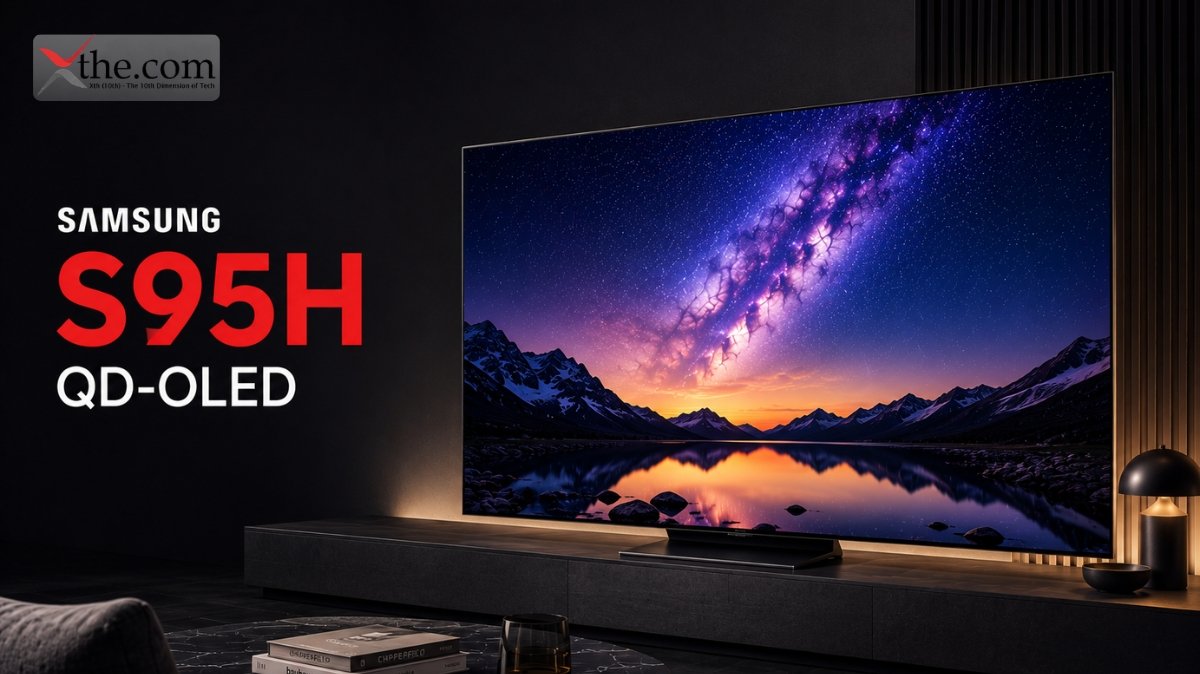
QD-OLED — Samsung’s Hybrid Approach QD-OLED combines OLED’s self-emitting pixels with quantum dot technology. Instead of the white organic pixels used in traditional OLED, QD-OLED uses blue OLED pixels that pass through quantum dot material to produce color. The result is an OLED panel that reaches meaningfully higher brightness levels than standard OLED while retaining OLED’s perfect blacks and infinite contrast. RTINGS named the Samsung S95H QD-OLED the best TV they have tested in 2026.
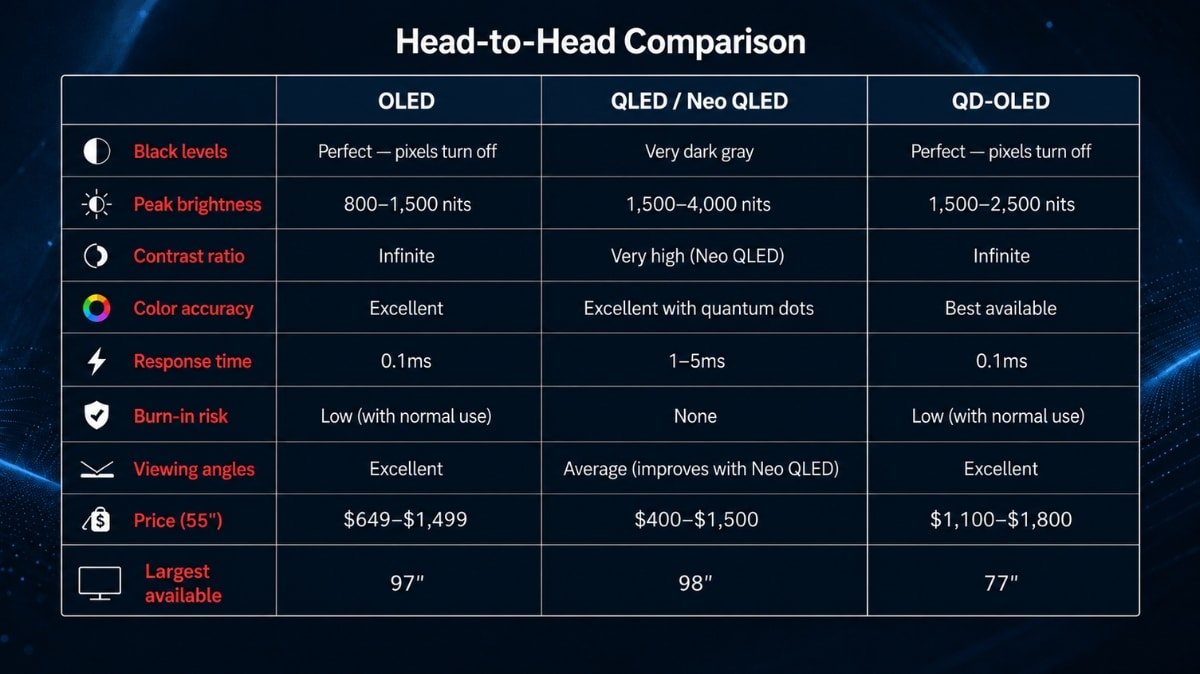
Head-to-Head Comparison
OLED
QLED / Neo QLED
QD-OLED
Black levels
Perfect — pixels turn off
Very dark gray
Perfect — pixels turn off
Peak brightness
800–1,500 nits
1,500–4,000 nits
1,500–2,500 nits
Contrast ratio
Infinite
Very high (Neo QLED)
Infinite
Color accuracy
Excellent
Excellent with quantum dots
Best available
Response time
0.1ms
1–5ms
0.1ms
Burn-in risk
Low (with normal use)
None
Low (with normal use)
Viewing angles
Excellent
Average (improves with Neo QLED)
Excellent
Price (55″)
$649–$1,499
$400–$1,500
$1,100–$1,800
Largest available
97″
98″
77″
Black Levels and Contrast — OLED Wins
This is the clearest and most meaningful picture quality difference between OLED and QLED, and it is visible to anyone without calibration equipment.
Put an OLED TV and a QLED TV side by side in a dark room, play a night scene from any movie, and look at the letterbox bars at the top and bottom of the screen. On the OLED, they are black. On the QLED, they are dark gray. The difference is subtle in a well-lit room and obvious in a dim one.
This contrast advantage is what makes OLED the preferred technology for home cinema setups, for people who watch movies at night, and for anyone who has spent time in a proper screening room and wants to replicate that experience at home. The shadow detail in dark scenes — the texture in a dark coat, the depth in a nighttime street scene — is more visible on OLED because the surrounding black areas are actually black rather than slightly luminous gray.
Neo QLED has dramatically reduced this gap compared to standard QLED. With thousands of local dimming zones, Neo QLED can get very close to OLED’s black levels in real viewing conditions. But in a direct side-by-side comparison, the OLED advantage is still measurable and visible.
Winner: OLED — but Neo QLED is closer than ever
Brightness — QLED Wins for Bright Rooms
This is where QLED technology holds a genuine, meaningful advantage that matters for everyday viewing in typical US living rooms.
A premium Neo QLED TV in 2026 reaches peak brightness of 2,000 to 4,000 nits. A premium OLED reaches 800 to 1,500 nits, with QD-OLED pushing to around 2,500 nits. In a bright living room with windows, on a Sunday afternoon with NFL games on, the QLED’s extra brightness makes the picture look vivid and punchy where the OLED can look slightly washed out.
The nit numbers are measured at peak brightness on small areas of the screen. The more practically useful measurement is sustained full-screen brightness, where OLED’s advantage over QLED narrows further — OLED panels manage heat by reducing brightness when large portions of the screen are very bright, which is exactly the condition of a bright sports broadcast or daytime television.
For buyers who primarily watch TV during daytime hours, in rooms with large windows, or with overhead lighting on, this brightness advantage is the single most practically important spec in the comparison. A $1,200 QLED will look better in that environment than a $1,200 OLED.
Winner: QLED / Neo QLED — clearly
Color Accuracy — QD-OLED Leads, Others Are Close
Color accuracy in 2026 is strong across all three technologies when you buy a quality panel from a reputable brand. The days of QLED having obviously oversaturated cartoon colors and OLED looking slightly muted are largely over.
QD-OLED produces the widest color gamut and the most accurate color volume — meaning colors stay accurate across different brightness levels rather than shifting as the screen gets brighter. This is relevant for HDR content, where the accuracy of colors at high brightness levels matters for the effect to look natural rather than blown out.
Standard OLED from LG uses white sub-pixels (WRGB) that can introduce a slight color accuracy trade-off at very high brightness. Standard QLED’s quantum dot filter produces accurate colors across most of the visible spectrum with good saturation. For most content in most viewing environments, the color differences between a good OLED and a good Neo QLED are smaller than reviewers’ spec-focused comparisons suggest.
Winner: QD-OLED for color volume. OLED and Neo QLED are close for most content.
Gaming Performance — OLED Wins on Response Time
For gamers, the comparison is more straightforward. OLED’s 0.1 millisecond pixel response time is effectively instantaneous — there is no motion blur from the display itself. Fast-moving game content stays sharp frame to frame. QLED’s response time of 1 to 5 milliseconds is not slow enough to cause visible problems in casual gaming but creates a measurable difference in competitive gaming where motion clarity at high frame rates matters.
Both technologies support HDMI 2.1 on higher-end models, which means 4K at 120Hz input, VRR (Variable Refresh Rate), and ALLM (Auto Low Latency Mode) for current-generation consoles — PS5 Pro, Xbox Series X, and high-end gaming PCs.
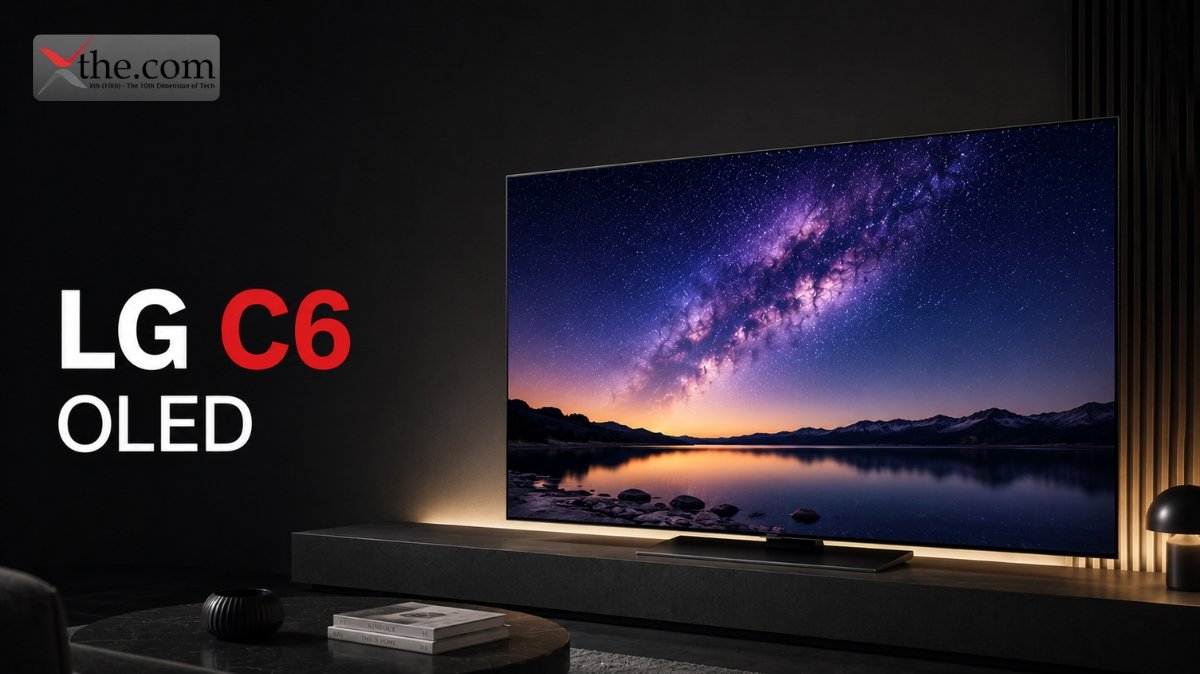
The LG C6 OLED is one of the most recommended gaming TVs of 2026, with four HDMI 2.1 ports, 144Hz refresh rate support, and input lag under 2 milliseconds at 4K120. For anyone buying a TV primarily for gaming, OLED’s combination of response time, black levels for dark game environments, and console integration is the strongest option at its price.
For competitive PC gaming where the priority is the highest possible refresh rate rather than picture quality, a gaming monitor typically outperforms any TV. But for console gaming at TV sizes, OLED is the category winner.
Winner: OLED — for both casual and competitive gaming
Burn-In — The Real Story in 2026
Burn-in is the most common concern people bring to OLED buying decisions, and it has been the most misrepresented issue in this category for years.
Burn-in on an OLED TV occurs when the same static image is displayed at high brightness for thousands of hours — the organic compounds in those specific pixels degrade faster than the surrounding ones, leaving a faint permanent ghost of the image. This is a real phenomenon and it did affect early OLED TVs more significantly.
In 2026, it is not a practical concern for the way most people watch television. Consumer Reports testing and real-world usage data from years of OLED ownership consistently shows that burn-in from typical TV viewing — movies, streaming, broadcast TV, and even regular gaming — is extremely rare. The content people watch is varied enough that no static element remains on screen long enough to cause damage.
The situations where burn-in remains a genuine risk are specific: watching the same news channel with a permanent ticker for eight or more hours daily, using the TV as a computer monitor with a static taskbar visible for years, or playing the same video game with a persistent HUD element for thousands of hours without changing content.
If your use case is anything other than those three specific scenarios, burn-in is not a practical concern with a 2026 OLED TV. Every major OLED manufacturer — LG, Samsung, Sony — includes pixel refreshing cycles and brightness management features that further reduce the already-low risk.
QLED has no burn-in risk at all. For the specific buyer who watches news channels continuously as background TV for twelve-plus hours daily, QLED is the safer technology. For everyone else, burn-in is not a reason to avoid OLED.
Price Reality in 2026
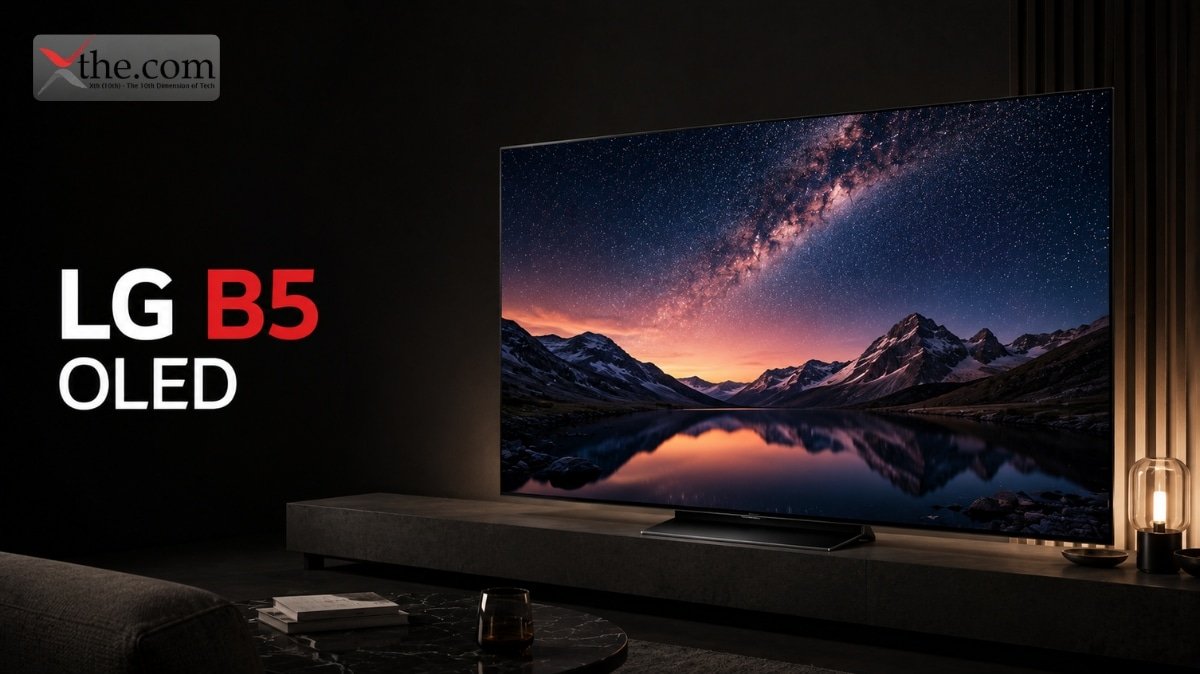
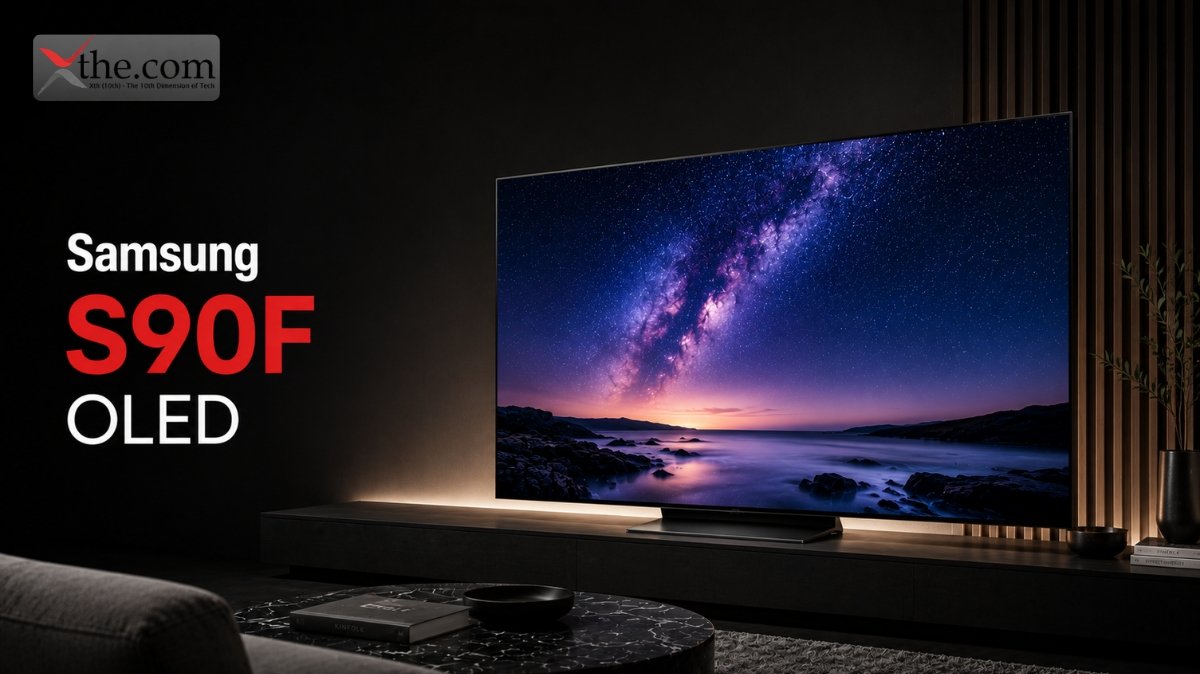
OLED prices have dropped significantly over the past three years. The LG B5 — LG’s entry-level OLED — is currently available at $649 for the 48-inch at Best Buy. The Samsung S90F 65-inch OLED is available at $1,097 at Amazon. A quality OLED TV is no longer exclusively a premium-tier purchase.
Here is what your budget actually gets in 2026:
Under $800: Entry-level OLED territory starts here. The LG B5 at $649 for 48-inch is the most accessible OLED from a major manufacturer. At this price, you get OLED’s black levels and contrast at a smaller screen size with fewer processing and smart TV features than the higher-tier models.
$800–$1,500: The most competitive range in 2026. Both quality Neo QLED and mid-range OLED compete here. The Samsung S90F OLED, LG C6 OLED, and TCL QM7K Neo QLED all sit in this range. This is where most US buyers making a considered TV purchase end up.
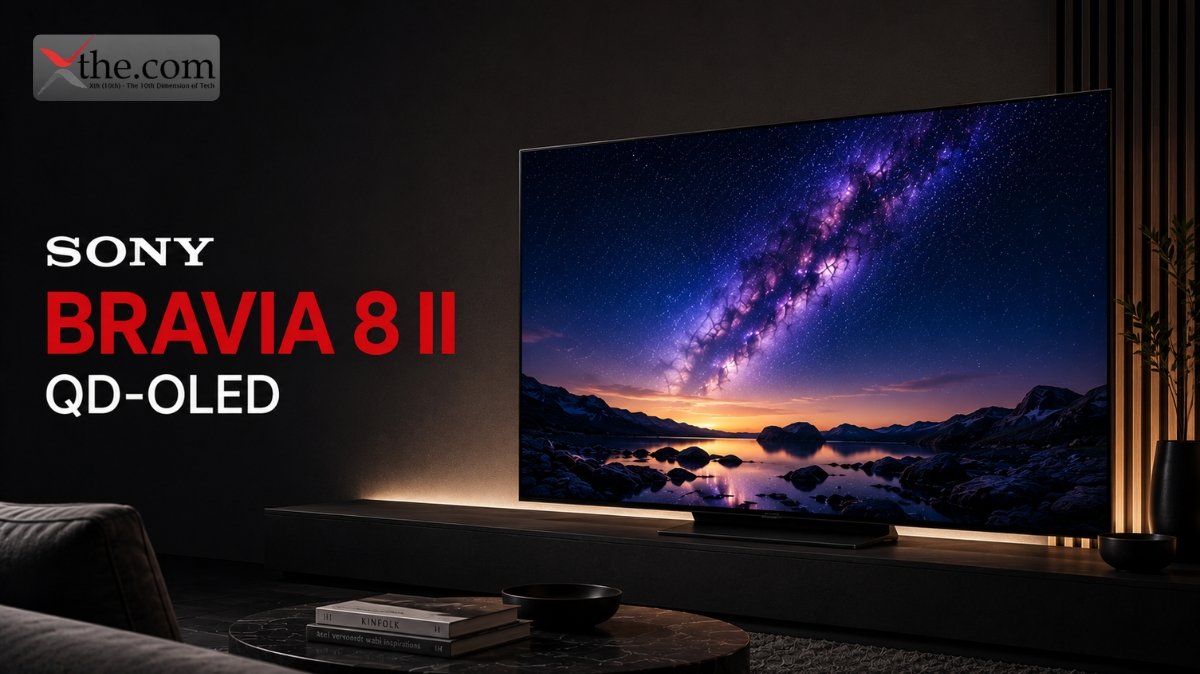
$1,500–$2,500: Premium OLED and flagship Neo QLED. The LG G6 OLED at $2,499 for 65-inch, Samsung S95H QD-OLED at $2,200 for 65-inch, and Sony Bravia 8 II QD-OLED at $2,698 for 65-inch all sit here. At this price, you are getting the best picture quality currently available in consumer televisions.
Above $2,500: Flagship territory for buyers where budget is not the constraint. The LG G6 at larger sizes, Sony’s top-tier QD-OLED, and Samsung’s S95H series. The performance gains over the $1,500–$2,500 range are real but incremental.
QLED and Neo QLED maintain a price advantage per inch at the largest sizes. An 85-inch Neo QLED costs significantly less than an 85-inch OLED, and QLED is available in sizes up to 98 inches where OLED currently stops around 97 inches. For buyers who prioritize size over picture perfection, QLED is the more cost-effective choice at the upper end.
Which TV Should I Buy for My Situation
I watch movies in a dark or dim room. OLED. The perfect blacks and infinite contrast make dark-room cinema viewing the strongest argument for OLED technology. The LG C6 at $1,399 starting or Samsung S90F at $1,097 deliver that experience at accessible prices. If budget allows and you want the best, the Samsung S95H QD-OLED at $2,200 adds meaningfully more brightness to OLED’s contrast performance.
I watch sports and daytime TV with the lights on and curtains open. Neo QLED. The brightness advantage at 2,000 to 4,000 nits makes a visible difference in a bright room, and sports content — with its fast motion and high-contrast action — benefits from Neo QLED’s sustained brightness across large bright areas of the screen. Samsung’s QN90F Neo QLED or TCL’s QM7K both perform well for this use case.
I game on PS5 or Xbox Series X. OLED — specifically the LG C6. Four HDMI 2.1 ports, 144Hz refresh rate, 0.1ms response time, and Dolby Vision Gaming support make it the most capable gaming TV at its price. The dark environments in most games look dramatically better on OLED than on any QLED.
I want the biggest screen my budget allows. QLED or Neo QLED. At 75 inches and above, Neo QLED offers more screen per dollar than OLED. TCL’s QM8K and Samsung’s QN90F both deliver strong performance at larger sizes without the premium OLED charges for bigger panels.
I have a $1,000 budget for a 65-inch TV. The Samsung S90F OLED at $1,097 for 65 inches is the answer — it brings OLED picture quality to a price that was QLED territory a year ago. Alternatively, the TCL QM7K Neo QLED at around $800 for 65 inches is the strongest picture quality available under $1,000 without OLED.
I want the best TV available, budget is not the constraint. Samsung S95H QD-OLED at $2,200 for 65-inch. RTINGS named it the best TV tested in 2026. QD-OLED’s combination of OLED black levels and higher brightness than standard OLED — up to 2,500 nits peak — produces the most complete picture performance currently available in a consumer TV.
The Best OLED TVs to Buy Right Now
LG B5 OLED — $649 (48″) | Entry-level OLED, best value introduction to the technology. Supports Dolby Vision, has HDMI 2.1 on select ports. The most accessible OLED from a tier-one manufacturer.
Samsung S90F OLED — $1,097 (65″) | The value pick in the OLED category. Samsung’s NQ4 AI processor and 144Hz panel at a price that makes 65-inch OLED accessible to more buyers than ever.
LG C6 OLED — $1,399+ | The most recommended TV for gaming in 2026. Four HDMI 2.1 ports, 144Hz, excellent gaming mode. The C series is the standard recommendation for buyers who want a premium all-purpose OLED.
Samsung S95H QD-OLED — $2,200 (65″) | The best TV RTINGS has tested in 2026. QD-OLED panel reaches higher brightness than standard OLED while keeping OLED’s perfect blacks. For buyers who want the best picture available.
Sony Bravia 8 II QD-OLED — $2,698 (65″) | Sony’s image processing adds a layer of real-time content optimization that makes it the preferred choice for buyers who care about how the TV handles film grain, skin tones, and natural-looking motion. Premium over the Samsung at the same panel type.
The Best QLED TVs to Buy Right Now
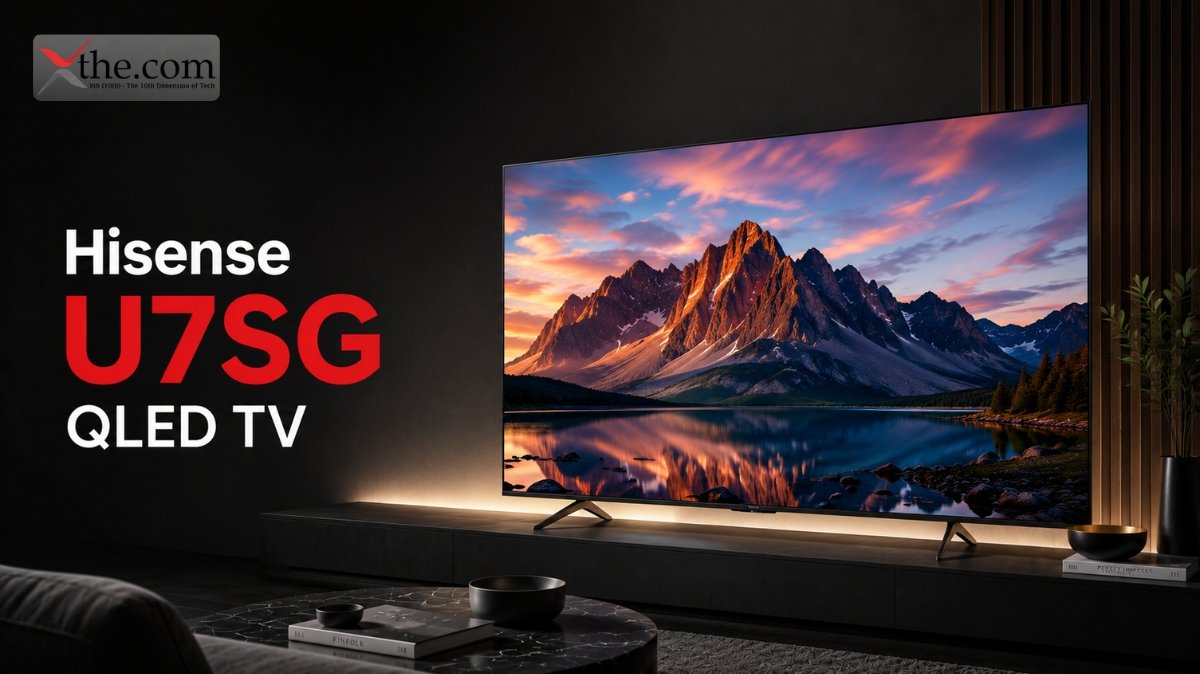
Hisense U7SG — ~$800 (65″) | The best value TV in the entire market according to several 2026 reviews. Strong Mini-LED backlight, excellent brightness for a living room setup, and Dolby Vision support. The answer if you want the most TV for your money without OLED pricing.
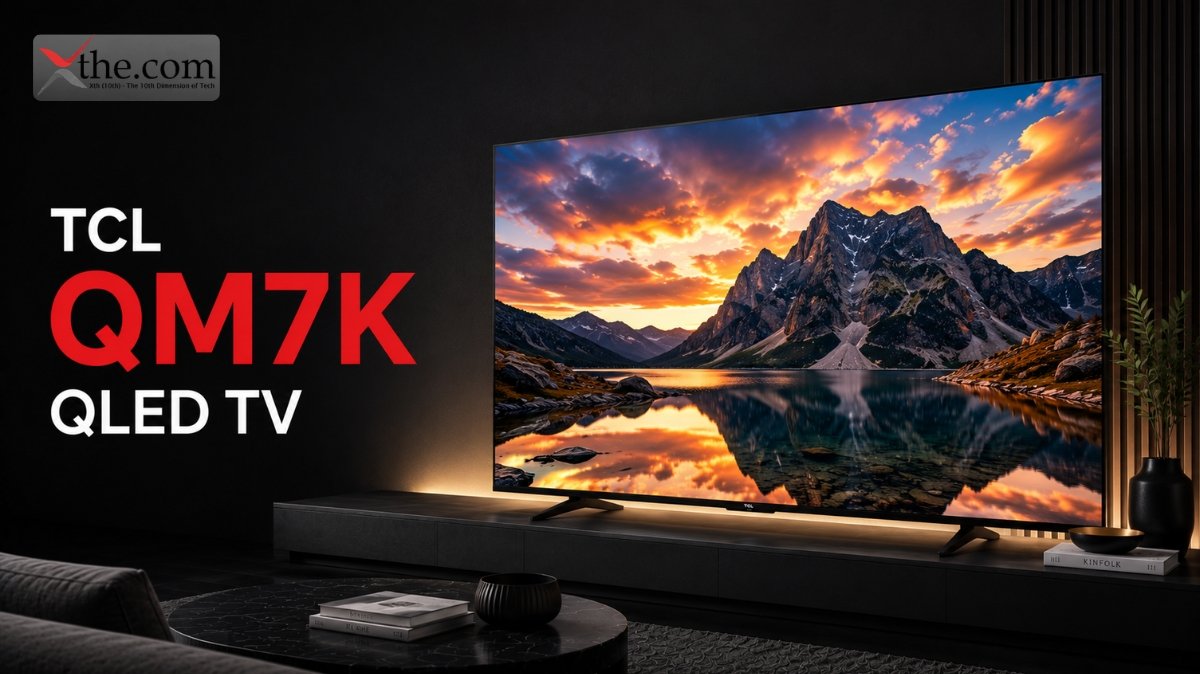
TCL QM7K — ~$900 (65″) | Consistently strong in RTINGS rankings for Neo QLED performance at accessible pricing. Good local dimming, solid HDR performance, and a capable smart TV platform.
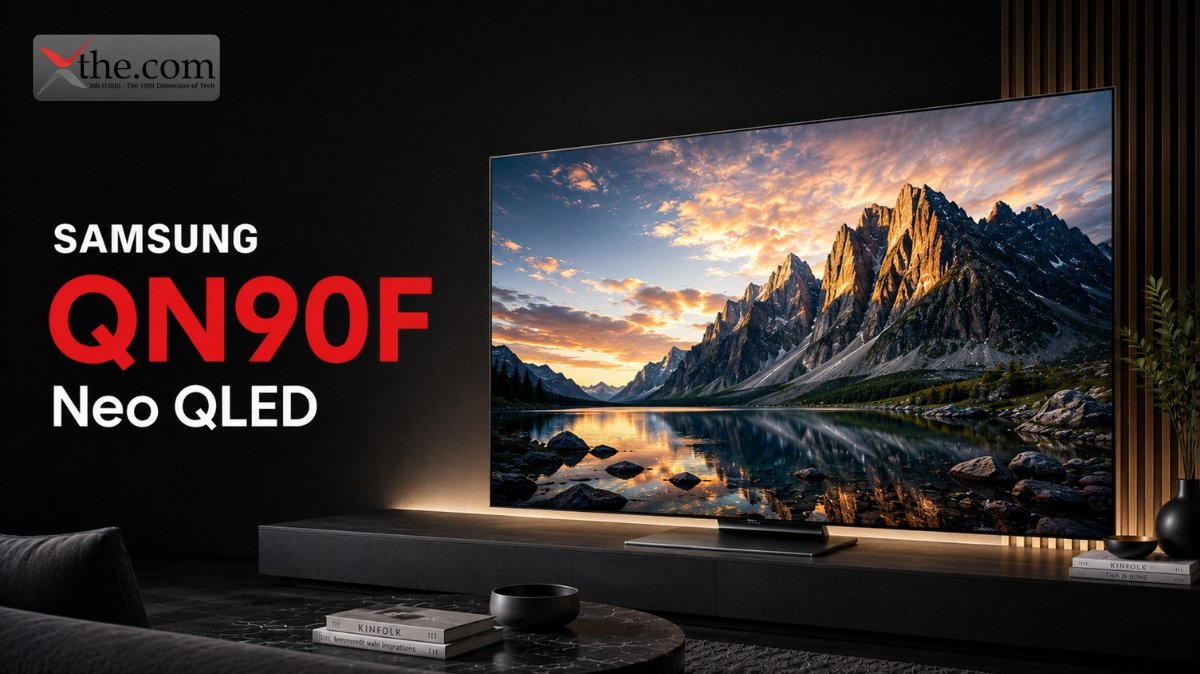
Samsung QN90F Neo QLED — ~$1,200 (65″) | Samsung’s flagship Neo QLED for 2026. The brightness ceiling — up to 4,000 nits on small areas — is the highest on this list. The right choice for a very bright living room where QLED’s brightness advantage matters most.
Frequently Asked Questions
1. Is OLED better than QLED for watching TV in a bright room?
No. QLED — specifically Neo QLED — is better for bright room viewing because of its higher peak brightness, which can reach 2,000 to 4,000 nits compared to OLED’s 800 to 1,500 nits. In a room with direct sunlight through windows or overhead lighting on during the day, Neo QLED holds up better. OLED’s advantages — perfect blacks and contrast — are most visible in darker viewing conditions where its backlight-free design makes a difference.
2. Will an OLED TV get burn-in?
With typical mixed-content viewing — streaming, cable, movies, gaming varied content — burn-in is not a practical concern on 2026 OLED TVs. Real-world data from years of OLED ownership shows burn-in occurring primarily in extreme use cases: static news tickers running for eight-plus hours daily, PC monitor use with permanent taskbars, or repetitive gaming with the same HUD for thousands of hours. If your viewing is varied, modern OLED TVs include pixel maintenance cycles that further reduce the already-low risk.
3. What is QD-OLED and is it worth the extra cost?
QD-OLED combines OLED’s self-emitting pixels with quantum dot material that produces more accurate colors and significantly higher brightness than standard OLED. The Samsung S95H QD-OLED reaches around 2,500 nits peak compared to standard OLED’s 800 to 1,500 nits. For buyers who want OLED quality in a bright living room where standard OLED sometimes struggles, QD-OLED closes that gap. Whether the premium over standard OLED is worth it depends on your room — in a dim room, the difference is minimal. In a moderately bright room, the extra brightness is genuinely useful.
4. Is a $2,000 OLED TV significantly better than a $1,000 OLED TV?
Yes, but the differences are more nuanced than the price gap suggests. At $1,000, the Samsung S90F gives you OLED black levels, 144Hz refresh rate, and solid gaming performance. At $2,000, the LG G6 or Samsung S95H give you higher peak brightness, better color volume, more processing power, and more complete feature sets. The step up is real — it is not twice as good for twice the price, but for buyers who keep TVs for seven to ten years, the premium-tier OLED holds up better as content and broadcast standards evolve.
5. How long do OLED TVs last compared to QLED?
Both technologies are rated for 30,000 to 100,000 hours of use at half brightness. At five hours of daily viewing, 30,000 hours is 16 years. Real-world longevity data shows both technologies outlasting most buyers’ desire to upgrade. QLED has no organic compounds and therefore no theoretical organic decay mechanism, giving it a slight theoretical longevity edge. In practice, neither technology fails before most buyers replace it for other reasons.
6. Which is better for 4K HDR content — OLED or QLED?
For HDR in a dark room, OLED delivers the most impactful experience because the contrast between the brightest highlights and the darkest shadows is maximized by the perfect blacks. For HDR in a bright room, Neo QLED’s higher sustained brightness makes HDR highlights more visible against the room’s ambient light. QD-OLED handles both cases better than either standard technology alone. The best HDR experience available on consumer hardware in 2026 is on the Samsung S95H QD-OLED.
The Bottom Line
OLED and QLED both produce excellent picture quality in 2026. The choice between them is not about which technology is better — it is about which technology is better for your room, your habits, and your budget.
The LG C6 or Samsung S90F is the answer for most buyers who want the best picture quality their money can buy and watch TV in a reasonably controlled lighting environment. Both bring OLED to prices that have no historical precedent.
The Samsung QN90F Neo QLED is the answer for bright living rooms, sports viewing, and buyers who want large screens at prices that OLED cannot match per inch.
The Samsung S95H QD-OLED is the answer for buyers who want the best of both — OLED’s contrast and QD-OLED’s brightness — and have the budget for it.
If you have been holding off on buying a new TV waiting for the technology to mature or the prices to drop, 2026 is the year where that wait has paid off. OLED has never been this accessible, and Neo QLED has never been this good. The decision is now less about technology and more about your room.
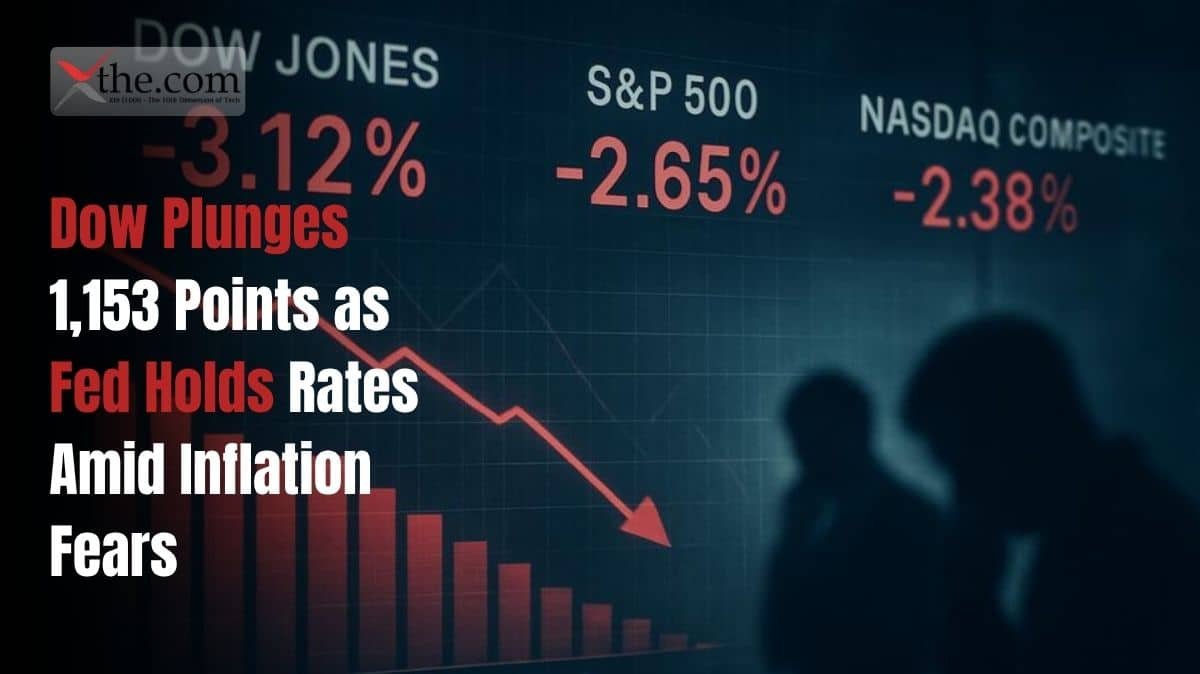
Just three dissenting votes. That is all it took to erase a month of investor optimism in a single afternoon. Wednesday’s Dow plunges Fed rate decision sequence played out exactly as bond traders had quietly feared: the Federal Reserve kept its benchmark rate steady, but Wall Street sold off anyway. The Dow Jones Industrial Average dropped 1,153.18 points, or 2.19%, closing at 51,594.14. This was the index’s worst decline since April 2025, even though the central bank did exactly what most economists expected.
This is what should concern investors most. Even though the rate decision matched expectations, it still led to the market’s worst day in over a year. The real issue was not the Fed’s action, but how divided the committee was when making it.
A Hawkish Hold Rattles Markets
The Federal Open Market Committee voted to keep rates unchanged, with the Fed holding rates at 3.50-3.75 percent, a decision that arrived largely as expected heading into Wednesday’s meeting. What markets did not expect was the internal math behind the vote. Three of the twelve voting members—Cleveland Fed President Beth Hammack, Minneapolis Fed President Neel Kashkari, and Dallas Fed President Lorie Logan—wanted a 25-basis-point increase instead. When a rate hold comes with three members pushing for a hike, it signals a shift in the committee’s stance. Traders reacted quickly, adjusting their positions within minutes of the announcement.
New Fed Chair Kevin Warsh did little to calm nerves when he stepped to the podium. During the Kevin Warsh press conference, he reiterated the Fed’s pledge to bring inflation to heel while insisting the labor market and wider economy remain solid. He spent a considerable portion of his remarks arguing that markets should trade on incoming economic data rather than anticipate the Fed’s next move — stance investors read as a warning that further easing is not imminent. Stocks briefly turned positive while Warsh spoke, then resumed their slide into the closing bell, a pattern that has become familiar during his tenure.
The Numbers Behind the Selloff
The S&P 500 dropped 1.52% to close at 7,316.15. The Nasdaq Composite fell 1.74% to 24,442.94, and its decline was more significant than the percentage alone suggests. The index is now down about 9.8% from its record high in early June, putting it on the doorstep of Nasdaq correction territory — a technical threshold reached at a 10% pullback from a recent peak. Semiconductor stocks were hit hardest. SK Hynix and Samsung both fell sharply in Asian trading before the U.S. market opened, and that weakness continued throughout the day, with AI-related hardware stocks taking most of the losses.
Tuesday’s session was very different, as the Dow rose 537 points to 52,747.32 on hopes that the Fed would be patient. But Wednesday wiped out that gain and more, showing how quickly trader sentiment can change when a rate decision arrives with unexpected difficulties.
What the Bond Market Is Telling the Fed
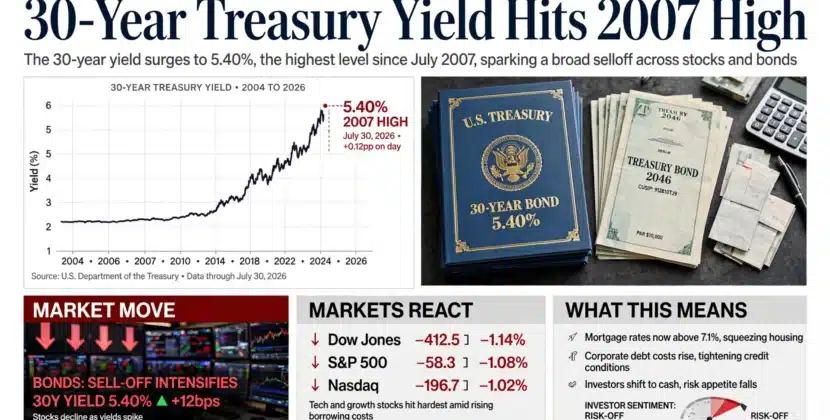
While stocks made the headlines, the real story was in the bond market. Long-term Treasury yields jumped even as near-term yields slipped, a divergence that amounts to a bond market inflation signal that the Fed may be moving too slowly. The 10-year yield rose 8 basis points to 4.68%, and the 30-year yield increased 12 basis points to 5.21%, its highest in 19 years. Meanwhile, the two-year yield, which reflects near-term Fed policy expectations, actually dropped four basis points to 4.24%.
This difference is important. When near-term yields go down, while long-term yields go up, it means bond investors expect rates to stay steady for now but are concerned about inflation worsening in the future. It’s the market’s way of warning the central bank that it might be falling behind, even if the bank says otherwise.
Barclays Flags an Underappreciated Risk
Not everyone on Wall Street was only watching the Fed. Barclays strategist Emmanuel Cau warned this week that equity positions are near record highs, with many portfolios heavily invested in artificial intelligence and momentum trades, even as second-quarter earnings continue to beat expectations. He said investors may be too confident that strong profits will offset tighter financial conditions. Rising real yields, more aggressive signals from central banks, and lower summer trading volumes are, in his view, risks the market has not fully considered. Wednesday’s selloff made his warning feel much more real.
This pattern is something strategists have pointed out before: strong earnings can hide underlying problems for only so long. When the “Dow worst day since April 2025″ headline appears alongside otherwise healthy corporate results, it usually means the market is repricing risk rather than fundamentals.
Why This Fed Meeting Was Different
Every Fed rate decision in July 2026 was watched more closely than usual, mainly because Warsh has tried to make a sharper distinction between market expectations and what the Fed actually says. Wednesday’s result shows that this effort is still ongoing. With the committee split three ways toward tighter policy and a chair who offered no comfort regarding future rate cuts, markets were left with little certainty, except that rates are staying the same for now.
Global markets felt the impact overnight. South Korea’s Kospi dropped sharply as chipmakers continued to lose ground, and European indexes opened mixed as investors faced the same struggle between strong earnings and tighter financial conditions that played out in New York.
The Road Ahead
Wednesday’s session will probably not be seen as a turning point on its own, but it does make the outlook for the coming months clearer. Investors can no longer assume that a Fed decision to hold rates will lead to a calm market now, how the votes are split matters just as much as the decision. With three officials openly supporting tighter policy and long-term yields indicating concern about inflation, the lead-up to the next Fed meeting will likely be judged more by how many members disagree than by what the committee officially says.
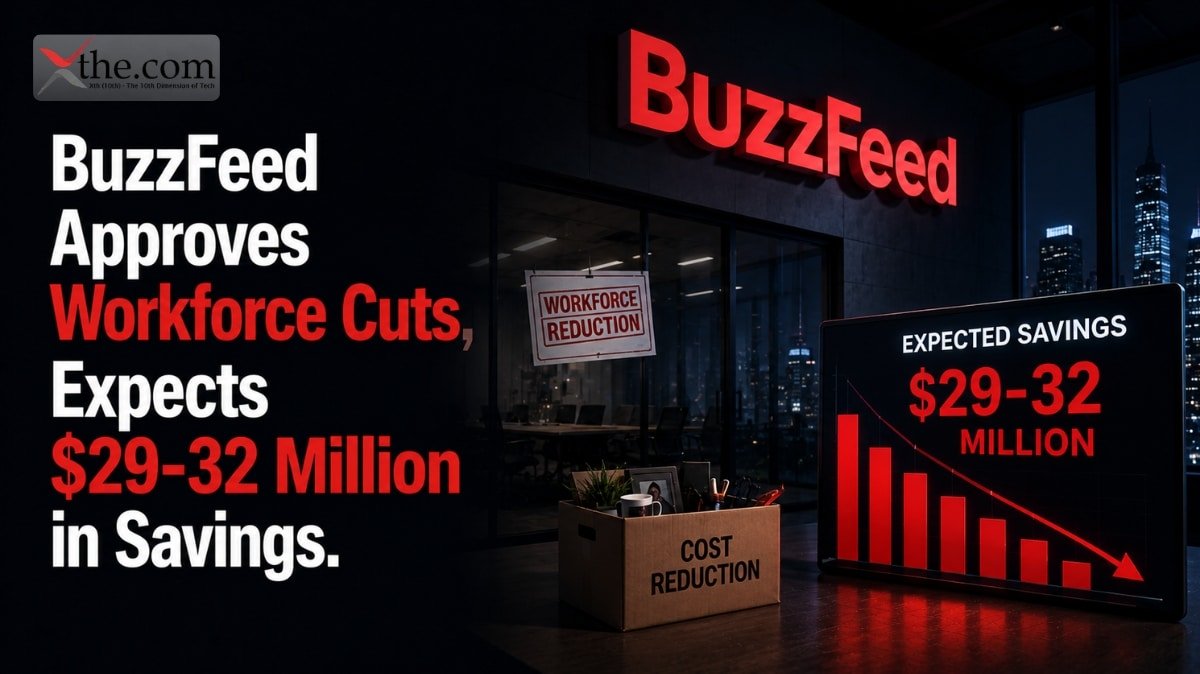
A shrinking advertising market and persistent pressure on digital publishers continue to force difficult decisions across the media industry. Against that backdrop, BuzzFeed workforce cuts approved, BuzzFeed $29-32 million savings, and digital media layoffs 2026 have appeared as one of the latest signs that publishers remain focused on protecting profitability rather than pursuing rapid expansion.
BuzzFeed announced in a regulatory filing that its board has approved a plan to cut jobs to lower costs and boost financial flexibility. The restructuring will affect employees and contractors in several countries while the company works to simplify its structure and strengthen its finances.
BuzzFeed workforce cuts approved as restructuring moves forward.
According to BuzzFeed’s SEC filing Monday, the company approved job cuts worldwide, hitting both staff and contractors in its international hubs staff cuts. Management expects these changes to save $29 million and $32 million each year, though there will be considerable upfront costs to implement the plan.
BuzzFeed expects the restructuring to result in one-time costs of $6.5 million to $8.5 million, mostly in the third quarter of 2026. Most of these expenses will go toward severance, employee costs, and other restructuring fees.
This move forms part of a financial plan that many publishers are now using. BuzzFeed’s management believes that simplifying the company can lower costs and help focus resources on more important projects.
The announcement additionally reinforces the long-tail search phrase “BuzzFeed workforce cuts $29-32 million savings,” which captures the central objective behind the reorganization effort.
Cost reductions aim to improve profitability.
Executives stressed that the restructuring is not simply about cutting costs in the short term. BuzzFeed cash flow improve its cash flow and build a more efficient way of operating.
Digital publishers have dealt with falling ad revenue, changes in search algorithms, and more competition from social media, streaming, and AI-powered content. These difficulties have led many companies to reconsider their staffing and business priorities.
BuzzFeed thinks that cutting overlapping roles worldwide will make the company more efficient without changing its main business strategy. The anticipated BuzzFeed $29-32 million in savings should provide improved financial flexibility as management continues investing in content, audience engagement, and new revenue streams.
While cutting jobs can save money right away, it also brings risks. Companies need to weigh lower costs against possible drops in productivity, slower content output, and lower employee morale.
International operations suffer significant impact.
The restructuring goes beyond U.S. operations. The international hubs staff cuts affect personnel supporting BuzzFeed’s global business, showing management’s wider effort to consolidate operations.
Many digital media companies grew quickly when online ad revenue was rising. As growth slowed, it became harder to keep large international teams. BuzzFeed is now one of many publishers rethinking their international presence to improve finances.
The company’s filing shows that both contractors and full-time employees will be affected. This lets management cut costs in different areas, not just by reducing permanent staff.
Industry experts see this as another sign that publishers are focusing more on financial discipline than on rapid growth.
SEC filing outlines expected financial impact
BuzzFeed’s SEC filing Monday gives investors key financial details about the restructuring.
The company expects to spend $6.5 million to $8.5 million to implement the changes, mostly in the third quarter of 2026. These short-term costs are needed to achieve the ongoing savings.
Investors often weigh the immediate costs of restructuring against future benefits. While earnings may show these charges at first, management expects lower costs to improve financial results over time.
The filing also supports another important search phrase: “BuzzFeed layoffs international hubs SEC filing,” underscoring both the geographic scope of the reductions and their regulatory disclosure.
Digital media layoffs 2026 mirror broader business trends.
BuzzFeed’s announcement does not stand in isolation. Throughout digital media layoffs 2026, publishers have continued adjusting staffing levels as revenue models evolve.
Numerous factors are still causing companies across the industry to cut jobs.
Ad spending is still unpredictable, even though the economy is stable overall. Tech companies are taking more digital ad dollars that used to go to publishers. AI tools are changing how people find and use online content. Many digital media companies also find it hard to grow their subscription businesses.
Because of these problems, industry leaders are focusing on running more efficiently, cutting fixed costs, and building up cash reserves.
BuzzFeed’s restructuring shows that publishers are now focusing more on running sustainable businesses instead of merely hiring more people.
Investors focus on cash preservation.
Financial markets usually look at restructuring announcements in terms of long-term profits, not merely the immediate job cuts.
BuzzFeed specifically cited BuzzFeed cash flow streamlining efforts as a central objective of the restructuring. Preserving liquidity remains particularly important for digital publishers managing uncertain advertising demand and changing consumer behavior.
If management achieves the projected BuzzFeed $29-32 million savings, the company could improve operating margins while creating greater flexibility for future investments in tech, content development, and audience growth.
However, how well the plan is carried out is important. Cutting costs alone does not always lead to better financial results. Companies also need to maintain content quality, audience engagement, and strong relationships with advertisers during these changes.
What the restructuring signals for the media sector
The BuzzFeed workforce cuts and approved announcement point to the continuing transformation of digital publishing. Growth alone no longer satisfies investors. Sustainable profitability, disciplined spending, and stronger cash generation have become equally important measures of corporate performance.
By cutting staff in international offices, aiming for annual savings, and focusing on cash flow, BuzzFeed’s management is trying to prepare the company for tougher business conditions.
As media companies continue adjusting to changing advertising trends and shifting audience habits, more restructurings may happen in the industry. BuzzFeed’s latest move shows that digital publishers must balance running efficiently with committing to quality journalism and keeping audiences involved to stay competitive in the long run.
A single trading session rarely carries two market-moving events at once. Today it carries both. At 2:00 p.m. Eastern, the Federal Reserve releases its policy statement. A few hours later, Microsoft and Meta report quarterly earnings after the closing bell. For portfolio managers who spent the morning positioning around interest-rate risk, the afternoon now demands a second, entirely different kind of bet. Investors brace for volatility today not because either event is unprecedented on its own, but because the calendar has forced them to happen within hours of each other.
This situation is so unusual that trading desks have given it a nickname. ‘Fed tech earnings collide’ appears in almost every morning note on Wall Street. That’s because both rate-sensitive sectors and the big technology stocks that make up most portfolios are facing risks from two sources at the same time, all within one trading day.
Why the Fed Decision Still Moves Markets
The Federal Open Market Committee meets over two days, finishing on July 29. This meeting does not include a Summary of Economic Projections, so there will be no updated dot plot or new quarterly forecast from policymakers. However, Chair Kevin Warsh will hold a press conference at 2:30 p.m., and investors will pay close attention to his comments for indications about future rate changes.
The federal funds rate has sat in a 3.5 percent to 3.75 percent range since June, and the market consensus heading into today leans toward another hold. That consensus is precisely what makes today dangerous for complacent portfolios. When a decision is widely expected, the real risk sits in the language of the statement and the mood of the press conference, not in the number itself. A single comment about labor-market softening or sticky inflation can send bond yields and rate-sensitive equities lurching in ways that a routine hold does not fully explain. This is the mechanism behind market volatility Wednesday, July 29: the outcome is anticipated, but the interpretation is not.
Rate-Sensitive Sectors on Alert
Homebuilders, regional banks, and small-cap indexes usually react first to any change in the Fed’s language about rates, because their lending expenses and profit margins are most affected. Traders in these areas are not expecting a surprise decision—they are listening closely for a key phrase.
Tech Earnings Top of Mind, But Not All on the Same Clock
It’s important to clarify today’s schedule before making any investment decisions. Microsoft and Meta will report their second-quarter results after the market closes today, a few hours after the Fed’s statement. Apple and Amazon, on the other hand, will report tomorrow, July 30. All four companies are key to this week’s earnings story, but only Microsoft and Meta share today’s calendar with the Fed. Tech earnings top of mind investors this week regardless of the exact reporting day, because the four results will be read together as a single verdict on AI spending across the industry.
Microsoft’s report is especially important. If Azure’s growth rate, expected to be in the high 30 percent range, meets or beats guidance, it will reassure investors worried about the company’s rising capital spending. If it falls short, it could restart concerns that have already hurt the stock over the past year. Meta’s earnings call, which comes soon after, will also be carefully observed for updates on advertising demand and infrastructure spending.
Traders await Amazon and Apple results with a slightly longer fuse, since both companies report Thursday rather than today. That one-day gap does not lower the stakes. If Microsoft or Meta delivers a disappointing capital-expenditure outlook this afternoon, options markets will likely start pricing in similar risks for Apple and Amazon before they report tomorrow. These four reports, spread over two days, are really four parts of the same story about whether AI investments are delivering results.
The Dual-Catalyst Risk Confronting Portfolio Managers
What sets today apart from a typical earnings week is the timing. The Fed’s cautious, data-driven statement comes out at 2:00 p.m., followed by a press conference at 2:30. Then, before markets have time to react fully, two of the world’s most valuable companies release results that could move the entire tech sector’s performance for the month. Portfolio managers can’t just hedge one risk and ignore the other; both risks are happening at once.
This is what desks mean when they describe today as a dual catalyst day markets have to manage without a break between events. A manager who correctly reads the Fed’s tone yet misjudges Azure’s growth number, or vice versa, can still end the day on the wrong side of the tape. Options pricing on the major indexes already reflects this compounding: implied volatility for today’s session sits meaningfully above a typical Wednesday, a signal that the market itself expects the combination of catalysts to produce sharper moves than either would generate alone.
Bond traders are in a similar situation. Normally, a Fed statement that sounds supportive would help risk assets in general. But if it comes at the same time as cautious spending outlooks from Microsoft or Meta, the Nasdaq could still fall. The phrase ‘Investors Brace VolatilityFed earnings collide’ describes this exact scenario, where two events that are manageable on their own become much harder to handle together.
What to Watch Into the Close
The sequence of events is important. The Fed’s statement and press conference will shape trading in rate-sensitive sectors during the early afternoon. After that, focus will turn to the two earnings calls after the market closes, with Azure’s growth and Meta’s ad-revenue trajectory likely to dominate the after-hours tape. Tech earnings top mind investors today in every practical sense, even as the Fed’s language continues to ring through bond markets after the press conference.
A Week That Isn’t Finished Yet
Today’s session is just one part of the story. Apple and Amazon will report tomorrow, and how the market reacts to Microsoft and Meta today will influence how those reports are received. Traders who see today as the end are missing that this is a two-day event, with the Fed’s influence felt throughout. The teams that do best by Friday will likely be those who wait for the full picture and treat the week as one connected trade.
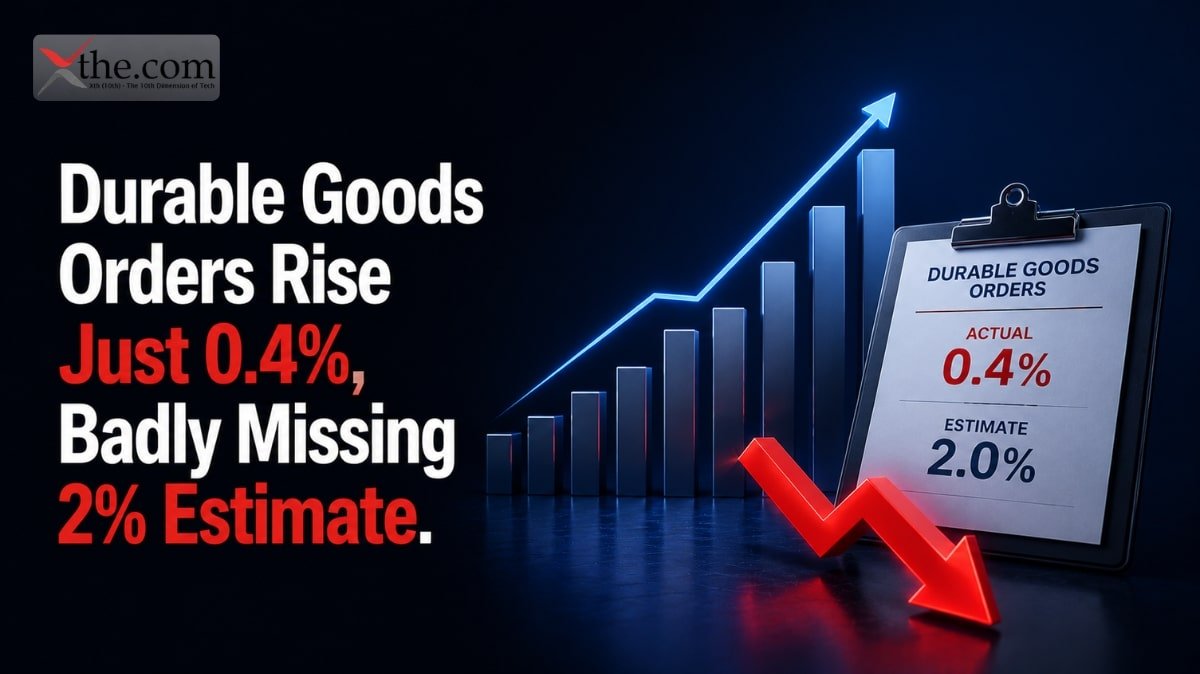
A modest gain can at times mask a larger problem. That appears to be the case with the latest U.S. manufacturing data after durable goods orders 0.4 percent came in far below expectations. The report, which marked another June durable goods miss, landed on a relatively quiet economic calendar but immediately drew attention because economic data disappointed Monday with weaker-than-expected business spending. Markets had expected stronger momentum heading into the Federal Reserve’s latest policy decision, yet the report instead reinforced concerns that investment demand remains uneven across major industries.
Economists were looking for a stronger rebound. The latest numbers remind us that manufacturing is still under pressure from heightened borrowing costs, slower corporate investment, and ongoing uncertainty about global trade.
Durable Goods Orders 0.4 Percent Raise Fresh Questions About Manufacturing
The Commerce Department said new orders for durable goods increased only 0.4% during June, substantially below the consensus estimate 2 percent gain. While the figure stayed positive, the shortfall represented another notable durable goods orders miss that disappointed investors looking for evidence of stronger industrial activity.
This report matters because durable goods, like machinery, aircraft, cars, computers, and industrial equipment, often show how confident businesses feel. When companies expect higher demand, they usually spend more on long-lasting equipment. If those purchases slow down, economists start to question future production and hiring plans.
The latest numbers match the idea of a ‘durable goods orders rise 0.4 percent miss,’ showing the growing gap between what markets expect and how manufacturing is actually performing.
Why Durable Goods Matter Beyond Manufacturing
Durable goods reports are about more than just factory output. They give a clear view of corporate spending, investment trends, and broad economic confidence.
Businesses frequently delay big equipment purchases when borrowing costs go up or when they are unsure about future demand. This is why durable goods orders can signal changes in the economy months before we see shifts in jobs or consumer spending.
The latest June durable goods badly miss estimate, suggesting that many companies are still cautious, even though the job market is steady and consumer demand in some service sectors remains strong.
Economists also pay close attention to non-defense capital goods excluding aircraft, which is often seen as a stand-in for business investment. Weaker numbers in this area usually mean manufacturers and industrial companies are planning to expand more slowly.
June Durable Goods Miss Reflects Uneven Business Investment
Several factors are still putting pressure on manufacturing activity in the United States.
Higher interest rates are still a major challenge. Even companies in good financial shape are being more careful about buying costly machinery or expanding production. Borrowing costs are much higher than they were right after the pandemic.
Global demand is also uneven. Export-focused manufacturers are dealing with mixed conditions as growth slows in several big economies. Supply chains are more stable than before, but pricing pressures and global uncertainty still make long-term investment decisions difficult.
The latest report reinforces concerns that the manufacturing demand signal weak despite pockets of toughness in sectors tied to artificial intelligence infrastructure, defense spending, and energy investment.
Instead of showing growth across the board, June’s numbers suggest that only a few industries are expanding.
Markets Move to the Consensus Estimate 2 Percent Gain Miss
Financial markets usually look at economic surprises in terms of what they might mean for prospective monetary policy.
Because the actual reading came in well below the consensus estimate 2 percent gain, investors interpreted the report as another indication that economic pace may be cooling. Treasury yields softened following the release as traders reassessed expectations for future Federal Reserve policy.
The weaker numbers could support policymakers who want to be more cautious about raising rates further. Inflation is still a concern, but slower business investment lowers the risk of the economy overheating.
This does not mean interest rates will be cut right away. Federal Reserve officials keep saying that their decisions depend on new data about inflation, jobs, consumer spending, and production.
Still, another durable goods orders miss adds to a growing collection of indicators suggesting economic growth may be moderating rather than accelerating.
Manufacturing Faces a Complex Second Half of 2026
As the year moves into its second half, American manufacturers face several different forces affecting demand.
Orders for advanced semiconductors, networking equipment, and data center hardware are still strong thanks to artificial intelligence projects. Defense spending is also steady, which helps keep business stable for aerospace and specialized manufacturers.
However, traditional sectors like heavy machinery, transportation equipment, and commercial construction supplies are still seeing slower demand as businesses put off expansion projects.
The latest data supports the idea that overall manufacturing demand signal weak even as certain technology-focused industries are doing better.
For manufacturers, the main issue is not a total drop in demand, but uneven demand. Companies focused on AI markets may keep growing quickly, while those relying on more extensive industrial investment might see slower order growth.
What the Federal Reserve Will Watch Next
The timing of this report matters because policymakers are getting ready to make their next decision on interest rates.
Although one month of data usually does not decide monetary policy, officials pay close attention to reports that show changes in business behavior. Slower capital spending often comes before a wider economic slowdown, especially when businesses hesitate to make long-term investments. If activity, industrial production, and capital expenditures show similar weakness, policymakers may become increasingly comfortable maintaining a patient approach rather than signaling additional policy tightening.
This report also offers context to upcoming GDP updates, inflation numbers, and job data. All these indicators together will show if June’s weakness is just a short pause or the start of a longer slowdown.
The phrase ‘June durable goods badly miss estimate’ sums up investor worries that the recent weakness in manufacturing could last beyond just one month.
Outlook
Manufacturing trends do not change overnight. The June report shows that businesses are still investing, but they are being more selective and cautious than economists thought. Even though the numbers are positive, the 0.4 percent rise, the big June miss, and another disappointing data point all show that industrial momentum is still fragile.
For investors, policymakers, and business leaders, the message is clearer now. Manufacturing is still helping the economy grow, but not as fast as forecasts suggested. Whether this weakness is temporary or turns into a bigger slowdown will depend on future capital spending, borrowing costs, and what the Federal Reserve does for the rest of 2026.
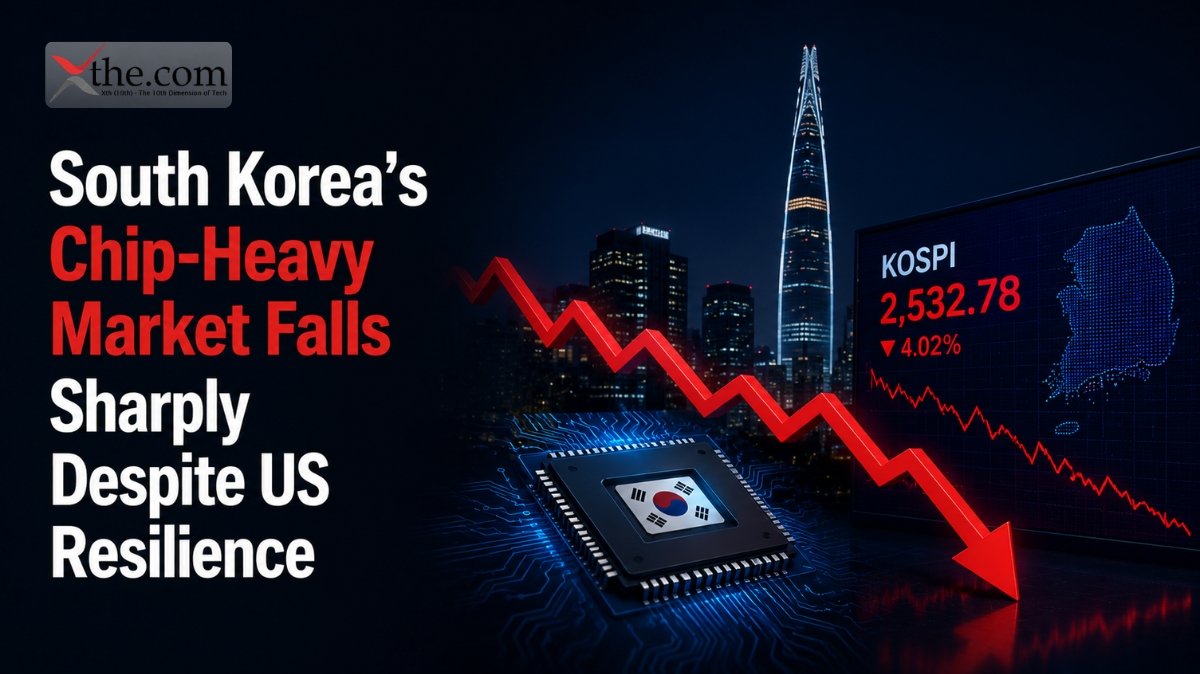
Samsung Electronics dropped 13 percent in one day, and SK Hynix fell even more. But when Wall Street opened on Tuesday, American investors hardly reacted. This difference between Seoul’s panic and New York’s calm is now influencing the global tech market story, showing U.S. investors where the real risks are this week.
The South Korea chip market falls narrative dominated Tuesday’s trading session, as the Kospi index tumbled roughly 10 percent before a partial recovery, constituting one of its steepest single-day declines since April. Trading halts kicked in twice as the sell-off accelerated. Yet the divergence between that collapse and the comparatively restrained tone on U.S. exchanges is what deserves the closer look. This is a story about Korea’s decline, U.S. resilience, and about why American money managers are refusing to treat Seoul’s selling as gospel for their own portfolios.
What Happened in Seoul on Tuesday
The immediate cause was new worries about China’s growing ability to make memory chips, adding to an already nervous month for Asian semiconductor companies. News that Chinese manufacturers are increasing their own chipmaking tools brought back fears that South Korea’s lead in memory chips, a key part of its exports, could fade faster than investors expected.
The result was significant declines in South Korea Tuesday, with the Kospi’s benchmark index sliding to its weakest close since April. Samsung Electronics, the bellwether of the entire exchange, shed more than 13 percent. SK Hynix, still fresh off its record-setting Nasdaq debut earlier this month, fell even harder, dragging its U.S.-listed shares below their original offer price. The Korea Exchange invoked circuit breakers not once but twice, a mechanism used only eight times so far this year, underscoring just how violent the intraday swings became.
Japan’s Nikkei followed the region lower, sliding nearly 4 percent in sympathy, as the sell-off in chip-heavy stock market overnight trading rippled across Asian exchanges before the U.S. session even opened. For a few hours, it looked like the makings of a global rout.
Why Memory Chips Are the Epicenter
Memory chips are the basic building blocks behind the AI infrastructure boom. Every data center, large language model training, and big cloud contract needs a steady supply of high-bandwidth memory, an area where Samsung and SK Hynix have usually led. When investors worry that Chinese companies might catch up faster than expected, it puts pressure on South Korea’s tech-heavy stock market. That’s what happened on Tuesday, which is why the losses hit semiconductor companies the hardest instead of affecting the whole Kospi evenly.
Wall Street’s Different Calculus
Here is where the story shifts. Despite the overnight carnage in Seoul, the U.S. market’s relatively steady performance on Tuesday stood in sharp contrast. U.S. semiconductor names opened lower, as did the broader chip sector, but they extended a multi-day losing streak; the moves were measured rather than panicked. The VanEck Semiconductor ETF slipped roughly 3 percent in early trading, a meaningful decline but nowhere near the double-digit collapse seen in Seoul. Micron and Western Digital each fell close to 5 percent, painful but orderly.
This is the essence of US stocks decouple Korea chips: American investors are not simply importing Korea’s fear wholesale. They are running their own math. Domestic chip names are down sharply for the month already, which means Tuesday’s session was, in some sense, adding to a trend already priced in rather than reacting to fresh, unanticipated news. More importantly, U.S. traders had bigger fish to fry.
Earnings Season Is Doing the Heavy Lifting
Tuesday’s session occurred just ahead of a dense stretch of mega-cap earnings, with reports due from Amazon, Meta, Microsoft, and Apple later in the week, alongside a closely watched Federal Reserve rate decision. That calendar matters enormously. When investors know they will get concrete guidance on cloud spending, AI capital expenditure, and margin trends within 48 hours, they tend to discount overnight regional noise and wait for company-specific data instead. That is a textbook case of “South Korea chip market falls US resilient” dynamics playing out in real time: a foreign market convulses, but the domestic audience is preoccupied with its own catalysts.
It also shows that professional investors are getting better at telling the difference between Korean memory chip stocks, which depend a lot on DRAM and NAND market patterns, and the wider American AI infrastructure sector, which is more about computing power, software profits, and how big tech companies manage their spending. These areas are connected, but they are not the same, and Tuesday’s trading made that difference clear in a way that a quieter week would not have.
What This Means for Portfolios
For American investors watching their semiconductor holdings gyrate, the practical takeaway is nuanced. The “Korea decline US stocks decouple” pattern does not mean U.S. chip stocks are immune to Asian sentiment. It means the transmission is imperfect, and the size of the move matters. A 10 percent single-day Kospi decline does not translate into a 10 percent Nasdaq decline, because U.S. investors are weighing a different, more immediate set of variables: interest rate policy, corporate earnings, and capital expenditure guidance from the companies that actually build and buy American chips.
This difference really matters for portfolios. If you treat every drop in the Kospi as a warning sign for U.S. tech stocks, you might overreact to news that U.S. markets have already taken into account. On the other hand, ignoring weakness in Korean chip stocks completely overlooks a real issue about China’s manufacturing growth, which will eventually affect demand and prices for American semiconductors, even if it is not the main factor right now.
The Week Ahead
It is rare for markets to give such a clear example of decoupling. Tuesday showed that, for now, American investors see Seoul’s troubles as a local issue, not a global judgment on the AI sector. The real test will come with this week’s earnings reports. If Amazon, Meta, Microsoft, and Apple give spending guidance that supports ongoing AI investment, the gap between Korean worry and American calm will probably grow. But if those reports are disappointing, investors might realize that this week’s calm was only temporary.
Meta Platforms Inc. heads into one of the most closely watched earnings releases of the quarter carrying a Meta Zacks Rank 3 Hold, a neutral rating that reflects balanced analyst outlooks rather than a clear bullish or bearish outlook. According to Zacks Investment Research, Meta’s analysis published ahead of Wednesday’s report, the social media giant remains in the middle of the firm’s ranking system as Wall Street waits for fresh guidance on artificial intelligence investments, advertising trends, and capital expenditures.
The Meta earnings rating ahead report arrives during an earnings season in which investors have been particularly sensitive to comments from large technology companies regarding AI infrastructure spending. While Meta has continued to invest aggressively in AI models, data centers, and computing capacity, investors are increasingly weighing whether those expenditures will translate into stronger revenue growth and higher profitability over the next quarters.
What a Zacks Rank #3 Means for Meta
The Meta Zacks Rank 3 Hold indicates that earnings estimate revisions have been relatively balanced in recent weeks. Within the Zacks ranking methodology, a Rank #3 generally suggests that analysts expect the stock to perform broadly in line with the overall market over the near term.
A Hold rating, unlike a Strong Buy or Strong Sell, does not mean there are problems with the company. It simply shows that analysts want more information before deciding if they should be more positive or negative about Meta’s future.
For investors, the Meta Platforms hold rating implies caution rather than concern. The company keeps generating billions of dollars in advertising revenue while growing its AI capabilities across Facebook, Instagram, WhatsApp, Threads, and enterprise tools. However, uncertainty surrounding future spending and monetization has limited stronger conviction ahead of earnings.
Earnings Could Quickly Change Analyst Sentiment
The quarterly results Meta expectations remain elevated given the company’s dominant position in digital advertising and its accelerating AI initiatives.
During Wednesday’s earnings call, investors will watch for updates on advertising revenue, user participation across Meta’s apps, profit margins, and new spending plans. They will also pay close attention to what management says about AI investments and whether these costs are likely to bring real returns soon.
If Meta reports better-than-expected earnings and gives positive updates on AI spending, analysts may become more positive about the stock. On the other hand, if guidance is weak or spending forecasts rise without matching revenue, analysts could lower their estimates and become less positive.
This uncertainty explains why Meta holds Zacks Rank 3 ahead of earnings instead of receiving either a more bullish or bearish recommendation before the earnings release.
AI Spending Remains the Biggest Market Focus
During the 2026 earnings season, investors have favored companies that show clear returns from AI spending and have been tough on those whose costs are rising faster than their revenue.
Meta has made AI a key part of its long-term plans, using it for ad targeting, content suggestions, business messaging, developer tools, and consumer assistants. The company has also invested billions to grow its computing power.
The market will probably care more about how confident management is that AI investments will help ads and create new revenue, rather than just this quarter’s financial results.
This makes the Meta earnings rating ahead report especially important, since what is said on today’s call could affect future earnings estimates and the Zacks ranking.
Understanding the Zacks Ranking System
The Zacks Investment Research Meta rating is based primarily on changes in analysts’ earnings estimates. Stocks receiving upward estimate revisions generally move toward higher rankings, while downward revisions tend to result in lower rankings.
The firm’s system classifies stocks into five categories:
Rank #1 (Strong Buy)
Rank #2 (Buy)
Rank #3 (Hold)
Rank #4 (Sell)
Rank #5 (Strong Sell)
Many investors watch the Zacks number 1 rank stocks list, which features companies with the biggest positive changes in earnings estimates. Meta is not on that list right now, showing that analysts are waiting to see what happens before making a move.
Wall Street Watches Guidance More Than Headlines
Even though most forecasts expect another good quarter, analysts think that what Meta says about the future will matter more than the headline earnings or revenue numbers.
If Meta changes its plans for spending, AI investments, ad demand, or its outlook for the rest of 2026, analysts may update their earnings models. These changes could lead to a higher or lower Zacks ranking after the earnings report.
For now, Meta Platforms Hold rating Wednesday shows a market waiting for greater clarity rather than expressing strong conviction in either direction.
Outlook
Meta’s Zacks Rank 3 (Hold) shows that Wall Street has an even perspective before one of the tech sector’s most expected earnings reports. Investors will look past the numbers to see if Meta can keep growing profits while investing heavily in AI. Since market mood now depends heavily on how companies manage AI spending, what Meta says on Wednesday could shift its outlook more positive or negative in the coming weeks.